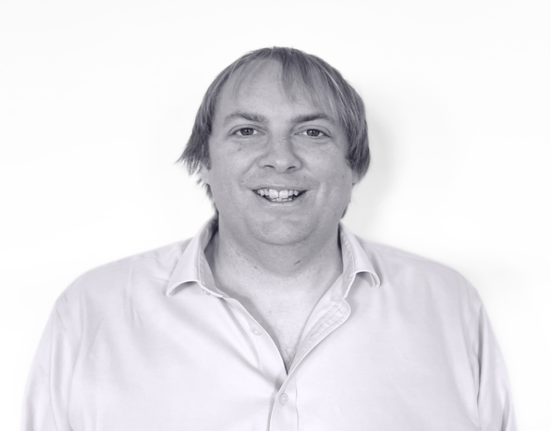
Alvaro Rozo is Chief Product Officer of Arcus Power Corp.

The grid is no longer a one-way street of big plants pushing power downstream. It’s becoming a crowded ecosystem—rooftop solar, home batteries, virtual power plants, new nuclear, even Bitcoin miners—each adding capacity, complexity and risk. Energy is expanding on all sides, and the real challenge for leaders isn’t predicting that growth. It’s figuring out how to operate it.
In my last article, I described digital twins as a way to “see around corners”—a tool to anticipate volatility and reduce risk. Today, I’ll discuss digital twins as something bigger: the operating system for an expanded grid. Twins no longer just model individual assets; they coordinate across the entire system, connecting front-of-the-meter with behind-the-meter, central plants with distributed resources, legacy infrastructure with emergent loads.
Independent Models, Shared Fabric
The difference is coordination. Before, we looked at twins as independent models of a singular entity: a battery, a feeder or a market. Now, the challenge is how to get these independent models talking to one another and functioning as part of a bigger system.
Singapore is showing what this looks like. Its Grid Digital Twin is a nationwide platform where contributors develop their own twins but connect them through a common framework. That means solar facilities, wind farms, batteries and even residential devices can be aggregated, synchronized and aligned with the reliability needs of the overall grid.
The U.K.’s Virtual Energy System is another example. It’s a consortium effort that brings together utilities, technology companies and regulators to share near real-time status across networks and markets. At the center is interoperability—defining standards like the Common Information Model (CIM), so that every asset or market twin can exchange information in a way others can understand. Without this kind of interoperability, decentralization risks fragmentation instead of resilience.
What Leaders Should Do Next
I tell leaders that success starts with five steps.
Adopt A Life Cycle Twin Strategy
From the beginning, planning tools should help municipalities and developers simulate network flows before adding new assets. If you install batteries on a network that’s already constrained, you’re not adding value. Twins let you test scenarios from pre-feasibility through operations and repowering, so you can optimize individual assets while strengthening the reliability of the grid.
Design For Aggregation
Virtual power plants are built from small parts: heat pumps, rooftop solar, EV chargers and home batteries. Alone, they’re modest. But aggregated, they can meaningfully participate in wholesale markets. Leaders need to think in terms of composition—how individual devices become flexible portfolios that contribute energy back into the system.
Invest In Interoperability
Aggregation doesn’t work if assets can’t talk to one another. Standards matter. Utilities don’t just need thermostats that connect—they need resources that can also plug into EMS and OMS platforms, maintenance systems and market interfaces. This is where open standards like CIM are critical.
Make Energy Expansion The Core Narrative
Reliability cannot be an afterthought. As we add renewables, we also need assets like gas plants or new nuclear sources that can provide backup when conditions shift. Expansion means coordination: old and new technologies, central and distributed resources, all playing together on the same fabric.
Lean Into Municipal Pilots
The best way to validate new approaches is to test them in real communities. Pilots show how distributed components aggregate, how they sync with utility operations and how they can participate in wholesale markets. That feedback loop helps regulators, vendors and operators move in parallel instead of waiting years for perfect conditions.
The Leadership Challenge
The hardest part isn’t the technology alone. It’s mindset, regulation and clear definitions. Take virtual power plants (VPPs): In some forums, VPPs mean residential aggregation; in others, they mean transmission-level portfolios. Without clarity, it’s easy to confuse the market. We need cooperation and, in some cases, competition to move things forward.
There’s also a cultural hurdle. Utilities have traditionally been protective of their systems—and with good reason. Opening access to customer data or third-party technologies raises real concerns about privacy and security. New regulatory frameworks like FERC Order 2222 and ERCOT’s ADER pilots are steps toward building trust, but change management is as much about people as it is about code.
Emerging Loads, Expanding Demands
The story doesn’t end with distributed energy resources (DERs). Emergent large loads (ELLs)—high-demand electricity consumers like data centers, AI compute facilities and Bitcoin miners—are reshaping the grid. Data centers partner with renewables to lower their footprint, while Bitcoin miners act as flexible loads that can absorb excess capacity or shut off during peak demand. These new actors complicate planning but also create opportunities for stability when integrated correctly.
This is where digital twins again show their value. They provide a safe environment to simulate scenarios before committing capital, test how emerging loads interact with distributed resources and forecast demand curves under different conditions. Forecasting is only part of the picture; optimization is just as important. Every ISO and utility runs incentive programs. The real question leaders ask is: Which products should we participate in to get the highest value? Twins give them a grounded way to answer.
From Pilots To Profit Centers
Energy expansion is already underway. South Australia’s data linkage demonstration projects prove that residential flexibility can scale. ERCOT’s pilots are showing how aggregated home batteries and devices can provide real capacity. Singapore and the U.K. are proving that nationwide, interoperable twins are possible.
The lesson for leaders is simple: Digital twins aren’t just software; they’re strategy engines. They convert DER sprawl into dispatchable portfolios and uncertainty into options you can bid. They give us a way to coordinate across assets, markets and loads—so that the grid of the future isn’t chaos, but a trusted system that can expand along with us.
Forbes Technology Council is an invitation-only community for world-class CIOs, CTOs and technology executives. Do I qualify?