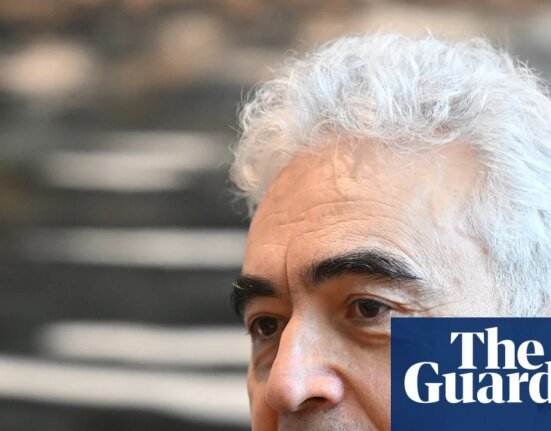
SALALAH: Port of Duqm’s long-term success hinges on pairing efficient operations with “captive” industrial cargo, green-energy–led manufacturing and tight public–private partnerships — rather than relying on transshipment alone, Reggy Vermeulen, CEO, stated here yesterday.
Addressing the Middle East Transport Forum, Vermeulen said: “Efficiency is essential, but location and infrastructure by themselves are no longer enough”. He cautioned however that ports which focus only on transshipment risk under-utilisation despite world-class facilities, adding: “You need steel, gas, fisheries and other industries tied to the quay to create a virtuous cycle of volumes and investment”.
The CEO cited examples of modernised ports that struggled because they lacked an industrial hinterland and guaranteed volumes. By contrast, Al Duqm is steering cargo generation from within Oman through major projects and off-takers “anchored” in and around the port and Special Economic Zone.
Three strategic pillars
The CEO outlined three priorities shaping Al Duqm’s next phase:
•Decarbonisation: Capitalising on Al Duqm’s complementary wind and solar profile to supply competitive green electricity and derivatives (hydrogen, ammonia, methanol) for downstream industries — especially low-carbon steel. “We are moving ahead of the curve by aligning off-takers with projects before the upstream is fully online”, he said, noting active interest from Japanese, Brazilian, European and Chinese players.
•People and community: Expanding education, healthcare and urban services to attract talent and residents to Al Wusta Governorate, while preserving distinctive natural assets, including sensitive coastal and migratory-bird habitats.
•Health and wellbeing at work: Embedding safety and quality-of-life measures to sustain a liveable industrial city.
On logistics efficiency, the CEO said Al Duqm is working with national authorities on a logistics community system linking port operators, customs, free zones, warehouses and shippers. The aim is real-time visibility and faster clearance — “closing the gap between B2C tracking standards consumers now expect and the B2B cargo world”.
He added that overcapacity across parts of the Gulf, Indian Ocean and Mediterranean means the “old model of a dominant port authority waiting for customers is over”. Success, he said, will come from teamwork among cargo owners, regulators, operators and shipping lines, coupled with policies that make Oman a natural origin-and-destination market for volumes moving north–south to the UAE and beyond.
Operational performance
According to the CEO, Port of Duqm’s core operations — vessel turnaround, loading and unloading — are benchmarking well. “The task now is to compound that operational base with captive industries so that volumes are resilient through the cycle”, he said.
A technical workshop scheduled this week will focus on captured, origin-based cargo strategies for Al Duqm and its hinterland, he noted.
“Partnership is the only way forward. When you have a plan that makes sense — industries tied to clean energy, communities that can thrive and digital transparency — capital follows”.
2025 © All right reserved for Oman Establishment for Press, Publication and Advertising (OEPPA) Provided by SyndiGate Media Inc. (Syndigate.info).