What are tax havens?
Tax havens are small, well-governed, offshore financial centres that offer low or zero taxes, combined with secrecy – or at least strict privacy – regarding client and ownership information.
Many of them are islands connected in some way with Britain to exploit the country’s legal frameworks, stability and access to the City of London, but with the convenience and flexibility of separate fiscal regimes. The islands have a massive incentive to take advantage of their position, and specialise, given financial services can generate vastly more income than other local industries.
Which British territories are tax havens?
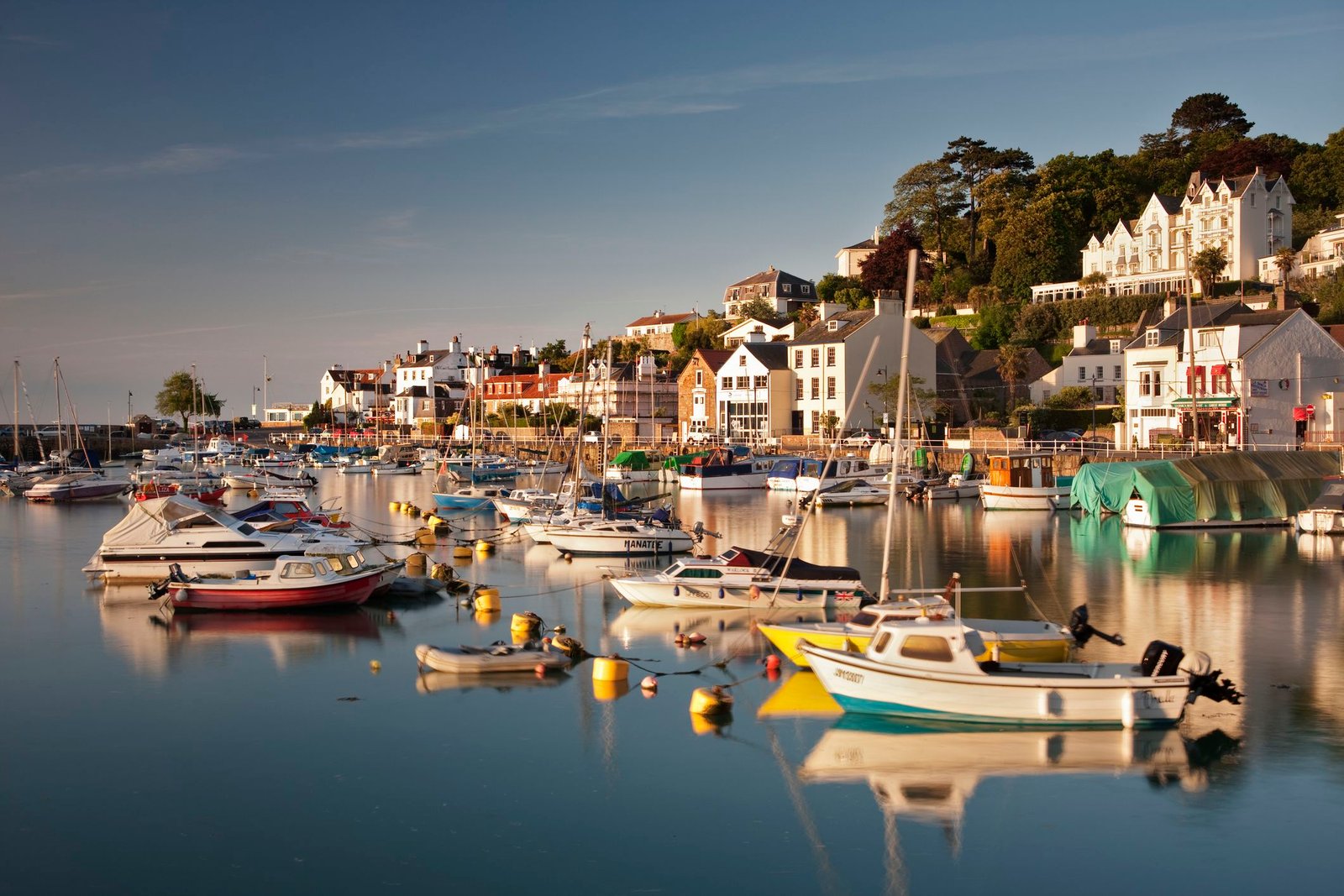
Offshore financial centres linked to the UK fall into two categories: Crown Dependencies and British Overseas Territories. The first group is made up of Jersey, Guernsey and the Isle of Man, which have enjoyed varying degrees of fiscal and legislative independence for many centuries (and are not legally part of the UK). When international finance took off in the 20th century, these islands had the advantage of independent legal and tax systems, plus close links to one of the world’s biggest financial centres.
Sign up for MoneyWeek’s free twice-daily newsletter.
Join more than 165,000 subscribers and keep yourself informed with latest financial news, insights and expert analysis to help you understand what really matters when it comes to your finances.
Join more than 165,000 subscribers and keep yourself informed with latest financial news, insights and expert analysis to help you understand what really matters when it comes to your finances.
By contrast, Overseas Territories (the Cayman Islands, Bermuda and the British Virgin Islands are the big three financial centres) are legacies of empire – self-governing microstates with their own tax and legal systems, but with the British monarch as head of state.
How big is the offshore financial centres industry?
The Cayman Islands is the legal domicile for 30,000 investment funds, with about $9.1 trillion in assets under management, according to its government’s figures, with more than 75% of offshore hedge funds domiciled there.
The British Virgin Islands are specialists in company incorporation, holding companies and trusts – home to 352,000 registered companies, according to figures from the Organisation for Economic Co-operation and Development (OECD) for 2024. According to the Tax Justice Network, some $2.6 trillion of foreign direct investment passed through British Virgin Islands structures that year.
Bermuda’s specialism is insurance and reinsurance, with 1,210 registered firms handling $2.17 trillion in total insurance assets and about $300 billion in assets under management through licensed investment businesses. In each case, the territories claim to provide an essential and legal tax-neutral framework that enables global commerce. Critics say they facilitate aggressive tax avoidance and profit shifting, allowing corporations and individuals to pay hundreds of billions of pounds less in tax.
Is being an offshore tax haven sustainable?
There’s definitely increased pressure on low-tax jurisdictions, both from global trends towards greater transparency and from the UK itself. The Crown Dependencies and British Overseas Territories are part of the OECD’s Common Reporting Standard (CRS), meaning they must exchange financial-account information with foreign tax authorities. They are also subject to the OECD’s 15% global minimum tax for large multinational groups, meaning the likes of Bermuda and Jersey – which both had zero-rate regimes – have been obliged to meet that minimum.
Meanwhile, the UK has been gradually pushing for more transparency when it comes to “beneficial” (ultimate) ownership of assets, with the Sanctions and Anti-Money Laundering Act 2018. Progress is far from complete, however, and wrangling continues. The Cayman Islands, for example, finally agreed to allow “legitimate interest” access in 2025, but in practice the process is slow and subject to expensive appeals and delays that critics say are designed to discourage access requests.
Will Britain’s tax havens survive?
Neither of these trends are set to lead to the collapse of the UK’s offshore tax havens. But the picture is morphing from one of “tax haven” bank secrecy and zero or low tax, to one of offshore centres providing tax-neutral legal and financial infrastructure for global capital. Strikingly, in 2025 the Overseas Territories between them froze more than $11 billion of assets under sanctions regimes, on Foreign Office figures. In other words, they are well on the way to being integrated into international anti-money-laundering and sanctions enforcement.
The relationship between the UK and its dependencies and territories has sometimes been fraught, with Jersey occasionally threatening independence if London gets too heavy-handed. But they are a positive asset and shouldn’t be taken for granted, says James Price in City AM. The Overseas Territories account for 4.4% of the UK’s services exports – more than Spain or Italy, or any Asian country except China. And they entrench the City’s global dominance, channelling “enormous sums of money into the country and fuelling finance with access to worldwide asset pools. In turn, this stimulates investment, drives productivity and more than offsets lost tax revenues”.
How is Jersey as an offshore financial centre?
It’s still one of the world’s leading offshore centres, says Simon Nixon on Bloomberg. But tougher competition from rivals such as Dubai, Singapore and the Cayman Islands means the island is “locked in an increasingly difficult battle to preserve a financial-services industry that accounts for 40% of its government revenues and 44% of gross value added”.
Brexit hasn’t helped – EU rules mean that funds marketed to European investors must be administered on European soil and Jersey has lost business to Dublin and Luxembourg. London, the source of Jersey’s deal flow, has lost business to the Middle East and Asia.
And the UK’s post-financial-crisis ringfencing rules (surplus deposits can no longer be lucratively parked with UK banks) has seen the number of banks on Jersey shrink by a third since 2017. A Jersey government-commissioned review put it well earlier this year: that “the privilege has shifted”. For decades, Jersey operated on the assumption that “access to the island was itself a privilege; now, Jersey must go out and compete for business like everyone else”.
This article was first published in MoneyWeek’s magazine. Enjoy exclusive early access to news, opinion and analysis from our team of financial experts with a MoneyWeek subscription.
Explore More