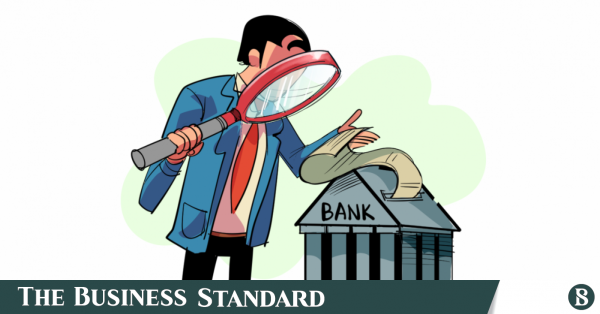
Retail banking encompasses the range of banking services offered to individual customers, with a strong emphasis on customer protection, agent banking, consumer loans and mobile financial services (MFS).
Consumer loans are a specific category of products within retail banking, designed to meet individuals’ personal financing needs. These include home loans, personal loans, vehicle loans, education loans, credit cards and consumer durable loans for purchasing electrical appliances, furniture and other household goods.
Retail banking also includes liability products, such as retail deposits and foreign currency deposits, including Resident Foreign Currency Deposits (RFCDs), Non-Resident Foreign Currency Deposits (NFCDs) and other foreign currency deposit schemes.

Wealth management banking offers comprehensive, personalised financial services to help customers manage, grow and preserve their wealth. It combines investment advice, banking, insurance and estate planning with digital banking services to provide tailored financial solutions aligned with each client’s financial goals and life priorities.
Specialised offerings include hospital partnerships for convenient access to medical care, investment advisory services for wealth creation and portfolio diversification, and international banking facilities for seamless cross-border transactions.
Wealth management banking may also cover sustainable investment opportunities in environmentally friendly and socially responsible ventures, tax advisory services on potential benefits under different jurisdictions, and wealth lending solutions that offer flexible collateral arrangements to improve liquidity. Tailored insurance packages can help protect clients against financial uncertainty, while dedicated relationship management teams can provide personalised support based on clients’ backgrounds, preferences and language needs.
Other services may include specialised private banking, with personalised financial assistance through digital platforms; remote account opening for greater convenience; and priority services through partner institutions worldwide. Multi-currency accounts can provide easy access to funds in different currencies, while international fund transfers through mobile or internet banking can offer competitive foreign exchange rates.
Wealth management banking may also cover sustainable investment opportunities in environmentally friendly and socially responsible ventures, tax advisory services on potential benefits under different jurisdictions, and wealth lending solutions that offer flexible collateral arrangements to improve liquidity. Tailored insurance packages can help protect clients against financial uncertainty, while dedicated relationship management teams can provide personalised support based on clients’ backgrounds, preferences and language needs.
In addition, online equity trading can enable clients to trade shares and other securities conveniently, while foreign exchange trading can provide access to international currency markets.
Benefits of wealth management banking
From a bank’s perspective, wealth management banking helps assess customers’ risk tolerance, investment goals and individual financial needs, enabling banks to develop tailored financial solutions. It allows investment strategies to be aligned with clients’ risk appetite and long-term aspirations, while professional portfolio management saves clients time and provides greater peace of mind. For banks, these services can strengthen long-term relationships with high-net-worth clients, enhance customer loyalty and brand reputation, and increase fee-based income from advisory, investment and portfolio management services.
From a customer’s perspective, wealth management banking provides a structured approach to managing financial risks, preserving wealth and maintaining long-term financial security. Professional advice and diversified investment strategies can help customers mitigate the effects of inflation, currency depreciation, exchange rate volatility and political or economic instability, including global financial and geopolitical crises. Access to professional guidance and international investment opportunities can also help customers make informed financial decisions and plan for the future with greater confidence, knowing that their wealth is being managed with care and expertise.
Key risks in wealth and retail banking
Wealth and Retail Banking (WRB) products are primarily exposed to credit risk, market risk, operational risk, regulatory and compliance risk, and foreign exchange risk.
Loan defaults and difficulties in recovering outstanding loans can create liquidity and asset-liability management challenges, affecting earnings and the management of maturity mismatches. Legal complications, loan rescheduling and write-offs can contribute to an increase in non-performing loans (NPLs), placing additional pressure on capital adequacy and potentially increasing credit concentration risk. Meanwhile, rapid changes in customer demand can leave banks with product offerings that no longer align with customers’ needs.
Unhealthy market competition can erode profit margins and reduce market share. Rapid digital transformation increases the need for robust cybersecurity measures and effective internal controls. Meanwhile, emerging forms of fraud and forgery involving employees, customers or third parties pose growing operational challenges. Increasingly stringent regulatory requirements also demand strict compliance, adding to banks’ costs and operational burden.
Foreign exchange (FX) risk can arise from inward and outward remittance transactions, the maintenance of foreign currency, non-resident foreign currency deposit (NFCD) and resident foreign currency deposit (RFCD) accounts, and the opening of import letters of credit (L/Cs). Such risks can intensify when sudden devaluation or depreciation of the taka is not adequately anticipated or managed.
Growing demand for sustainable finance products also exposes banks to greenwashing risks. Meanwhile, retail lending portfolios face pressure from rising interest rates, inflation and geopolitical uncertainty. More sophisticated money laundering techniques, digital lending fraud, synthetic identity fraud and the misuse of digital wallets further heighten financial crime and regulatory compliance risks in Wealth and Retail Banking (WRB).
Key challenges in expanding wealth management banking
Expanding wealth management banking presents several challenges for banks in Bangladesh. These include recruiting and retaining skilled relationship managers who can understand and respond to customers’ financial needs, as well as building strong research teams to identify market gaps and develop forward-looking services. Banks also need effective data analytics tools and skilled personnel to ensure timely, reliable and relevant analysis. Designing integrated products that offer customers a comprehensive, one-stop financial solution is another priority. At the same time, banks must balance digital innovation with robust data privacy and client confidentiality measures. Strong internal audit teams are also essential to assess existing controls, identify gaps and evaluate their effectiveness.
Cost management and operational efficiency
In Wealth and Retail Banking (WRB), cost management involves more than reducing overheads. It also requires ensuring long-term sustainability, competitiveness and value for customers.
As WRB involves large volumes of relatively small-value transactions, inadequate cost control can erode profit margins. Improving the cost-to-income ratio is therefore important for enhancing operational efficiency, meeting regulatory requirements and delivering better returns to investors. Integrating financial technology (FinTech) solutions and digital services into existing banking channels can help banks streamline operations, manage costs and strengthen their competitive position.
Emerging opportunities in wealth management banking
From a WRB perspective, the number of affluent depositors holding Tk10 crore or more is reportedly increasing. Growing demand for personalised services, cross-border investment opportunities and digital convenience presents new avenues for banks to expand their wealth management businesses.
Meeting these evolving needs will require investment in digital infrastructure, stronger compliance frameworks and strategic partnerships that enable banks to offer globally competitive wealth management solutions. Given the growing reliance on digital channels, robust business continuity planning and operational resilience are also essential to ensure uninterrupted services during disruptions.
Mohammad Ali, FCMA, CISA, PMP is serving as Head of Audit in a private commercial bank and can be reached through [email protected]
Disclaimer: The views and opinions expressed in this article are those of the author and do not necessarily reflect the opinions and views of The Business Standard.