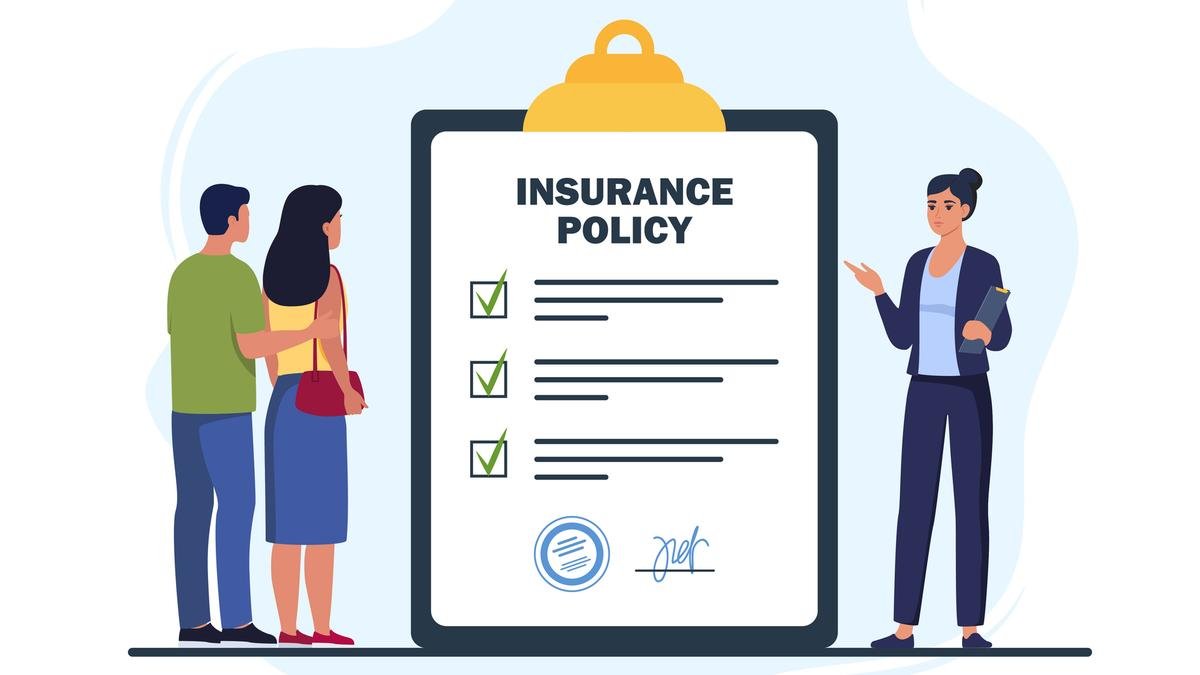
Did your insurance agent or the broker just say, “Sir, you just sign the proposal form; I will take care of filling it”? And did you say “yes”? It’s a wrong move.
If the intermediary, by mistake or deliberately, fills in erroneous information, you may still be the person answering for it. You signed the proposal form, and the consequences, logical or legal, can be yours.
It could be an error in your address or phone number or a pre-existing disease deliberately concealed to hasten or smooth policy issuance. You are the one who will live with the consequences. Your renewal notices may not reach you, or your claim could be rejected.
Basic caution
Drastic? No. It’s basic caution that you should read something related to a critical financial decision and outlay that you are going to sign.
The next time you take a life or health insurance policy, don’t go by the “leave the paperwork to us” pitch.
It’s your health, your life, your money and your family’s financial well-being. Give the paperwork the diligence it deserves.
Read it. Check it. Then, sign it.
Another error to avoid is going along with anyone who says, “Sir, we need not declare that you have high blood pressure in the proposal form. Policy will be delayed, or they will charge a higher premium…”
Both may be true.
Cost of concealment
However, every equation has two sides, and that is where simple money mathematics comes in.
A higher premium for the appropriate cover after you have made full disclosure is cheaper than a repudiated claim when you have spent a few lakhs at a hospital.
Then, there is simple time mathematics.
Any insurance policy is a commitment you make as part of your long-term life plans. The time you spend filling out or at least checking the proposal form before signing it is an investment of your time, not a waste of it.
Talk evaporates
In this case, the intermediary is telling you to make a false declaration of facts.
It may be a misguided move to help you and help himself, but the problem is that his advice is only oral.
That makes it very difficult to establish later if there is a dispute.
The same goes for oral marketing pitches stating what is covered, the terms and conditions of the policy or the returns on an insurance-and-investment product such as a unit-linked insurance policy.
What you are told may help you decide. What you sign and what the policy says may determine what happens later.
So, check that important assurances you were given are supported by the policy documents.
For example, if you are told there are no sub-limits in your policy, check the policy wordings. If you are told that some procedures are covered only after 24 months, read the list in the policy documents and confirm that it is indeed 24 and not 36 months.
If there is a discrepancy, raise it with your insurer and agent immediately. I am sure I don’t have to say ‘in writing’!
But what if you discover the problem only after the policy is in hand?
That is where the free-look period can give you a second opportunity to review your decision.
IRDAI regulations provide a 30-day free-look period for eligible life and health insurance policies, from receipt of the policy document. During this time you can review it. If you see discrepancies between what you heard and what you have got, if you have second thoughts about its suitability or your affordability or even if you have just changed your mind, you can make a written cancel request for the policy and get a refund subject to the rules.
The free-look cancellation is not a magic cure for every wrong decision or every instance of mis-selling. But it gives you a valuable window to read what you bought, compare it with what you thought you were buying and act if the two do not match.
Insurance is a product with enormous benefits. But when two parties to a contract don’t have the same level of information, trust can break down.
Which is why you, as a customer, have to be more diligent. What you are told may help you decide. What you sign and what the policy says may determine what happens later. Read. Check. And learn to read between the lines.
(The writer is a business journalist specialising in insurance & corporate history.)
Published – September 21, 2026 06:06 am IST