The key Government pre-budget document, the Summer Economic Statement, is due shortly and is likely to be published next Wednesday, after the Cabinet meeting. By outlining the parameters of the tax and spending measures it will give important indications for Budget 2027 and what it will mean for households. It will also, given the scale of demands, set up a big pre-budget battle within Government.
The Government will record a big surplus of revenue over spending this year – the forecast is €9 billion plus. And so on the face of it, the Government is well set for the budget.
But surpluses create political pressure. And the Irish Fiscal Advisory Council has calculated that, accounting for its estimate of the cost of maintaining State services at existing levels next year and the likely price of a public sector pay deal, there is little room for additional giveaways.
Not surprisingly, Ministers disagree, but this does illustrate the difficult trade-offs ahead. Here are the how the key decisions will affect your pocket.
The numbers to watch
The key figures in the Summer Economic Statement will be the size of the expected package and what the breakdown is between higher spending and lower taxation.

Will the State’s plan for the Carlton Cinema site revitalise O’Connell Street?
This will determine the “pitch” on which the budget debates will be played out in Government – and this is vital for the shape and extent of gains to households. Last October’s package was €9.4 billion and Minister for Finance Simon Harris has said this year’s will be at least as big. The breakdown last year was €8.1 billion in additional spending and €1.3 billion in taxes.
Harris has indicated he wants a bigger tax package this year, aimed particularly at income tax. The more that is spent on tax, the less is available for new spending in areas such as welfare increases.
Income tax
Clear indications have come from across Cabinet that there will be income tax relief in the budget, with Harris referring repeatedly to the need to help middle earners.
The clearest hint is that the level at which taxpayers enter the higher 40 per cent rate – currently €44,000 for a single person or €53,000 for a couple – will be increased, meaning more income will be taxed at the lower rate.
This figure was not changed in the 2026 budget, meaning that inflation leads to a slightly higher tax take as wages increase.
To keep pace with expected general inflation next year, the €44,000 limit would need to rise to about €45,300 – however, if it is also to be adjusted to account for this year’s inflation, it would need to rise to above €46,800 – or say €47,000 in round numbers.
[ Buoyant tax receipts provide cover for runaway State spendingOpens in new window ]
The Revenue Commissioners have still to publish their pre-budget estimates for 2027, but on the basis of the 2026 figures each €1,000 increase in the standard band costs the exchequer €230 million. And this will rise as other income tax tweaks are needed to ensure that those who don’t earn enough to benefit from the band extension get something.
In cash terms, each €1,000 increase in the band is worth €200 a year to someone earning enough to benefit fully. So say the band went up by €2,000 – as happened in Budget 2025 – it would be a €400 a year gain for a single person earning more than€46,000 or a married couple earning over €55,000.
For a dual-income couple, of course, the gains are greater and would double if both earn enough to fully benefit from the expected extension of the standard tax band.
The other tweaks, usually in the USC (universal social charge) or tax credits, which will be needed to help lower earners will also give some extra money to the middle ground and higher earners. Credits for specific groups, such as carers and renters, could also be pushed up further.
Changes in tax bands and credits could deliver €600 a year to a one-income household or close to twice that to many two-income homes. The question then is whether USC cuts, as happened in 2025, add further to the gains.
In that budget many single-income households gained €800 to €1,000 and many dual-income households gained €2,000 or more.
Energy questions
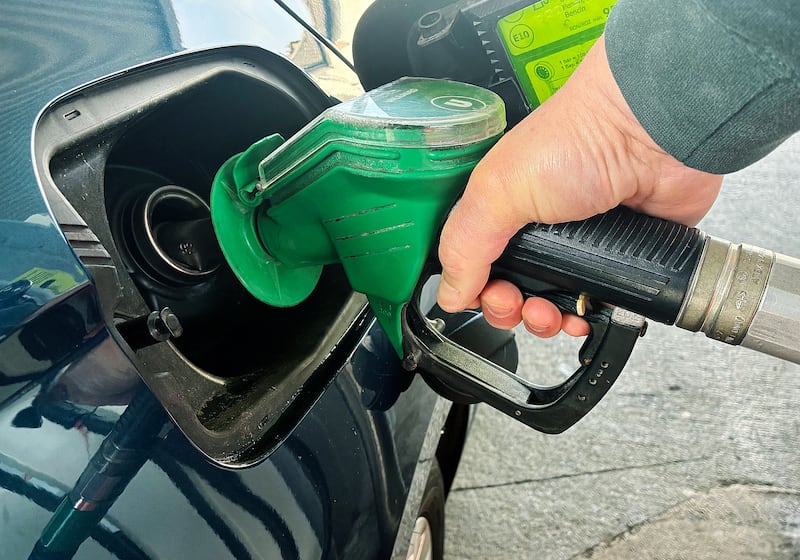
There are a few key things here to watch. The first is whether the excise cuts announced earlier this year, worth 27 cent on a litre of petrol and 32 cent on diesel, will definitely be phased out. The plan is to do so between September and December, though if fuel prices rise again this could come under pressure.
The Government also needs to decide whether it will proceed with planned carbon tax hikes next year, which would increase the price of fuels, but also raise some €120 million, some of it ring-fenced to help less well-off households and pay for environmental measures such as retrofitting.
So not doing so has wider budget fallout, as well as backtracking on a climate commitment. Decisions, decisions…
Inheritance promises
Taoiseach Micheál Martin and Ministers, as well as some backbenchers, have said they want to do something to help perceived areas of unfairness in relation to inheritance tax. Campaigners have focused in particular on the situation facing childless couples – and those who inherit from them who actually pay the tax.
A parent can leave €400,000 to a child with only amounts in excess of this liable to 33 per cent CAT. But when leaving an inheritance to another “blood relative” such as a niece or nephew, the tax-free amount is €40,000 while for cousins, close friends of neighbours it is €20,000. It looks like either or both of the lower allowances may be raised, though how far the Government will go is unclear.
[ Targeted supports more critical amid a gradual economic slowdownOpens in new window ]
The last time it raised all the thresholds was in the 2025 budget, when the category A threshold rose from €335,000 to €400,000 with the others also increasing, at a full-year cost of €88 million.
There are likely to be more changes in this October’s budget, with pressure from backbenchers in both main parties and from Independents, but the precise shape will be subject to last-minute haggling.
Buying a home
There are a few other points to watch on tax. One is whether the €500,000 limit for the Help-to-Buy Scheme is increased. The second is whether mortgage tax relief is extended for another year for those facing higher repayments. And, of course, there will be details of the new savings scheme promised by Harris and what tax reliefs it will offer to those who become involved.

Childcare crunch
New measures to help parents meet the cost of childcare are to come into force in September, including a new €183.70 cap on weekly full-time fees and an increase in the income threshold at which parents get subsidies. The question for Budget 2027 is: what happens after that?
The sector faces problems. Payments to providers are also rising but many complain that fees they must charge under the State scheme are uneconomic, with some withdrawing from it, leading to big hikes for parents. And then there is the programme for government promise to limit increases costs to €200 a month and a commitment to start moving towards this.
There are potentially big budgetary costs here, whatever direction the Government takes. The lack of provision in many less well-off areas is also an issue and has led to demands from bodies such as the trade union body ICTU for the State to take a bigger role in provision.
The Government will commit to more funding, but the question is whether it will outline additional supports for parents or promise that these are on the way.
Welfare
This is the big area of additional spending for budget day and there will be trade-offs here over cash with the size of the tax package. There was a €10-a-week rise in general welfare payments last year. This would seem to be a baseline for 2027. Social Justice Ireland, the campaign group, has called for a €15-a-week increase.
The political decision is likely to be whether to stick to €10 or go a bit higher – and whether to introduce the increase across all the main welfare payments or differentiate, for example, by a lesser increase for jobless benefits.
Households have benefited from energy credits in recent years, though these were discontinued in the last budget. The Government is resisting calls for another round this year – it will probably stick to this unless energy prices surge again.

However, there will be targeted measures on fuel allowances and supports for less well-off households. And there is discussion of a general response to cost-of-living pressures that could see hikes in areas such as the working family payment, paid to lower and some middle-income households.
A key welfare measure looks set to be a new support for disabled people involving a payment to help them meet additional costs in areas such as health, education, housing, energy and transport.
There was controversy after lump sum payments to disabled people were ended in last year’s budget. Taoiseach Micheál Martin said this week that a “groundbreaking” move would be signalled in the budget in this area. Although there have been extensive consultations on this, the precise shape of the measure remains unclear.
However, talk of a new level of child benefit payment to lower-income households has again been put on the long finger. The focus may instead be on increasing welfare payments to those with children by an additional amount.
Work by the Economic and Social Research Institute has said that the second level of payment – also payable to lower-income people outside the welfare system – would be the best way to tackle child poverty. But Government officials have pointed to the administrative complications.