Picture the scene. You’ve graduated from university with a five-figure pile of debt, battled your way into an extremely competitive graduate job and spent years laboriously climbing the career ladder.
After doing everything expected of you, your reward is a salary of £150,000 – and the tax bill to go with it.
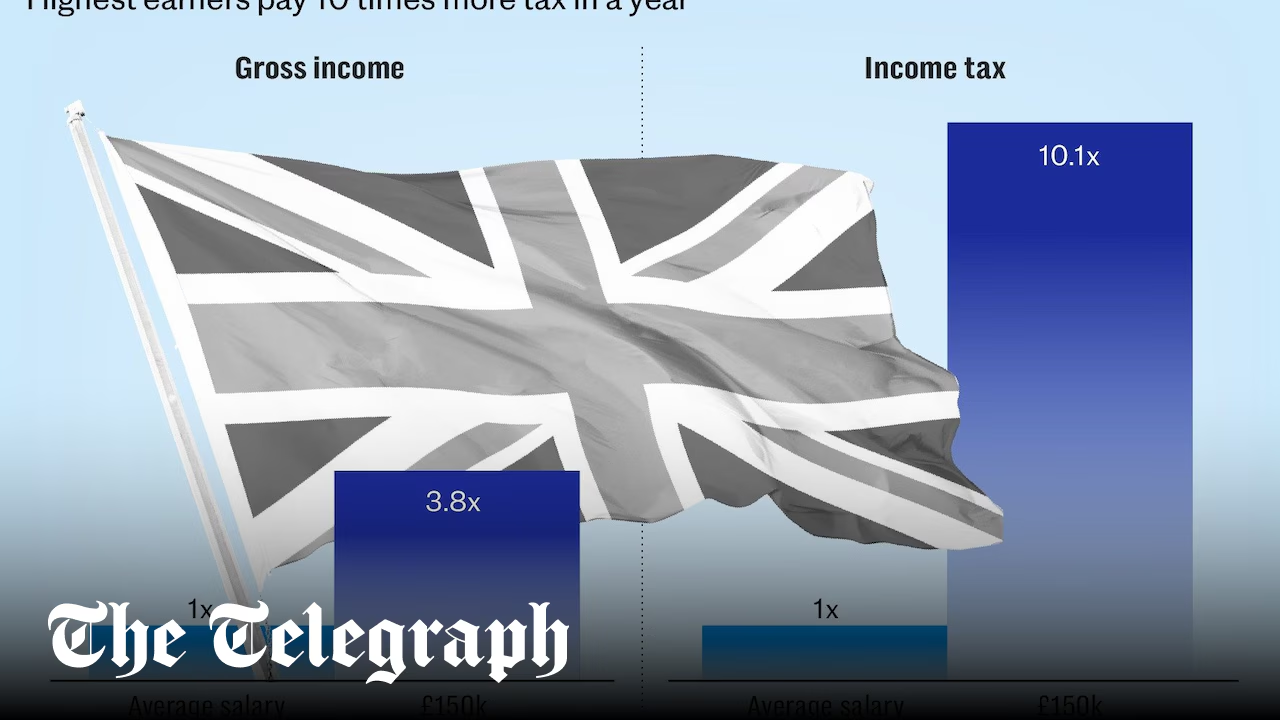
A worker earning £150,000 a year in Britain today will pay the same amount of income tax in just four years as an average earner will during their entire working life, an analysis by wealth management firm Rathbones has found.
In a single year, the £150,000-earner will shell out more than £53,000 in income tax, 10 times more than a worker on the median salary of £39,039.
The figures lay bare the extent of Britain’s reliance on a relatively small pool of high achievers to pay the nation’s bills. The top 10pc of income taxpayers today contribute close to 60pc of receipts, while the top 1pc pays 27pc of the total.
It means that high earners are caught in a tax system that skews incentives, punishes progress and discourages hard work.
The £100k tax trap
Over the centuries, income tax has morphed from a temporary levy into a revenue-raising juggernaut. It was first introduced in 1799 to fund the Napoleonic Wars, raising £6m in its first year. It was reinstated in 1842 and has been paid every year since.
Before the early 20th century, less than one million taxpayers paid it, and it only affected the wealthiest.
Then, in 1944, the Pay As You Earn (PAYE) system was born and income tax began to be removed from workers’ wages before they were paid. Some 15 million workers earning at least £100 were given a tax code.
Fast forward to today and, in the last tax year, 40 million people were expected to pay income tax, generating £320bn for the Treasury.
The progressive income tax system is designed so that those earning more pay a higher share of their salary, on the assumption that they can afford to do so.
But one of the major flaws in the system kicks in once a salary hits six figures. The 800,000 taxpayers earning more than £100,000 gradually lose their tax-free allowance as their income rises, until it disappears completely. This means that between £100,000 and £125,140, they are hit with an effective tax rate of 62pc, when National Insurance is also taken into account.