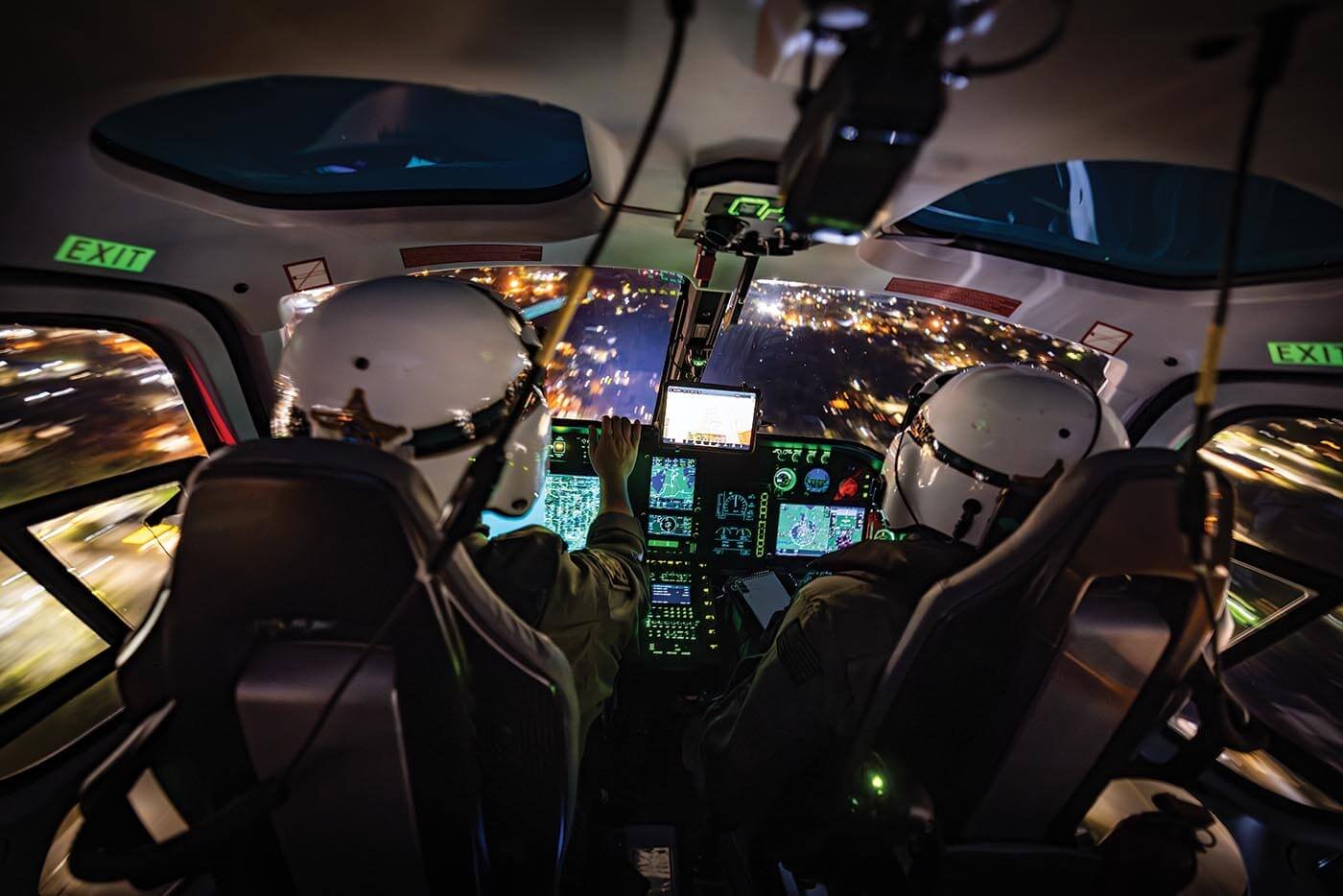
Not long ago, tactical flight officers (TFOs) in law enforcement aviation relied on little more than a paper map book, gyro-stabilized binoculars, and the unmistakable glow of a Spectrolab Nightsun searchlight to get the job done.
Today, that world has been transformed. Rapid advances in aviation, sensors, mapping, and communications technology have dramatically reduced the cognitive and physical workload placed on TFOs, while simultaneously expanding situational awareness and operational effectiveness.
These innovations have also reshaped how new TFOs are trained, shifting the focus from basic navigation and tactical skills in the cockpit to mastery of complex, integrated systems.
To explore this evolution, insights were gathered from five highly experienced TFO trainers who have lived through the technological transformation firsthand. Each has served both as a TFO and as an instructor during this period of change.
All have experienced the challenges of operating with paper map books — including the risk of loose pages disappearing out an aircraft door — as well as the operational advantages introduced by modern tools such as FLIR, downlink, advanced mapping systems, night vision goggles, and sophisticated radio suites.
Across these discussions, consistent themes emerged alongside distinct perspectives shaped by different operational environments. A recurring use of sports analogies to describe TFO training further underscored the shared philosophies surrounding skill development and proficiency.
Fundamentals before technology
One trainer who has observed this evolution firsthand is Cpl. Curtis Brassington, a TFO supervisor with the Royal Canadian Mounted Police (RCMP).
“New tactical flight officers expect the technology to do the work for them. That is certainly not true,” he explained. “The initial training has not changed. We start from scratch and then add the camera and other technology.”
His goal is to ensure TFOs never develop an overreliance on equipment. To that end, Brassington employs a deliberate, layered approach to training: as a TFO masters one core skill, another piece of technology is introduced. The intent is to build competence without overwhelming the student.
As he puts it, “It’s like teaching a golf swing. You don’t tell the student to simply do these five things, and the swing will be good. You work on the five elements one at a time — stance, grip, elbow bend, hip turn, follow-through — and eventually the swing comes together.”
Despite the sophistication of today’s cockpits, Brassington is adamant that fundamentals still matter. Basic map book skills are still taught — not out of nostalgia, but realism. Technology can, and occasionally does, fail, even if those failures are now rare. That balance, he said, cuts both ways. “In some ways, it makes training harder but the job easier.”
When asked which technological advancement has made the biggest impact, Brassington doesn’t hesitate to point to the Shotover mapping system. Given the vast geographic areas covered by the RCMP, he called it a “game-changer,” especially when enhanced by ATAK blue force tracking overlays. But with those gains comes responsibility.
“More tech, more training,” Brassington emphasized, adding that as technology continues to advance, agencies must be willing to invest in training accordingly. In his view, the TFO role is a professional discipline that demands expertise, continuity, and focus — and should be treated as a full-time position.
Training through data and repetition
Sgt. Nick Minx of the San Diego Police Department also brings a training perspective informed by his work as the owner of Tactical Flying. In his view, the most significant change over the years has not been a single piece of hardware, but the sheer volume of data now available to TFOs — both in the cockpit and back at the hangar.
San Diego has recorded its calls for service for more than 25 years and maintains a video library of thousands of missions. That archive has become a cornerstone of modern training.
As Minx puts it, when training new TFOs, “If you are not flying, you are watching videos.” This exposure allows new TFOs to learn how to properly frame a camera on an incident or individual, refine communication skills, and understand decision-making in dynamic environments.
Watching these recordings, Minx explained, is like experiencing “real life,” compressing years of exposure into a much shorter learning curve.
That emphasis on data expanded significantly during the covid pandemic, when Minx developed an online Tactical Flying course to offer remote training. Leveraging years of studying hundreds of mission videos and real-world experience, he produced actionable insights on foot pursuits, perimeter operations, vehicle pursuits, and suspects attempting to hide. That analysis now informs how he teaches TFOs to “search with a strategy,” rather than relying on luck or instinct alone.
The result is meaningful repetition without the aircraft ever leaving the ground. New TFOs can get valuable “reps without being in the cockpit,” whether by studying video or powering up a sensor on the ground. Minx compares it to endurance training: “It’s like training for a marathon — you’ve got to run. No shortcuts.”
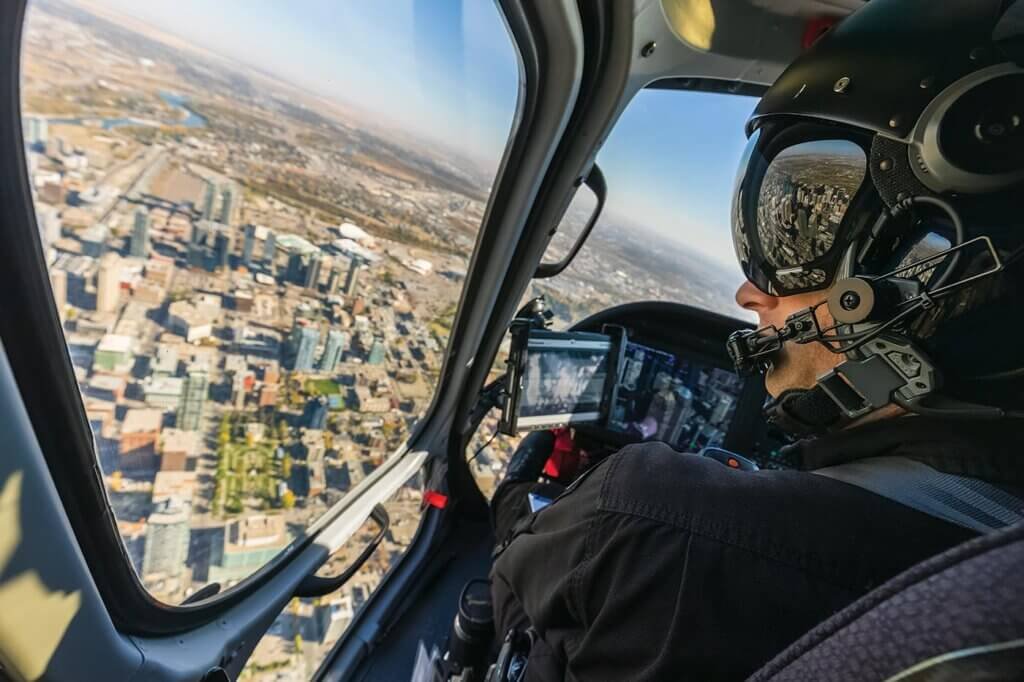
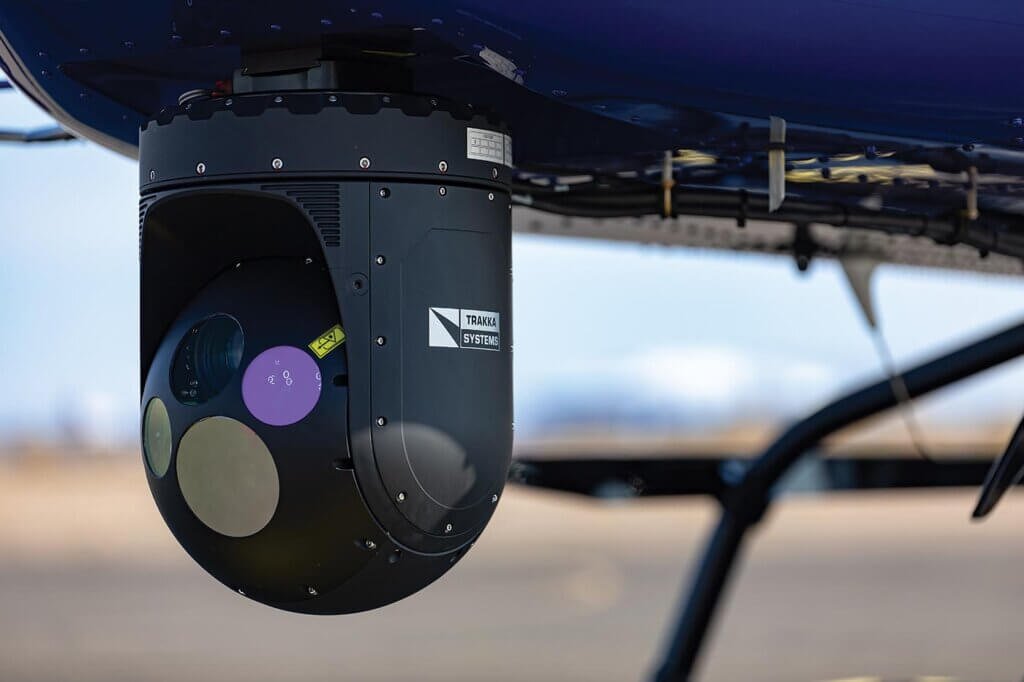
When asked which technology has had the greatest impact on both the job and training, Minx points to the airborne sensor. Once a TFO masters the fundamentals of sensor operation, the workload inside the cockpit decreases, freeing cognitive capacity to manage tasks outside the aircraft, such as directing ground units. Modern sensors — with vastly improved geo-pointing, stabilization, and resolution — have fundamentally changed how TFOs operate. Those same improvements have also reshaped how they are trained.
According to Minx, “The job has become more complex, but it makes the harder job easier to learn.” He likens the shift to completing an entire home purchase and mortgage on a smartphone with e-signatures — still complex, but far more accessible than it once was.
The right human in the seat
Mike Calhoun, a retired pilot with the Riverside County Sheriff’s Office Aviation Unit and author of Training Through Chaos, reflects on an earlier era of TFO operations, when bulky map books were standard and access to a “moving map” was a capability earned through experience and trust.
Today, systems like Shotover have fundamentally changed that aspect of the TFO’s workload, transforming navigation and target management into a far more integrated process.
Calhoun highlights the value of the Shotover simulator in this evolution, which allows new TFOs to learn keystrokes, menus, and system logic before ever stepping into the aircraft. Training now incorporates structured scenarios, and while the technology can initially seem overwhelming, Calhoun noted, “the younger generation picks up on it very quickly.” The results are evident in flight. “The situational awareness challenge is still there,” he explained, “but functionality was easy.”
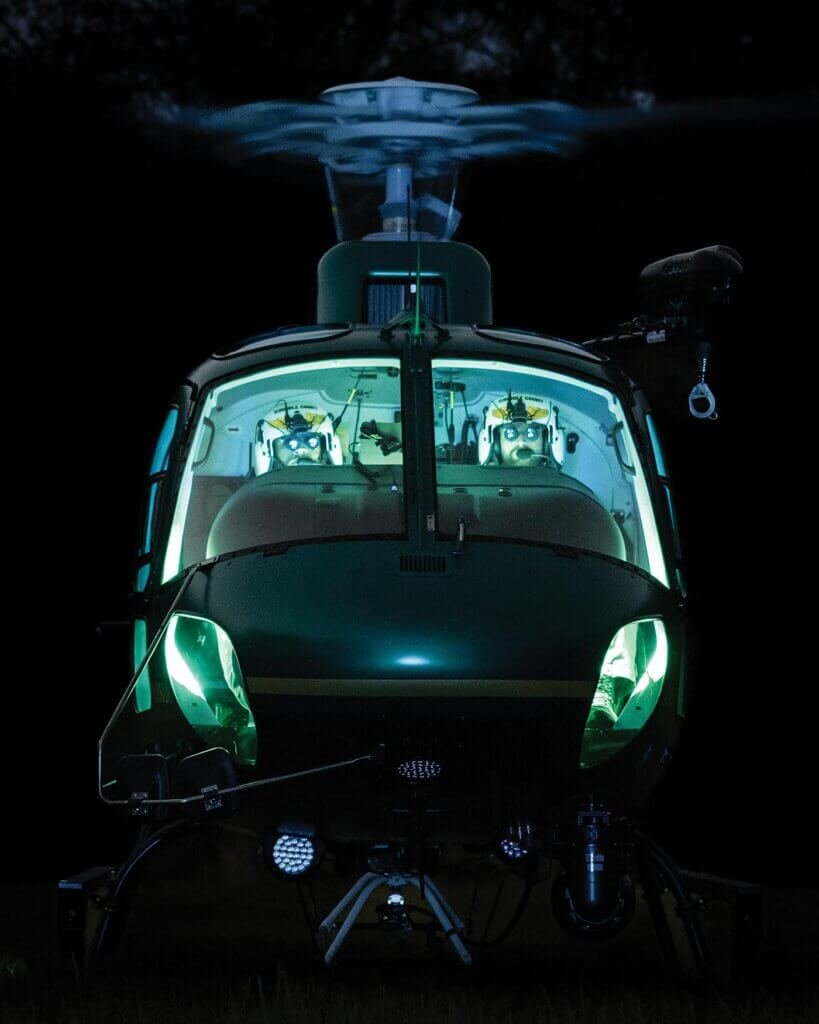
When asked which piece of equipment has been truly game-changing, Calhoun approaches the question from a search-and-rescue perspective. For him, the answer is white phosphor night vision goggles for both pilot and crew.
He described the experience as “like watching a black-and-white HD TV,” noting that the improvement in clarity enhances safety, increases mission effectiveness, and produces zero eye fatigue. He is quick to add, however, that modern mapping systems with layered overlays have also had a profound impact.
In an area as vast as Riverside County — spanning more than 7,200 square miles (18,650 square kilometers) — these tools dramatically increase situational awareness and make operating across such a large geographic area far more efficient.
Despite these technological advances, Calhoun is clear that the core of the TFO job remains unchanged: it still demands the right human being in the seat. TFOs must be assertive, capable of taking charge, and comfortable making critical decisions when lives are on the line.
The selection process still requires candidates to demonstrate strong communication skills through a rigorous interview and, ideally, some form of flight evaluation. Even highly experienced patrol officers — with 20 years on the street — can struggle with the complexity and pace of the role.
As Calhoun puts it, “It’s like a superstar, award-winning quarterback in college getting to the NFL and not succeeding because of the speed of the game.” The TFO role is not suited to every candidate, and even highly capable patrol officers can struggle when placed in the TFO seat.
Fundamentals under pressure
Lt. Clay Lacey of the Texas Department of Public Safety Aviation Operations Division brings a uniquely comprehensive perspective, having served as a pilot, TFO, and TFO trainer.
Over the course of his career, he has instructed aircrews around the world in aviation tactics and mission equipment, and his experience spans the full spectrum of law enforcement aviation — from binoculars and paper maps to some of the most technologically sophisticated cockpits in modern policing.
With that perspective, Lacey offers a measured caution about the rapid growth of technology in the aircraft. “There can be a negative side of the enhanced technology in the cockpit, and that is simply being overly dependent on tech and mission equipment,” he said.
The volume of data now flowing into the cockpit has increased dramatically, and while entering an address into a mapping system is fast and efficient, real-world operations are rarely static. Locations shift, suspects move, and situations evolve in seconds.
In those moments, there may not be time to punch in a new location. Lacey stresses the importance of foundational skills, questioning whether a TFO can still get the job done using what they’ve learned when technology lags behind the pace of the call. Sometimes, he noted, something as simple as writing information on a kneeboard instead of going straight to a keyboard can make the difference.
Lacey also coaches football and encourages linemen to wear a wristband marked “AAT” — Alignment, Assignment, Technique — as a constant reminder to return to fundamentals. The same concept applies to TFOs, he said, by following the “steps” or the “list” when handling a call, even amid chaos.
Lacey is careful to point out that he is not “anti-tech.” Instead, he believes a solid understanding of basic map and navigation skills still comes into play on a nightly basis. When asked which technological advancement has had the greatest impact on the TFO role, Lacey points squarely to sensor improvements.
Having started on a FLIR 2000 system in 1999, he has witnessed firsthand the dramatic gains in image resolution, geo-stabilization, and the integration of sensors with mapping systems. Those improvements, he said, have significantly increased situational awareness, reduced workload, and enhanced tactical insight.
Ultimately, Lacey emphasizes balance. “TFOs need to find the right balance between tech and human information,” he said. “That combination must always be based on the core mission of stay safe and find the bad guy.”
Decision-making in a digital cockpit
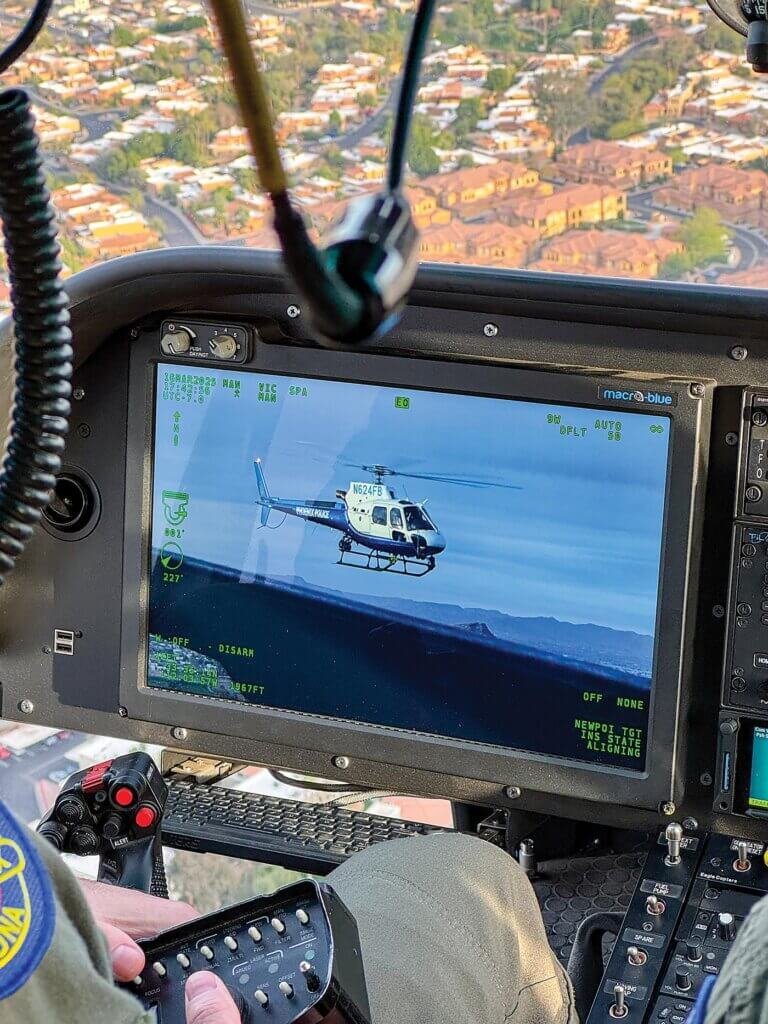
As unit sergeant and chief pilot for the San Diego Police Department, Sgt. Matthew Zdunich brings a measured perspective on how technology has shaped both the TFO role and the way TFOs are trained. Drawing on his experience as a TFO and later as a TFO trainer, he recalls the transition from the Teledyne FLIR 8500 to the FLIR 380-HDC.
“For the TFO, the new sensors are easier to use,” Zdunich explained, “but as a trainer, I am always concerned that I might be missing something on the human side. Are the cop fundamentals still there? Is the technology masking a deficiency?” It’s a question that resonates across modern aviation units and one that deserves careful consideration.
There is no doubt that today’s sensor quality and image clarity have transformed the way TFOs operate. Zdunich pointed out that “painting the picture” for ground units is now far easier than it once was. The era of trying to interpret a vague white heat “blob” is largely gone. Modern sensors allow TFOs to direct officers to precise locations using integrated mapping interfaces.
Yet, despite these advances, Zdunich believes the greatest challenges in training remain unchanged: decision-making and communication. No matter how advanced the cockpit becomes, he emphasizes that “the voice over the air is the only product offered in real time.”
Technology may support the mission, but it cannot replace sound judgment, clear direction, or the ability to think like a cop. As Zdunich succinctly puts it, TFOs must be proficient with the equipment — but never forget to “be a cop.” He believes in getting reps, “just like batting practice prepares you to be ready.”
When asked which piece of technology has had the greatest impact, Zdunich immediately points to the digital video recorder. Much like Sgt. Minx, he cannot overstate the value of an extensive video library.
“New TFOs are able to see the progression of senior TFOs, as well as their own improvements,” he explained. “I want them to witness my mistakes, learn from them, and improve.”
When asked how many of those recordings he has watched over the years, Zdunich answers simply, “Almost all of them.” That archive, he said, remains one of the most powerful training tools available to any TFO unit.
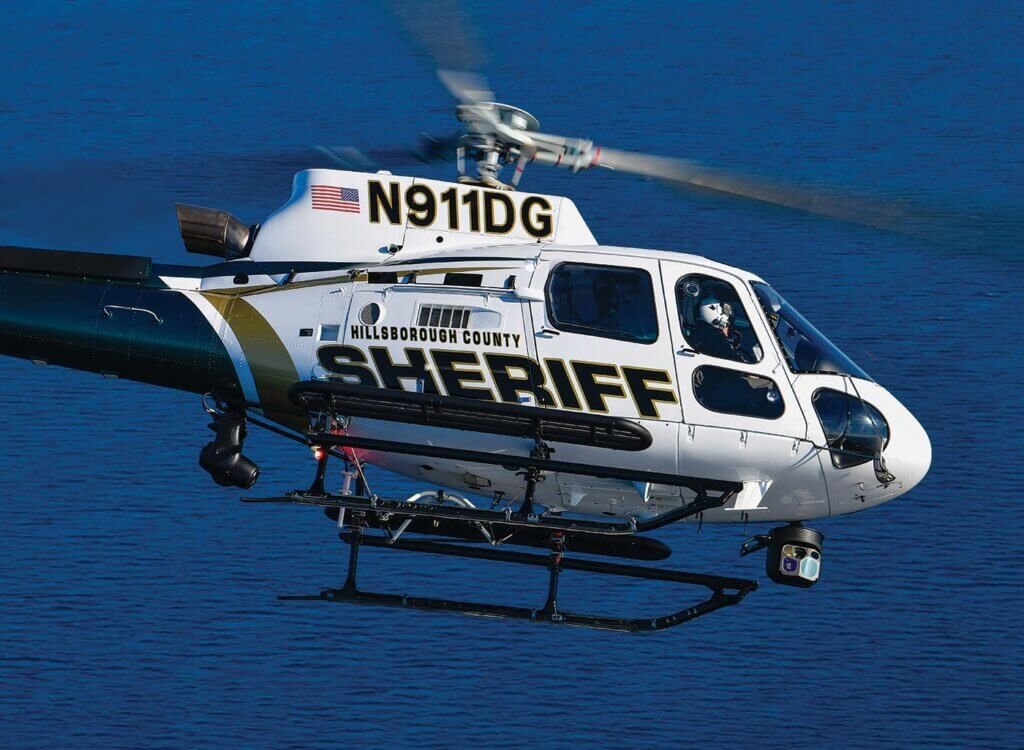
Taken together, the perspectives of these five subject matter experts paint a clear and consistent picture. While technology has transformed the TFO’s cockpit and reshaped how TFOs are trained, it has not replaced the human element — it has simply changed how that human performs the job.
Each expert, from different agencies and operational environments, emphasized that judgment, communication, decision-making, and foundational skills remain the true drivers of mission success.
Sensors, mapping systems, video libraries, and data integration may reduce workload and increase situational awareness, but they cannot think, prioritize, or lead. At the end of every call, it is still the human in the seat who ensures the mission is completed effectively and, most importantly, safely.