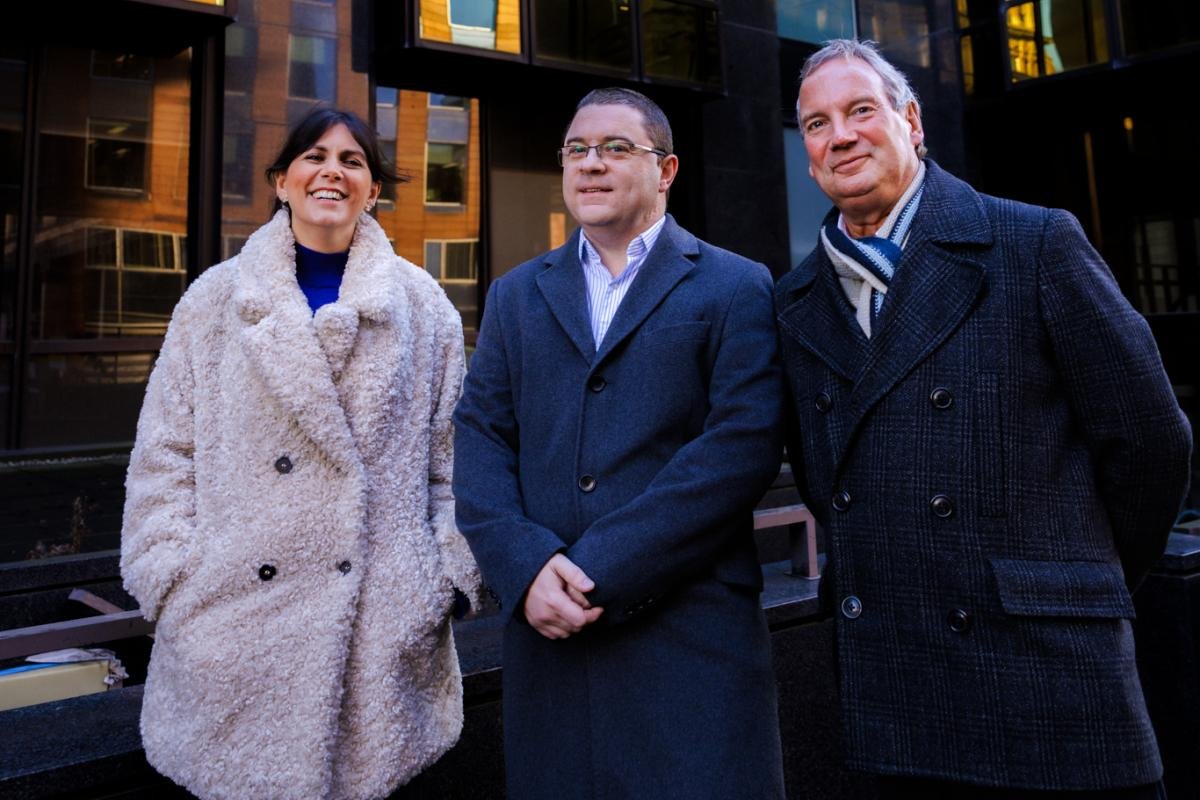
Launched amid the uncertainty of the Covid pandemic, Glasgow-based Spectrum Wealth Group has grown into a trusted, client-first firm that is helping a new generation rethink their finances, retirement, and long-term wealth planning
Starting a business in the middle of a worldwide pandemic is not for the faint hearted – but the team at Spectrum Wealth Group believe it was the best thing they could have done.
“It was probably one of the best times that you could start a company because we were able to solely focus on that,” co-founder and managing director Nadeen Watson said.
“I’m just really proud of what we’ve accomplished over the last five years; the team that we’ve built and the amazing clients that have supported us and continue to support us.”
Her cofounder Paul McFadyen agrees that Covid changed many people’s mindset in relation to their finances.
“It was a big upheaval for many people and it focussed people’s minds,” he said.
“They realised life’s too short just to think about work. We find that people are coming to us at a younger and younger age thinking, what does my retirement plan look like? Can I afford to retire? What do I do with the rest of my life? Maybe because they’ve seen friends or family members have bad experiences, maybe they realise that your life expectancy might not be what you assume it is and they really want to make the most of their money and the time that they have.”
Spectrum Wealth Group, based on West George Street in Glasgow, has grown to a team of 15 with expertise in all areas of wealth management from individual risk assessments and cashflow modelling to research and detailed analysis to allow people to make the right plans for their future.
Two years into the business Nadeen’s father, Alistair Creevy, joined the company as a director, bringing years of experience and a strong network to the growing enterprise.
“Previously we all worked together at a national firm and we could see quite clearly it wasn’t working because they didn’t have the same focus on doing the right thing for people and their families,” he said.
“It was a really brave move when Nadeen and Paul decided to set up their own business. I wasn’t too sure how it was going to work out, but I’ve thoroughly enjoyed the three years, seeing them develop the business, recruit, retain, and bring in some high quality individuals. I think we all work well together and it’s a really good team.”
With the shared experience at a large corporate institution, the founders were clear they were building something different, with a strong focus on the relationships they build with clients.
“Smaller is better,” Nadeen said.
“Just being able to get involved in the things that we’re passionate about, like really getting close to our clients, putting on good events and using good marketing, that’s what’s important to us as individuals.”
Paul added that sometimes the focus for wealth managers is on sales and that made him uncomfortable in previous roles.
“To an extent, a sales focus is good because you get to understand the products and you get to talk to people,” he said. “But there’s an element in a big company of it all being about how much money you can make, rather than doing the right thing and really looking after people for the long term and building relationships.”
Nadeen said building trust with clients is crucial, especially when world events are worrying and clients need reassurance that their financial plan will hold.
“You can really help them, to offer peace of mind, especially when we’re going through quite a tricky economic time at the moment,” she said.
“There’s a lot of information in the news that can create a lot of panic. Because we’ve built that trust over a long period of time, they know they can always talk to us.”
Often Spectrum recommends bringing other family members into discussions, as that can really build the clarity and trust around the financial planning around generational wealth. “It’s becoming more and more important because of changes to inheritance tax planning,” Paul added.
“So we speak to our clients who are building up their wealth, perhaps inheriting from elderly parents, but also we speak to the next generation about what their plan looks like, so that we can all understand the most efficient way for money to pass down through a family.”
“Basically people want to know if they have enough money to do the things that they want to do, whether world events affect that and is the news actually that bad? These questions can easily be answered, through tools like cash flow modelling, but it’s also about sticking to the plan.”
Although the team admits it is often human nature to only take action when triggered by a life event, the nature of retirement is changing. Rarely do people have a hard stop at retirement age, often they go part time or take on different types of work.
“Retirement can be very long and boring for some people, and people tell us that,” Paul joked.
“We all have bad days at work, but if we can show you a plan that means you don’t need to go to work anymore, you’re at work voluntarily, your bad day might not seem quite so bad anymore.”