
Read our Monthly Magazine
And support our mission to provide fearless stories about and outside the media system
It is almost poetic. This week, it was announced that the construction of a mega-solar project with a cumulative capacity of 2.1GW had been completed. It’s on the site of former coal mines, and will provide enough energy to power around 1.5 million homes.
What once powered communities through fossil fuels – an extremely slow and toxic form of solar power, in a way (the fossilised plant matter was, after all, given life by the sun) – will now utilise the sun directly. The public – via the Government – is the majority shareholder.
The only problem for Brits: it’s in Greece.
When I shared the story, it got a lot of interest. And some understandable jealousy. “Why can’t the UK do this?” was one person’s rather representative reply.
As it turns out, we are. But you probably won’t have heard of many of the projects. I don’t know why. But each of them are inspiring in their own ways. I’ve been researching where renewable projects are being built on former industrial heartlands, and giving them new life.
ENJOYING THIS ARTICLE? HELP US TO PRODUCE MORE
Receive the monthly Byline Times newspaper and help to support fearless, independent journalism that breaks stories, shapes the agenda and holds power to account.
We’re not funded by a billionaire oligarch or an offshore hedge-fund. We rely on our readers to fund our journalism. If you like what we do, please subscribe.
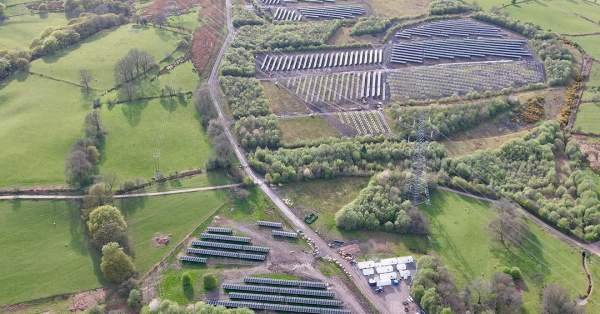
Coed-Ely Solar Farm, Rhondda Cynon Taf, Wales
Built on a reclaimed 84-acre colliery tip, a solar farm in Rhondda is now switched on and supplying electricity directly to the Royal Glamorgan Hospital via a dedicated power line. The hospital board tells me it will fully power their operations on the sunniest days, and 15% of their energy use across the year. Panels were fully installed by Earth Day, 22 April 2025, just a few months after construction began. By October, it was fully operational.
A spokesperson for the hospital tells me: “By sourcing electricity through this project the hospital benefits from greater cost certainty and reduced exposure to volatile energy markets, helping to deliver ongoing financial savings and allowing saved resources to be focused on patient care.”
Gateshead Mine Water Heat Network, Tyne & Wear, England
Gateshead Energy Company – owned by the council – uses water heated underground in the mines to power thousands of homes. It’s been operational since March 2023 and is the largest project of its kind in the UK.
Mine water, at 15 degrees C, is taken from drilled boreholes and passed through a heat exchanger which transfers heat, via a heat pump, into a network of underground pipes that supply hot water at 80 degrees C to over 350 homes and more than 25 buildings – including Gateshead College, the Glasshouse and the Baltic Centre for Contemporary Art. There are plans to expand to 270 more private homes, a conference centre and a hotel.
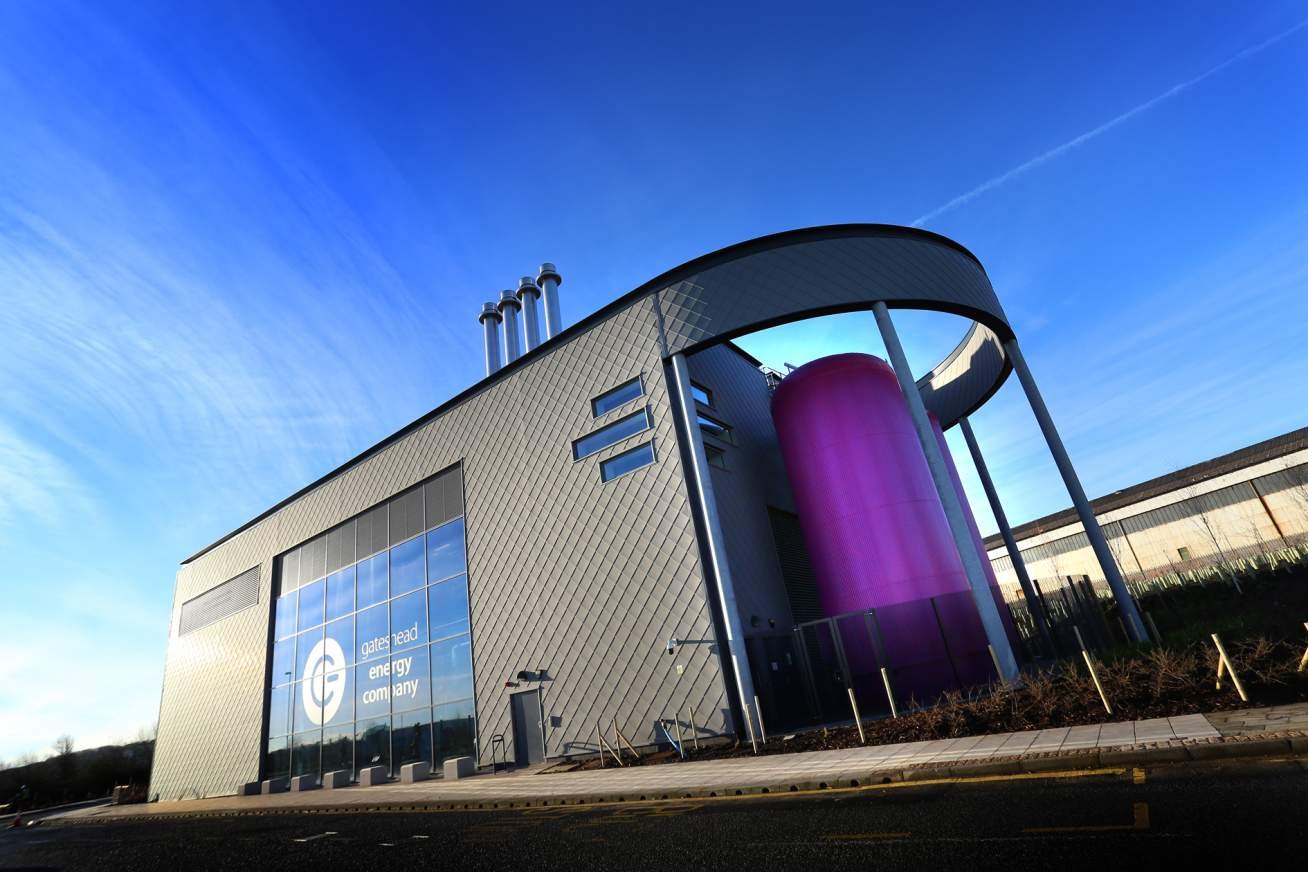
A spokesperson told Byline Times: “Our prices are guaranteed to be 5% minimum below market prices…[It’s] also very reliable and efficient, and the tariff means customers are protected from big spikes in their energy bills that tend to happen when you are wedded to volatile international energy markets.” The solar park next to the heat pump building also means the machinery itself runs on 100% sustainable energy for several months of the year.
Miners from Poland visited last July to look at what could be done with former coal sites, and seemed inspired by the idea.
Lindsay Mine, Carmarthenshire, Wales
A mine water heat scheme became operational in March 2025, harnessing previously untapped heat from a mine water treatment scheme near Ammanford to provide low-carbon heating for a nearby business.
A spokesperson said: “Wales, with its industrial heritage and coal mining past, has recognised the potential of mine water heat, through its Heat Strategy for Wales, as a viable option to support a just transition to renewables.”
Black Law Wind Farm, Forth, Scotland
Across 1,850 hectares of abandoned coal mine land, 88 wind turbines are generating vast amounts of wind power in South Lanarkshire. The site is an old opencast coalmine, much of which has been restored to shallow wetlands. It’s been operational since 2005 — one of the first renewable projects of its kind on ex-mining land.
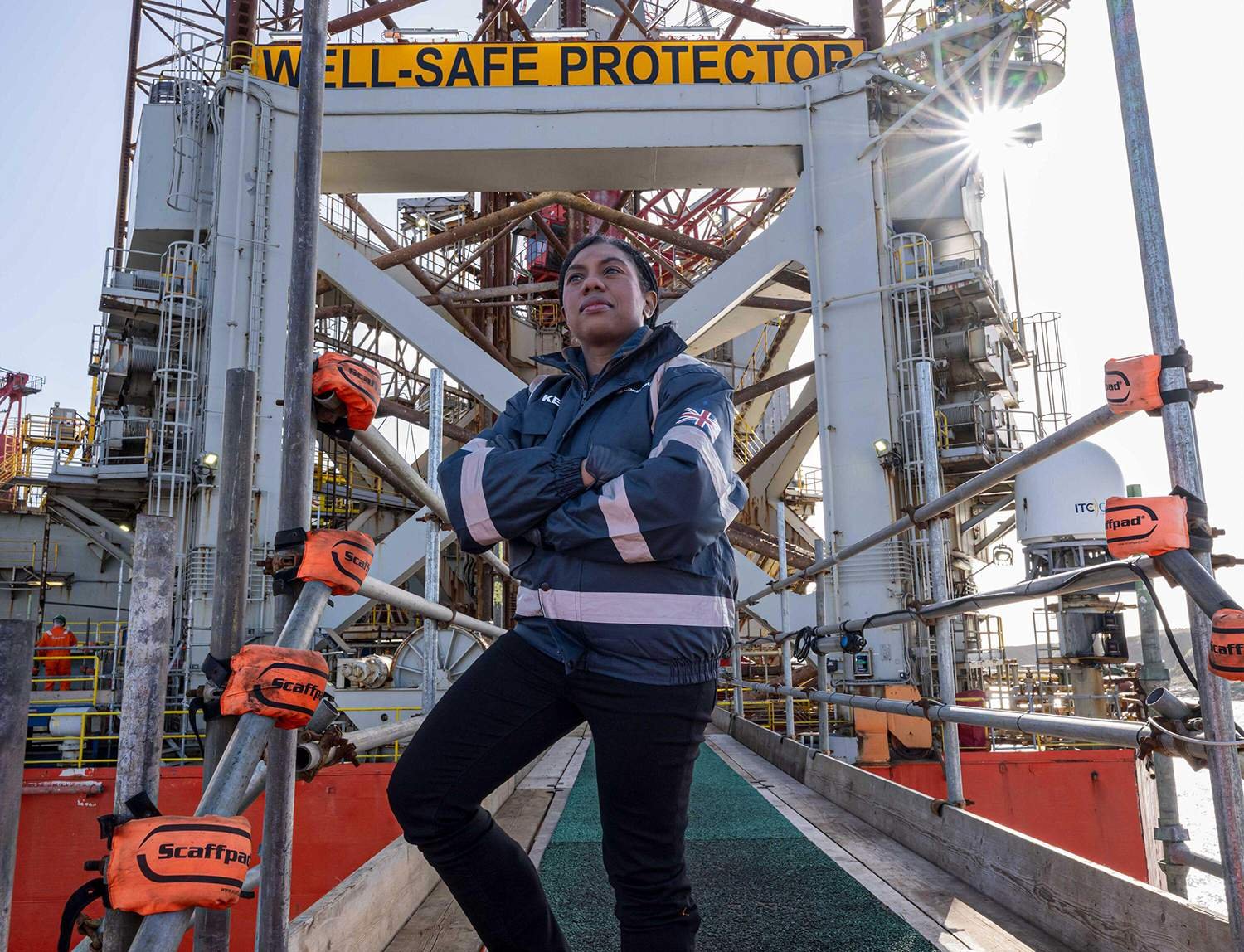
The Conservative party, which calls the Government’s plans for replacing fossil fuels with renewable energy “crazy” has also taken millions of pounds from funders and directors of anti-Net Zero lobby groups
Adam Bienkov
Oakdale Wind Energy, South Wales
A 4MW wind farm at the old Oakdale Colliery in South Wales provides about 10GWh a year and annual carbon savings of around 4,400 tonnes. The two 130m turbines sit over Oakdale Colliery, which closed in 1989, and can power 2,400 homes. Another public-sector led reclamation project, and a success by all accounts.
Welbeck Colliery, Nottinghamshire, England
A 30MW solar portfolio now sits on the site of five former collieries — your archetypal brownfield land. Developer Anesco says the installations will generate enough low-carbon energy to power around 9,000 homes while saving up to 14,000 tonnes of carbon per year. Welbeck was the first site to come online in 2014, covering almost 32 acres with 44,160 solar panels.
Lochhead Open-Cast Mine, Dunfermline, Scotland
Now home to a 100-acre site of 80,000 solar panels and a large battery storage system, it’s ready to power the equivalent of 15,000 homes per year. A second site at Cullerlie near Aberdeen uses 26,000 panels across almost 50 acres. Together they will deliver renewable energy equivalent to 20,000 homes annually. The Dunfermline project is going through final commissioning — seemingly another victim of Britain’s grid bottlenecks — but is already generating some energy. I’m told they’ll move to “100% of forecast capacity shortly” once the paperwork is signed off.

The Reform leader’s pledge to restart Welsh blast furnaces ignores the practical realities of flooded pits, collapsed infrastructure – and the actual wishes of working people, argues Josiah Mortimer
Josiah Mortimer
Williamthorpe Colliery Solar Farm, Chesterfield, England
Funded by a £700,000 grant from GB Energy’s Mayoral Renewables Fund, around 14,000 ground-mounted panels are due for completion in “Spring 2026”. So hopefully very soon.
The 2MW solar farm will be council-owned. The former coal mine has been shuttered since 1970 and is now a nature reserve — soon it will provide renewable energy too, powering over 700 homes annually and saving the council more than £3m over the project’s lifetime. GB Energy officials tell me its the only ex-colliery project they’re supporting right now. At any rate, others are doing it without the need for public funds.
Holme Hall Quarry, Maltby, England
A planning application for a solar park at Holme Hall Quarry was submitted to Doncaster and Rotherham councils in August last year. Backers Infinis tell me they are hopeful of a decision in the coming months. “If approved, we would aim to begin construction shortly afterwards,” which would likely take 12–18 months. Once complete, it would power approximately 5,500 homes each year.
“For decades, coal mines like this powered industry and local communities. Today, those same sites can support a cleaner, more secure energy system,” an Infinis representative tells me.
Solar sites typically require smaller permanent teams once operational – there will not be thousands of jobs in this directly. But the firm already operates a Captured Mineral Methane (CMM) facility at the former colliery, which provides more employment.

A Conservative Member of Parliament and KC is helping a coal mining firm to sue the British Government in a controversial international court
Olly Haynes
Seaham Solar, County Durham, England
A proposed solar park near the former Dawdon Colliery would power approximately 11,000 homes each year and displace around 19,000 tonnes of carbon annually. It includes a voluntary community benefit fund of £20,000 per year over its 40-year lifetime. The application is awaiting a decision from Durham County Council and Sunderland City Council. “Subject to approval, construction is expected to take around 12 months, with first electricity generation targeted in 2027.”
Also worth watching: new solar farms in Northumberland were set to power 30,000 homes, with the Bedlington site on a former open-cast coal mine and the Blyth site over former coal seams.
And in January 2024, then Mayor of the West of England Dan Norris announced a £1.6 million study to explore whether flooded coal mines across Somerset and South Gloucestershire — more than 100 of them — could heat over 100,000 homes via mine water heat networks. Unfortunately, Norris was arrested in April 2025 and stood down, and we are trying to find out whether this project is still live.
Top Tips
Former mine sites – and the waste tips that so often accompany them – can make pretty perfect locations for solar energy generation. The areas covered are huge and exposed. You can plonk turbines on top of spoil tips for increased elevation and wind exposure. And still use the land underneath for other purposes.
Crucially, many sites already have the essential infrastructure — transmission lines and roads — reducing development costs.
But really, the political and moral dimensions feel most significant. The projects offer economic renewal to communities still bearing the scars of deindustrialisation. And they give us that pulse of power we all need right now: hope.
Got a story? Get in touch in confidence on josiah@bylinetimes.com
holding farage to account #reformUNCOVERED
While most the rest of the media seems to happy to give the handful of Reform MPs undue prominence, Byline Times is committed to tracking the activities of Nigel Farage’s party when actually in power
 Subscribers Get More from JOSIAH
Josiah Mortimer also writes the On the Ground column, exclusive to the print edition of Byline Times.
So for more from him…