As Thai high-net-worth (HNW) families become more international in how they hold assets, educate their children, and think about succession, wealth structuring is becoming more complex and more individual. The old approach of treating offshore planning as a separate technical exercise is becoming harder to sustain. Families now face a wider mix of tax residency issues, asset location questions, succession pressures, and next-generation readiness concerns. In that environment, the real challenge is no longer simply choosing the right vehicle, but understanding what problem the family is actually trying to solve.
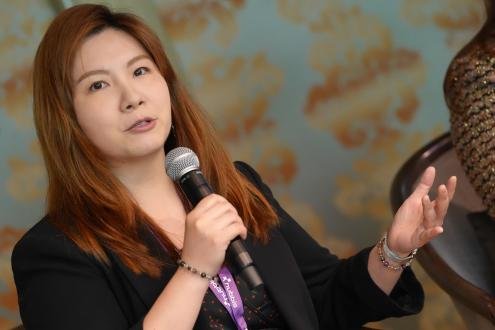
At the Thailand Wealth Management Forum 2026, a panel discussion examined how Thai families are approaching structuring, succession, mobility, and intergenerational planning in a more globalised world. Among the panellists, Rose Chan, Executive Director, Wealth Planning at ZEDRA, offered a distinctly fiduciary perspective on what advisers need to do differently. Her remarks focused on the unusually high level of second-generation participation in Thai family businesses, the importance of understanding each family’s lifecycle and readiness, and the dangers of approaching wealth structuring as a product-selling exercise rather than a planning discipline.
Key Takeaways
- Thai family businesses often benefit from stronger next-generation continuity than some other Asian markets: The willingness of the second generation to join the family business remains relatively high.
- There is no one-size-fits-all structuring solution: Similar-looking families can require very different structures depending on their circumstances.
- Advisers must start by identifying priorities: Immediate risks and long-term objectives need to be distinguished before structures are recommended.
- Trusts, foundations, and family office regimes are tools, not answers in themselves: Their value depends entirely on the family’s needs.
- The best fiduciary advice is diagnostic, not commoditised: Good structuring begins with careful listening, not a pre-packaged product pitch.
A Market with Stronger Family Business Continuity
Chan began with an observation that stood out in the broader regional context. “One thing that the Thai family really stands out is that for the second generation to stepping in, taking over the family business, the ratio is really high compared to other parts of Asian countries like Hong Kong, Mainland China or Taiwan,” she said.
That is an important starting point because it suggests that Thai family wealth planning often begins from a different foundation than in some other Asian markets. In places where the next generation is less willing to join the family business, succession planning may revolve more quickly around liquidation, sale, professional management, or a sharper shift away from the operating business. In Thailand, by contrast, there appears to remain a stronger culture of intra-family continuity.
Chan’s point matters not because it removes succession risk, but because it changes its shape. If the second generation is more willing to step in, then the structuring challenge is less about whether there will be a successor at all and more about how that transition is governed, how the wider family is treated fairly, and how the business and personal wealth are organised around the realities of multi-generational ownership.
In other words, the high rate of next-generation participation is an advantage, but not a substitute for planning. If anything, it makes governance and structuring more important, because continuity without clarity can still create conflict.
Families May Look Similar from the Outside, but They Are Not
Chan then moved quickly to the core of her philosophy as a fiduciary adviser: avoiding assumptions. “As international trustee, fiduciary provider, where we come in is we always hold a view that there’s not one size fits for all solution,” she said.
That line captured the heart of her contribution. In a field where advisers can easily default to familiar structures, Chan argued for a much more careful, diagnostic approach. “We come up with an open mind, trying to understand the situation of the family,” she said.
This is especially relevant in markets such as Thailand, where many wealthy families may appear similar on the surface. They may have a family business, children studying abroad, offshore assets, or an interest in long-term succession planning. But Chan’s point was that once one looks more closely, these families can differ significantly in the things that actually matter most.
“Every family, they might look alike from the outside,” she said. “However, if you go deep, they’re in different lifecycles, different stages of the lifecycle of the family and the readiness of the second, third generation’s difference and the tax residencies and also the jurisdiction of the assets.”
That is a highly practical insight. Structuring should not begin with the question of which vehicle is available. It should begin with the question of what stage the family is in, who is ready, where the family members live, what the asset map looks like, and what tensions or priorities already exist.
A family with cohesive siblings, one tax residency profile, and a business still under strong founder control may need something very different from a family with children in multiple jurisdictions, mixed levels of readiness, and an operating business beginning to fragment. On paper they may both be “Thai HNW families”. In practice they may need entirely different structuring paths.
Prioritisation Comes Before Solutions
Chan built on that point by stressing the importance of sequencing. “We try to help the client to prioritize, what are the immediate needs, pressing issue they need to address, and what are the long-term goal they want to achieve?” she said.
This is one of the most useful ideas in her remarks because it highlights a common failure in structuring conversations: the tendency to jump straight to solutions without agreeing first on priorities.
Families often face multiple issues at once. There may be a concern about governance, an overseas child, a question around asset holding, an unresolved succession issue, and a desire to improve tax efficiency. Not all of these carry the same urgency, and not all can be addressed in one step.
Chan’s approach suggests that good advice starts by distinguishing the immediate from the eventual. What must be fixed now to avoid exposure or disorder? What can be built gradually over time as the family becomes more prepared? Which objective is genuinely central, and which is secondary?
This matters because structuring solutions tend to work best when they are attached to clearly defined purposes. A trust, a foundation, or a holding company may all appear sensible in the abstract, but unless the family is clear about its priorities, even technically sound solutions can miss the mark.
Chan’s framework is therefore disciplined as well as client-centric. It is not anti-structure. It is anti-premature structure.
The Problem with Selling Structures as Commodities
Perhaps the sharpest part of Chan’s contribution came when she warned against treating fiduciary tools as products to be sold. “Sadly, there’s no like too good to be true some solutions,” she said.
She then made the point even more directly. “I intend not to sell them commodities, selling approach, like selling them trust or like foundation or Cayman companies or Hong Kong family office regimes.”
That is an unusually candid statement in a discussion of wealth structuring, and an important one. It cuts to a tension that often exists in the market: the temptation to recommend whatever structure an adviser is most familiar with, or whatever solution is currently fashionable, rather than starting with the family’s actual circumstances.
Chan’s criticism was not aimed at the structures themselves. Trusts, foundations, companies, and family office regimes can all be valuable. Her point was that none of them should be treated as an answer in themselves.
“I think there’s no one thing fits for all,” she said. Instead, “we will carefully understand clients’ needs and what they want to achieve, and in order to achieve their goals. Then we come in with this type of different vehicles, which could help.”
That sequence is critical. First understand. Then prioritise. Then select the appropriate vehicle. The vehicle is the servant of the objective, not the other way round.
This is especially important in a cross-border environment where families may be tempted by the perceived prestige or novelty of certain structures without fully understanding their implications. A family office regime, for example, may sound attractive, but may not solve the most urgent governance or tax issue. A trust may provide continuity, but may be too complex or poorly aligned with the family’s structure if used without careful thought. Chan’s remarks were a reminder that sophistication is not the same as suitability.
A Fiduciary Lens on Thai Family Wealth
Chan’s contribution was also helpful because it reflected the perspective of an international fiduciary provider rather than a domestic lawyer or a tax specialist alone. That meant her focus was less on any one legal mechanism and more on the broader process of understanding how families function over time.
Her emphasis on family lifecycle, generational readiness, tax residency, and jurisdictional spread shows how fiduciary advice often sits at the intersection of multiple advisory disciplines. It also shows why it can add value in situations where wealth planning becomes too fragmented or too product-driven.
By focusing on how families differ beneath the surface, Chan effectively argued that the structuring process must be more interpretive and less formulaic. Advisers need to ask not just what the family owns, but who is involved, what stage they are at, what conflicts or asymmetries may exist, and what kind of continuity they are actually trying to preserve.
In the Thai context, where many families still retain a strong operating business core and relatively high second-generation participation, this kind of analysis may be especially useful. It avoids assuming that every family is either ready for institutionalisation or suited to imported structuring models. Instead, it encourages a more nuanced view of readiness and need.
What Will Matter Most for Thai Families
Taken together, Chan’s remarks suggest that the next stage of wealth structuring for Thai families will depend less on the popularity of particular tools and more on the quality of the advisory process behind them.
Thai families may, as she noted, benefit from relatively strong next-generation willingness to participate in the family business. But that does not remove the need for planning. If anything, it makes the need for clear priorities, governance discipline, and tailored structuring more pressing.
Her contribution also highlighted a wider truth about the market. As families become more international, their lives become harder to fit into standard templates. Tax residency becomes more mixed. Assets become more dispersed. Readiness across generations becomes more uneven. In that environment, advisers who rely on standardised solutions risk oversimplifying the real problem.
Chan’s perspective offered a more disciplined alternative. Start with the family, not the product. Understand the lifecycle, not just the asset map. Identify the pressing issue before recommending the long-term structure. And above all, remember that trusts, foundations, companies, and family office regimes are only as good as the purpose they serve.
That message was one of the clearest to emerge from the panel. For Thai families navigating a more globalised wealth landscape, the strongest structuring advice may not be the most complicated. It may be the advice that begins with the fewest assumptions.