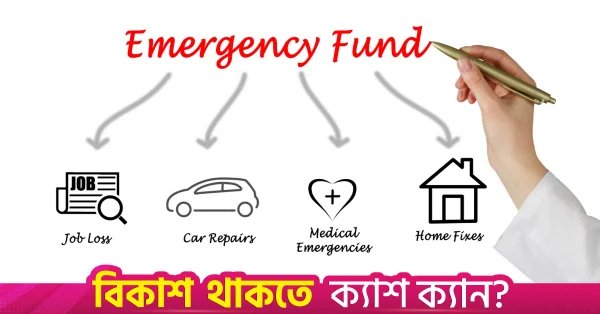
We will walk you through what an emergency fund is, how much to save, and the easiest way to build it
Representational image. Photo: Collected.
“>

Representational image. Photo: Collected.
Ever feel like one car repair or medical bill could throw your whole budget off balance? An emergency fund gives your personal finance plan breathing room, so retirement savings, student loans, and regular bills do not all have to fight for the same dollar.
It is simply cash you keep for surprises, not for vacations or random shopping. A budgeting rule like 50/30/20 can help you make room for it, but your real target should match your take-home pay, monthly expenses, and job stability.
We will walk you through what an emergency fund is, how much to save, and the easiest way to build it, with practical help from tools like the NerdWallet calculator and simple automation features many banks already offer.

What is an emergency fund?
An emergency fund is money you set aside for expenses you did not plan for and cannot easily ignore. Think job loss, a surprise dental bill, a broken transmission, or a home repair that cannot wait.
The Consumer Financial Protection Bureau treats emergency savings as money for unplanned bills that are outside your normal monthly expenses. That is an important distinction, because rent, groceries, and streaming subscriptions belong in your regular budget, while an emergency fund is there for the stuff that hits out of nowhere.
You will usually want this money in a separate account from your everyday checking. That small bit of distance matters. It helps you avoid dipping into the balance for discretionary spending, and it makes your short-term savings easier to track.
As of January 2026, the FDIC listed the national average savings rate at 0.39% and the national average money market rate at 0.56%, which is a good reminder to park emergency savings somewhere that earns at least some interest instead of leaving it idle in a near-zero account.
|
Account type |
Why it works as an emergency fund |
What to watch for |
|
High-yield savings account |
Simple, liquid, and usually the easiest place to keep emergency savings while earning compound interest. |
Transfer times can vary by bank, so test how fast you can move cash before you need it. |
|
Money market account |
Often pays a competitive rate and may include check-writing or debit access. |
Some accounts require a higher minimum balance, and some limit certain transactions. |
Safety matters more than chasing the absolute highest return. FDIC insurance covers deposits at insured banks up to $250,000 per depositor, per bank, per ownership category, and federally insured credit unions offer the same $250,000 limit through NCUA share insurance. Also, a bank money market account is different from a money market mutual fund, which is an investment product and is not FDIC-insured.
Representational image. Photo: Collected
“>

Representational image. Photo: Collected
Why is an emergency fund important?
An emergency fund keeps a short-term problem from becoming a long-term money mess. Without cash on hand, many people end up turning to credit cards, personal loans, or missing payments just to get through one bad month.
That can spill into your credit score, too. MyFICO says payment history makes up about 35% of a FICO score, so having emergency savings can help you keep debt payments, student loans, and utility bills current when life gets expensive fast.
In 2024, the Federal Reserve reported that 55% of US adults had savings set aside for three months of expenses, and 13% said they could not cover a $400 emergency expense by any means.
Those numbers explain why this piece of financial planning matters so much. Even a modest cash cushion can protect your financial well-being before a setback turns into revolving debt.
- It protects retirement savings. The Federal Reserve found that 8% of non-retirees tapped retirement accounts in the prior year, and another 8% reduced contributions. A healthy emergency fund makes that less likely.
- It lowers stress. Vanguard reported in 2025 that having at least $2,000 in emergency savings was linked to a 21% higher financial well-being score.
- It gives your other goals a chance to survive. You can keep working on debt payments, retirement savings, and long-term savings instead of restarting from zero after every surprise.
This is why many advisors treat emergency savings as the first layer of personal finance. It is not flashy, but it keeps the rest of your plan standing.
Representational image. Photo: Collected.
“>

Representational image. Photo: Collected.
How much should you save in an emergency fund?
For most readers, the right target is 3 to 6 months of essential living expenses. Use the amount you actually need to cover housing, utilities, groceries, transportation, insurance, minimum debt payments, and other fixed basics.
The 3-6 months rule
Start with your true monthly essentials, then multiply that number by 3, 4, 5, or 6. If your must-pay bills total $3,000 per month, your emergency fund target is $9,000 for 3 months, $12,000 for 4 months, and $18,000 for 6 months.
This is one place where your own numbers beat national averages. Your emergency fund should be based on real living expenses, not your age group or what someone else on the internet claims to save.
|
Your situation |
Starting target |
Why that range makes sense |
|
Stable full-time job, no dependents |
3 months |
A steady paycheck lowers the odds of a long income gap. |
|
Dual-income household |
3 to 4 months |
Two paychecks can soften the impact if one income changes. |
|
Single income, kids, or high fixed bills |
4 to 6 months |
There is less room for error when one paycheck covers everything. |
|
Freelance, seasonal, commission, or self-employed income |
6 months or more |
Uneven cash flow calls for a bigger buffer between busy and slow periods. |
Bankrate’s 2026 emergency savings report found that 63% of Americans say they would need at least six months of expenses saved to feel comfortable. You do not need to hit that number overnight, but it does show why readers with variable income often feel safer at the high end of the range.
Factors that impact your savings goal
- Your cost of living. If rent, insurance, and groceries eat up most of your take-home pay, build a larger cushion. High fixed costs leave you less flexibility in a bad month.
- Your job stability. If layoffs are common in your field, or your pay relies on commissions, a six-month fund is more realistic than a 3-month fund.
- Your household size. Kids, ageing parents, pets, or a partner who depends on your income all raise the amount you need available fast.
- Your transportation and housing risks. A homeowner with an older car usually needs a bigger buffer than a renter who uses public transit.
- Your debt payments. Minimum payments on credit cards, student loans, or personal loans still count, because lenders do not pause your bill just because your water heater quits.
- Your retirement savings strategy. If your budget is tight, many readers do well by building a starter cushion first, then making sure they capture any employer match available at work while continuing to grow the fund.
How to start building an emergency fund
Start smaller than you think, and start sooner than feels perfect. A lot of readers stall because the final number looks huge, but your first goal is progress, not perfection.
Representational image. Photo: Collected.
“>

Representational image. Photo: Collected.
Set a realistic initial goal
A smart opening target is $500 or $1,000. NerdWallet’s updated guidance says even $500 in a savings account can help cover a surprise car repair or medical bill without pushing you into new debt.
Once you hit that first milestone, move to your next one, maybe $3,000, then one month of expenses, then three. Breaking the process into stages keeps your savings rate steady and makes the goal feel winnable.
- Save a fixed dollar amount each payday, even if it is just $25 or $50.
- Send part of a tax refund, bonus, side-hustle check, or cash gift straight to the fund.
- Keep the account separate from your everyday spending money.
- Use online tools for savings, like bank alerts, savings buckets, or a simple spreadsheet, so you can see progress quickly.
Your emergency fund will not grow from compound interest alone, but interest does help. A high-yield savings account lets your cash earn while it waits, which is exactly what you want from money that needs to stay safe and accessible.
Automate your savings
The CFPB recommends recurring transfers through your bank or credit union, and that advice works because it removes the need to make a fresh decision every payday. If the money moves automatically, you are far less likely to spend it first and save what is left.
Try one of these simple setups:
- Split direct deposit: Send part of each paycheck straight to savings before it lands in checking.
- Automatic transfer after payday: Schedule the move for the same day you get paid.
- Round-up features: Let your bank sweep spare change or small amounts into savings.
- Annual increase: Raise your transfer by 1% whenever your income goes up.
If you are balancing emergency savings with retirement savings, debt payments, and other financial goals, automation helps you stay consistent without thinking about it every week.
Tips to maintain and grow your emergency fund
Building the fund is half the job. Keeping it useful is what makes it a real safety net.
Reevaluate your fund periodically
Review your emergency savings at least once a year, and also after major life changes. A new baby, a move, a higher rent payment, a job switch, or a jump in insurance costs can make an old target too small.
- Recalculate your monthly expenses after a move or housing change.
- Increase your goal if your take-home pay becomes less predictable.
- Review debt payments if you add a car loan, private student loan, or new credit card balance.
- Adjust for family changes, including dependents, pets, or caregiving costs.
Put a reminder on your calendar so this review actually happens. Good financial planning is often just a series of boring check-ins done on time.
Avoid dipping into it for non-emergencies
Your emergency fund should cover true emergencies, not convenience spending. A broken furnace, urgent travel for a family crisis, or a medical bill counts. Concert tickets, holiday gifts, and a flash sale do not.
|
Use your emergency fund for |
Do not use it for |
|
Job loss or reduced income |
Vacations |
|
Urgent car or home repairs |
Holiday shopping |
|
Unexpected medical bills |
Impulse electronics or clothes |
|
Essential bills during a short-term crisis |
Predictable annual expenses you could plan for |
In Bankrate’s 2026 report, 80% of people who used their emergency savings said they used it for essentials. That is the right instinct. The fund is there to keep a hard season from turning into debt and credit damage.
A practical tip you see often in personal finance communities is to keep a separate sinking fund for expected but irregular costs, like tyres, vet bills, back-to-school shopping, or a future appliance replacement. That way, you do not raid your emergency fund for expenses that were painful but still predictable.
If you do make a withdrawal, make refilling the account your next short-term savings priority. Rebuilding fast helps protect your retirement savings rate, your long-term savings, and your peace of mind.
Final words
An emergency fund gives you breathing room when life gets expensive fast. For most readers, the sweet spot is three to six months of living expenses, kept in a high-yield savings account or money market account that stays easy to reach.
Start with a small cushion, automate it, and protect it for real emergencies only.
That one habit can make the rest of your personal finance plan, from debt payments to retirement savings, much easier to keep on track.
FAQs
1. What is an emergency fund?
— An emergency fund is money you set aside for surprise costs, like a job loss or a car repair. Think of it as a rainy day fund. It is emergency savings that cover living expenses. Seek simple financial education to learn how to save.
2. How much should you save?
— Aim for three to six months of living expenses, many experts say. If you have big debt payments, irregular income, or shaky take-home pay, aim for six to 12 months. Experts like Lauren Schwahn, Laura McMullen, Tara Unverzagt, and Tess Zigo back this basic rule.
3. Where should I keep emergency savings?
— Put it in a high-yield savings account or a money market account, so you can get to it fast. Keep it separate from long-term savings, short-term savings, and retirement savings.
4. How does an emergency fund fit with retirement and other plans?
— Keep emergency savings separate from retirement savings, but do still save for retirement. Take employer matches when you can, and watch your retirement savings rate. Cut discretionary spending first, if you must.
5. How can I build an emergency fund on low take-home pay?
— Start small, maybe $500, then add funds each month. Track monthly expenses, trim discretionary spending, use online tools for savings and budget apps to automate deposits. This smart financial planning lifts your long-term savings, and it helps your financial well-being.
6. Will an emergency fund help my credit?
— Yes, it helps protect your credit score by keeping you out of late payments and high balance use. Good emergency savings also help with credit scoring, and they make saving money and managing personal finances easier to manage.