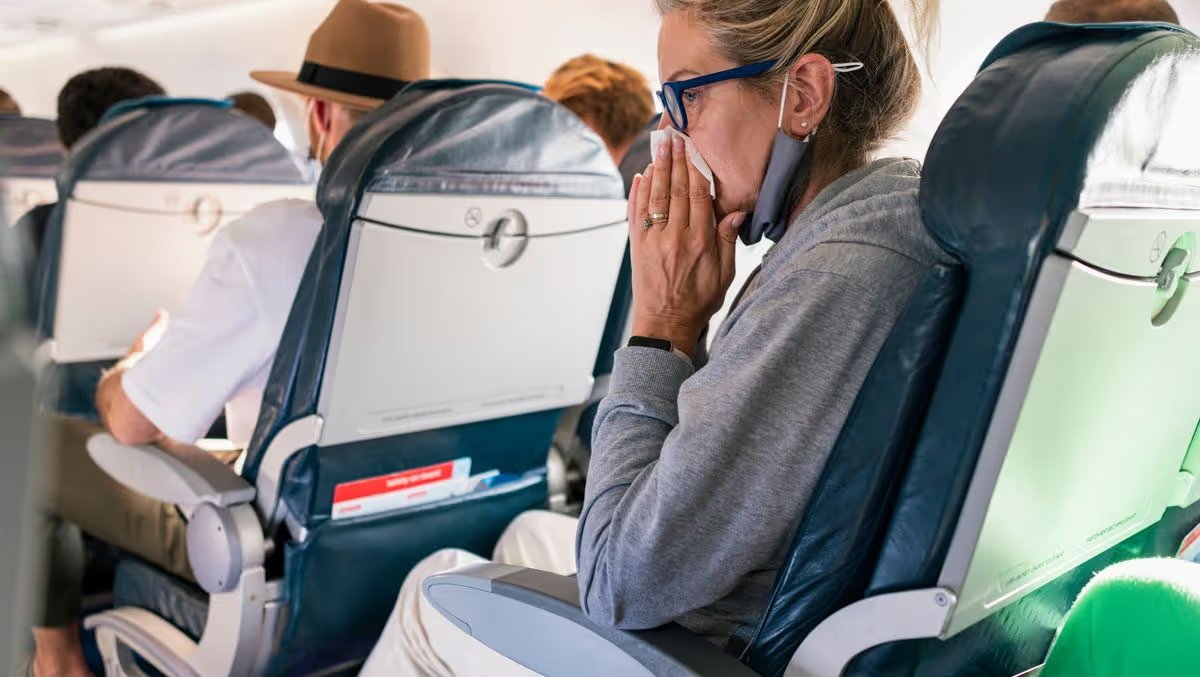
The UKHSA has issued an alert after a rise in travel-related infections

There has been a rise in people faling ill on holiday
Health officials have issued a warning to holidaymakers after a rise in the number of infections linked to travel. Travellers have been urged to protect themselves against mosquito bites after the latest data show a significant rise in cases of chikungunya virus, which is transmitted by infected mosquitoes.
Health officials also sounded the alarm about “consistently high” levels of malaria, which is also caused by being bitten by an infected mosquito. But there was a significant fall in the number of cases of dengue. The new report on travel-associated infections from the UK Health Security Agency (UKHSA) show that the number of chikungunya infections rose 43% in 2025.
UKHSA said the number of chikungunya cases in England, Wales and Northern Ireland increased to 160 in 2025, up from 112 in 2024. The majority of cases reported travel to Sri Lanka, India and Bangladesh.
The infection causes fever and severe joint pain, joint swelling, muscle pain, headache, nausea, fatigue and rash. The number of dengue cases decreased to 344, down from 904 in 2024. Separate provisional figures on imported malaria cases in the UK show there were 1,629 cases in 2025.
While this is down from 1,812 reported in 2024, officials said that imported malaria cases “consistently remain at high levels in the UK”. Malaria is a life-threatening infection spread by mosquitoes found in some parts of the world.
Symptoms can include fever, chills, headache fatigue, confusion, seizures and difficulty breathing. Dr Philip Veal, consultant in public health at UKHSA, said: “For some people chikungunya can be a prolonged and nasty disease and we continue to see cases in travellers returning to the UK, particularly from parts of Asia and the Indian Ocean region.
“While this mosquito-borne infection is rarely fatal, it can cause severe joint and muscle pain, headaches, sensitivity to light and skin rashes. Thankfully, symptoms usually improve within a few weeks, but joint pain may last for months or longer. So it is essential to take precautions against mosquito bites when travelling.”
Dr Dipti Patel, director of the National Travel Health Network and Centre, said: “If you’re travelling over Easter or spring, it’s important that you prepare before you travel, and take precautions against mosquito bites. Simple steps such as using a Deet-based insect repellent, covering up your skin and sleeping under insecticide-treated bed nets can greatly reduce the risk.
“Before you travel, check the Travel Health Pro website for the latest advice on your destination. If chikungunya is a risk at your destination, you may wish to discuss the suitability of chikungunya vaccination with a travel health clinic.”
As of early 2026, here is the breakdown of the highest-risk regions and specific countries for each.
1. Malaria
Malaria is primarily found in tropical and subtropical regions. The risk is highest in Sub-Saharan Africa, which accounts for roughly 95% of global cases.
- Highest Risk Countries: Benin , Burkina Faso , Nigeria , Mali , and Democratic Republic of the Congo (DRC) .
- Other Notable Areas: Parts of South Asia (India, Pakistan), Southeast Asia (Indonesia, Myanmar), and the Amazon basin in South America (Brazil, Colombia).
- Note: Malaria is caused by a parasite and is often most dangerous in rural, forested areas rather than big cities.
2. Dengue Fever
Dengue is the most widespread of the three and is frequently found in urban and residential areas because the Aedes mosquito prefers to live near humans.
- Current 2026 Hotspots: The CDC recently issued alerts for Vietnam, Bangladesh, Colombia, Samoa, and the Cook Islands due to higher-than-usual activity.
- High-Burden Regions: The Americas: Brazil (highest total cases), Mexico, Nicaragua, and Peru. Southeast Asia: Thailand, Indonesia, and the Philippines.
- The “City” Risk: You are much more likely to catch Dengue in a major city like Bangkok or Rio de Janeiro than you are to catch Malaria.
3. Chikungunya
Chikungunya often occurs in “waves” or outbreaks. While it exists in many of the same places as Dengue, it is currently surging in specific areas.
- 2026 Active Outbreaks: Suriname and Bolivia are currently seeing significant spikes.
- High-Risk Countries: Brazil, Paraguay, and India consistently report high numbers.
- Emerging Areas: Recently, the CDC flagged the Seychelles, Mayotte, and Cuba as areas where travelers should take extra precautions.
While Europe is not an “endemic” zone like the tropics, the risk of catching these three diseases has increased significantly in recent years due to the expansion of the Asian Tiger mosquito (Aedes albopictus).
As of early 2026, here is where you are most likely to encounter these diseases in Europe:
1. Dengue & Chikungunya
These two are grouped together because they are carried by the same mosquito, which is now established in over 13 European countries. Transmission usually happens in the summer and early autumn (July–October).
- France (Highest Risk): Southern France (Provence-Alpes-Côte d’Azur and Occitanie) is the primary hotspot. In 2025, France reported hundreds of locally acquired cases of Chikungunya and dozens of Dengue cases.
- Italy: Also a major “red zone,” particularly in the Emilia-Romagna, Veneto, and Lombardy regions. Large Chikungunya clusters were reported here in late 2025.
- Spain: Cases have been popping up along the Mediterranean coast (Alicante, Ibiza, Barcelona) and recently in Madrid.
- Croatia & Greece: While case numbers are lower than in France or Italy, the mosquito is well-established along the coasts, and sporadic local cases have occurred.
2. Malaria
You almost never catch Malaria from a “wild” mosquito in Europe. Instead, cases usually fall into two very specific categories:
- Airport/Seaport Malaria: When a mosquito from the tropics “hitchhikes” on a plane or ship and bites someone near the airport or port. This has been documented in France, Belgium, Germany, and the UK (specifically near major hubs like London Heathrow or Paris CDG).
- Greece: Greece is the only European country that occasionally sees “autochthonous” (locally transmitted) Malaria in rural agricultural areas, though these outbreaks are usually very small and quickly contained.