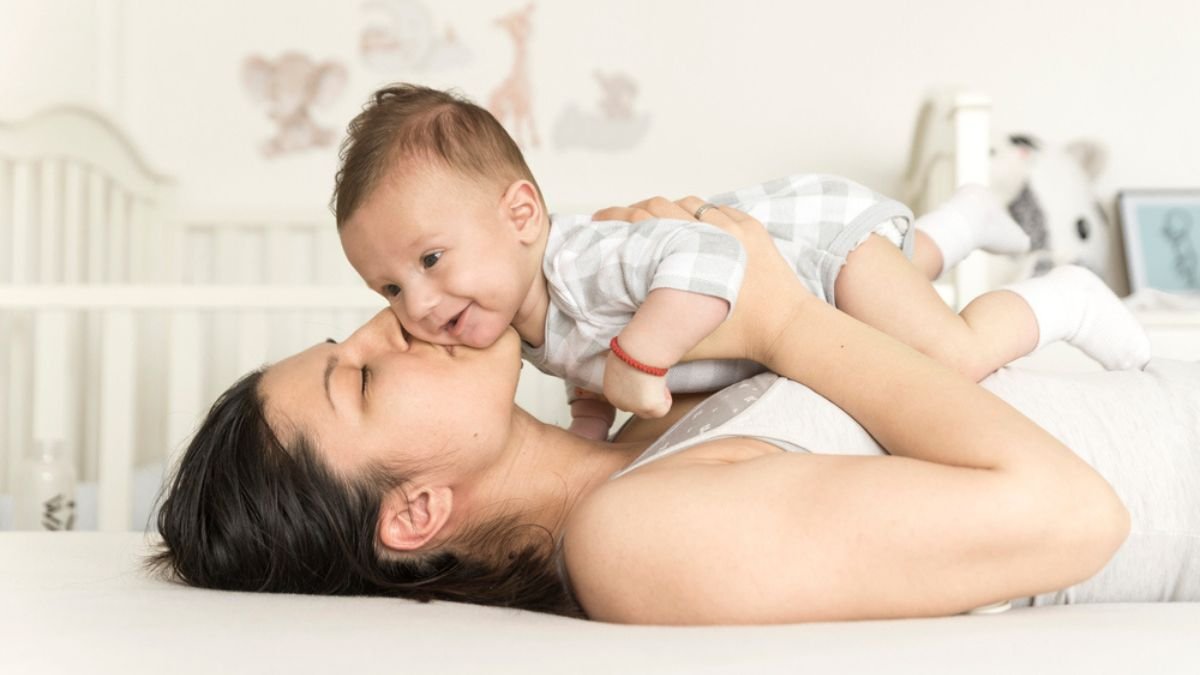
CLAIM:
Kissing a newborn can be life-threatening, as it may transmit infections like herpes simplex virus (HSV-1), especially if the person has an active cold sore. Infections can rapidly affect a baby’s brain, leading to severe damage, long-term health complications, or even death.
FACT:
True. Newborns have not had time to develop their immune system, so they are at higher risk for infections from both bacteria and viruses. In rare cases, infections like HSV Type 1 can be transmitted through close contact such as kissing and may lead to severe complications, including HSV encephalitis. Maintaining good hygiene and avoiding close contact when unwell, especially with cold sores, can significantly reduce these risks.
In a viral Instagram post by Hashem Al-Ghaili, who has over 1.1 million followers on the platform, concerns have been raised about the risks of kissing newborns. The post claims that even a simple gesture of affection can have serious, life-threatening consequences for infants.
In the post, the caption reads, “A single kiss can be life-threatening to newborns,” and goes on to narrate the story of baby Breelyn as a cautionary example. It explains that the infant allegedly contracted neonatal herpes simplex virus (HSV-1) after being kissed by someone with an active cold sore. According to the caption, because the newborn’s immune system was not yet fully developed, the infection progressed rapidly into HSV encephalitis, “a severe infection that directly attacked her brain,” leading to significant and permanent neurological damage.
The post further describes how the condition resulted in long-term health challenges, including seizures and developmental issues, while also highlighting the child’s resilience. It emphasises that although such infections are rare, neonatal herpes can be life-threatening, warning that “individuals with cold sores must never kiss a baby.”
The post has gained significant traction online, amassing over 20,300 likes and 49,100 shares, prompting closer scrutiny of the claims and the actual medical risks associated with kissing newborns.
Can kissing newborns pose life-threatening health risks?
Evidence shows that while kissing a newborn is not universally dangerous, it can become life-threatening in specific circumstances, particularly when infections like herpes are involved. This makes awareness, hygiene, and caution critical during the early weeks of a baby’s life.
According to the BMJ, transmission of herpes to newborns through close contact like kissing is a recognised risk. As the journal notes, “Yes, if you are infected with herpes. Transferred to a newborn, the infection can have serious consequences, including long term neurological damage and, in some cases, death.” This highlights that while the act itself is not inherently dangerous, the presence of an active infection significantly increases the risk.
Medical bodies also emphasise that newborns are particularly vulnerable due to their underdeveloped immune systems. According to Johns Hopkins Medicine, “newborns have not had time to develop their immune system, so they are at higher risk for developing infections from both bacteria and viruses.” The institution further explains that infants are more susceptible to severe conditions such as sepsis and meningitis, and that their blood-brain barrier is not fully developed, increasing the risk of infections reaching the brain. Because of this vulnerability, even a fever in a newborn is treated as a medical emergency.
Building on these risks, it is strongly advised to limit close contact that could transmit germs. As noted by Johns Hopkins, “visitors should not kiss the baby or be too close to their face, as mouths carry a lot of germs,” and individuals with symptoms such as fever, cough, or cold sores should avoid contact altogether. Preventive steps like hand hygiene and wearing masks can further reduce the risk of infection.
Evidence from clinical case studies also supports the possibility of transmission through kissing. A 2016 case study documented a newborn who developed Herpes Simplex Virus Type 1 infection after repeated exposure to a caregiver with active cold sores. The researchers reported that the father “had active herpes simplex labialis and admitted to having repeatedly kissed his baby while he had active lesions,” after which the virus was confirmed in the infant through PCR testing. The study concluded that postnatal transmission of HSV-1 through close contact is plausible, and stressed the importance of early diagnosis and treatment to prevent complications such as central nervous system involvement.
At the same time, the case study also provides important context: early medical intervention helped prevent the infection from progressing to more severe forms, such as brain involvement, and the infant recovered without long-term complications. Researchers emphasised the need for awareness, recommending that newborns be kept away from individuals with active herpes lesions and that precautions such as mask use be considered.
This story is done in collaboration with First Check, which is the health journalism vertical of DataLEADS