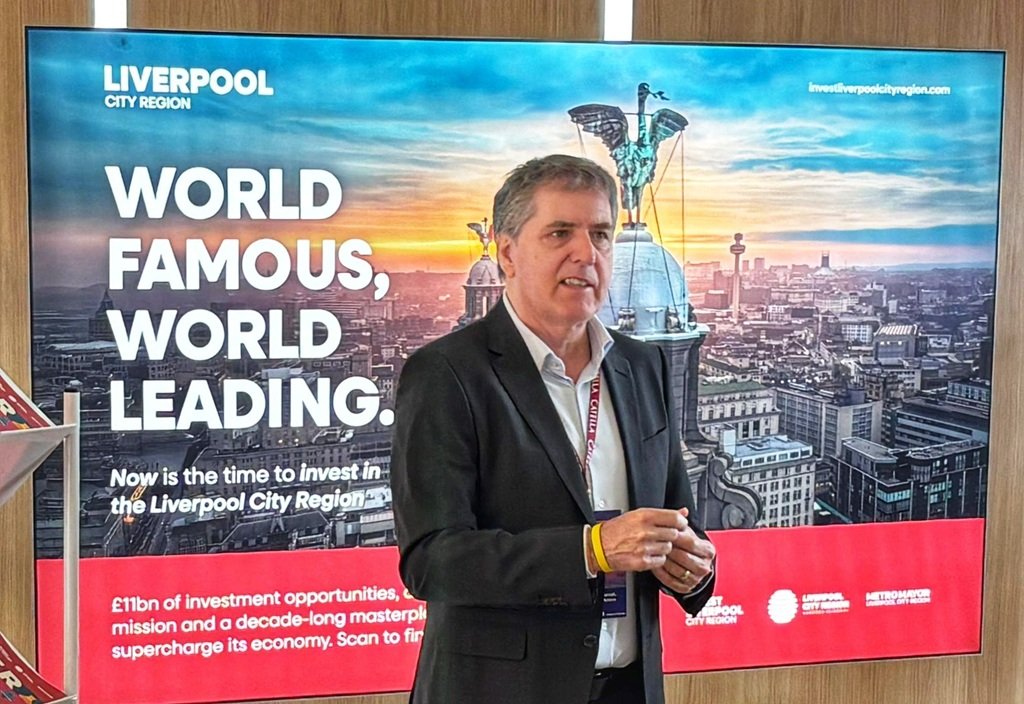
Liverpool City Region Metro Mayor Steve Rotheram said the gap between the two cities is closing after he unveiled a nine-figure regeneration war chest in Cannes.
The £2bn investment fund launched today, and billed as the largest fund of its kind ever announced in the city region, is aimed at speeding up the delivery of Rotheram’s £10bn regeneration pipeline, which includes big ticket items like the long-awaited Pall Mall office development.
Armed with the fund and soon to receive an integrated settlement worth £1.5bn over four years, Rotheram expects movement on some of its stickiest stalled schemes before MIPIM 2027.
In 2026, the city region’s list of investable propositions it is in Cannes to showcase looks similar to years gone by, highlighting ingrained viability challenges. However, Rotheram said he would feel “crap” if he arrived in the South of France in 12 months’ time and those projects were still stuck in limbo.
The fund has been in the works for some time and will offer grants, loans, and patient equity to bring forward developments.
In the first instance, investment will be focused on job-spinning projects including office developments like Pall Mall, stalled for several years and described by Rotheram as “totemic”, as well as lab space and light industrial units for advanced manufacturing, digital technology, and life sciences businesses.
Housing is also in the city region’s regeneration crosshairs. The £2bn fund, made up of government and local sources like income from the Mersey Tunnels, could help the six boroughs in the city region deliver on their combined target of 64,000 homes, including the regeneration of North Docks and Central Docks in the city centre.
The launch of the cash pot comes a few months after Greater Manchester announced its own Good Growth Fund, which is worth an initial £1bn and has seen £400m already committed to a range of projects.
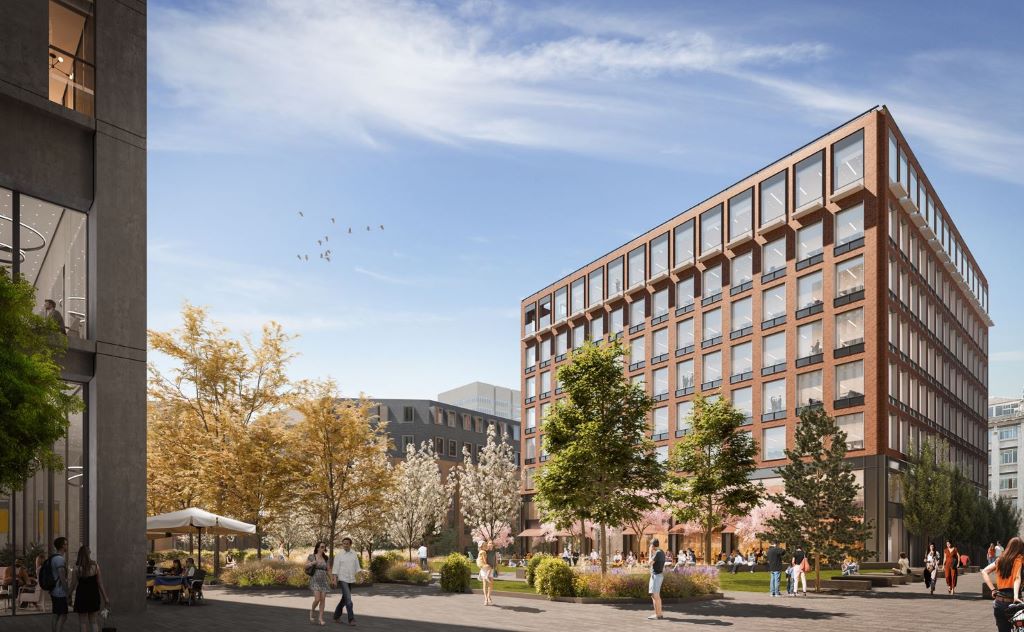
Liverpool’s Pall Mall was one of several high profile schemes to get a boost in 2025. Credit: via Liverpool City Council
Greater Manchester is often seen as the poster child for regional devolution in the UK but Rotheram is adamant that the gap between the two city regions is closing.
“I know we are catching them up,” he said.
“They undoubtedly were ahead of others when they had the likes of Sir Howard [Bernstein]. Sir Howard was a visionary, we didn’t have that in our city region, we had local authorities battling each other, and we don’t have that anymore. We have a single vision.”
That vision is starting to gain traction nationally, said Rotheram, who recalled a recent event in London as evidence.
“A guy from the Stock Exchange said ‘can you explain to me what’s happening in Liverpool? Because for the first time, there’s a real buzz in the Stock Exchange about opportunities and the Liverpool City’.”
As well as anecdotal evidence, Rotheram also has cold hard stats to back up Liverpool City Region’s rise.
Unemployment in the conurbation is 14% lower than the national average while job creation in high growth sectors is 11% higher than the rest of the country. A lot of that is driven by improved graduate retention, Rotheram said.
“10 years ago, we were in the bottom 10 for graduate retention in the country, and now we’re in the top three.”
Rotheram is aware that, while the data may look good for the city region, metrics of this type often do not cut through with the average person as much as other more tangible indicators.
“I would like to see more cranes on the skyline, because that would demonstrate to people that there are buildings being built,” he said.
In short, people prefer progress over statistics and one scheme that would make a lot of people very happy if it came forward is the redevelopment of the Littlewoods building into what Rotheram once billed the Hollywood of the North.

Rotheram is hopeful a way forward can be found for Littlewoods. Credit: via Font Comms
The vision for a film and tv campus has been held back by a yawning viability chasm but Rotheram is optimistic about the scheme’s chances.
“The mood music was good,” he said of a recent trip to Downing Street to discuss how government could help unlock the development.
The mayor wants £50m from government for Littlewoods, which could pay for itself in 10 years, he said.
“£50m is a big ask but… there might well be a cocktail that we can pull together.”
The £2bn fund launched at MIPIM today may be part of that cocktail but with a £10bn pipeline that also includes a major expansion of Maghull Health Park, the regeneration of St Helens and Bootle town centres, the revival of Southport, and a £550m health innovation campus on the site of the former Liverpool Royal Hospital, the mayor will have plenty of local leaders knocking on his door for a share of the pot.
As devolution deepens in Liverpool, he is desperate to use his new-found powers and fiscal levers to rid the city region of its plague of stalled sites.
“Too many sites have stood still for years, too many opportunities have passed us by, and too many talented young people have felt they’ve had to leave the region to get on in life.
“Well no longer. With this £2bn Investment Fund we’re setting out to change that – giving us the firepower to unlock development, build the homes people need and back the industries that will create the next generation of good, well-paid jobs.”