Key changes to the state pension qualifying rules are coming in very soon

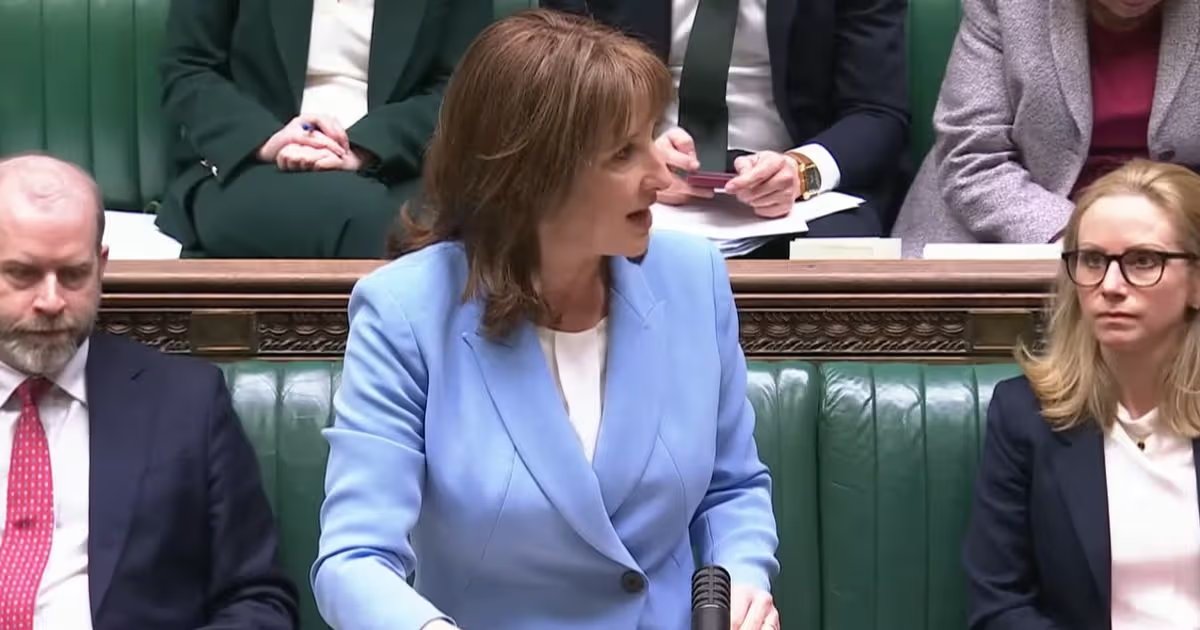
Chancellor Rachel Reeves has given an update about tax changes for the state pension(Image: UK Parliament)
Chancellor Rachel Reeves has issued a statement about significant changes to tax on the state pension. The Government unveiled a new policy regarding state pension tax in the Autumn Budget 2025, as many claimants face a fresh tax bill.
As part of the policy statement, the Government said it would implement changes so that people “whose sole income is the basic or new state pension without any increments…do not have to pay small amounts of tax via simple assessment from 2027-28 if the new or basic state pension exceeds the personal allowance from that point”.
This clarification was necessary as from April 2027, the full new state pension will consume the entire personal allowance threshold and incur a tax bill for claimants on this income alone. You can earn up to £12,570 annually in line with the allowance without paying income tax, but the full new state pension currently pays £230.25 weekly, or £11,973 yearly.
Payment rates will increase by 4.8 percent from April 2026, raising the sum to £241.30 weekly, or £12,547.60 annually, just over £20 short of exhausting the entire personal allowance. Due to the triple lock policy, the full new state pension will certainly breach the threshold and attract an income tax bill from April 2027.
The triple lock guarantees payments rise each April in line with whichever is highest: 2.5 percent, the increase in average earnings or inflation. Shortly after the Budget, consumer expert Martin Lewis questioned the Chancellor about the issue of more pensioners being pulled into the tax bracket.
She informed Mr Lewis that those whose only income is the state pension “won’t have to pay the tax (income tax)” during this Parliament. With the Government yet to provide specifics on how the new tax exemption policy will work, Conservative MP Luke Evans sought further clarification from the Chancellor in the Commons.
More state pensioners dragged into paying tax
He queried: “I want to raise the issue of the freezing of thresholds and the effect on the state pension. When the Chancellor did it in her Budget, she told Martin Lewis that some people would be pulled into paying tax and won’t have to pay small amounts of tax and won’t have to do a tax return.
“The updated [OBR] forecast now says this year 600,000 pensioners will be drawn into paying tax, and going up to a one million by the end of this Parliament. Could she set out what the definition is of small amounts of tax and what the mechanism is she will use to make sure they don’t have to do a tax return?”
In response, Ms Reeves said: “As I said after the Budget last year, if you just get the basic state pension you will not be paying tax. We will be setting out more details of that in the coming months.”
Senior HMRC officials were also recently questioned about the fine details of the new policy by the Treasury Committee. Speaking to the committee in January 2026, Cerys McDonald, director of Individuals Policy at HMRC, said there are between 800,000 and a million pensioners whose sole income is the state pension.
Changes to UK law needed
She indicated that new legislation would be required to implement the tax changes. Ms McDonald said: “We would expect this to go through the next finance bill in the Autumn but we have mobilised a project team already in anticipation of having to make this change.
“The mitigation that we would normally use to recover this tax is simple assessment, normally we wouldn’t be processing that for 2027/2028 until after the 2028 tax year, so we’ve got a decent run in here.” She explained that currently, pensioners whose only income is the state pension receive a simple assessment after the tax year ends, which they complete to settle any tax owed.
Ms McDonald informed the MP committee: “There’s clearly a lot of detail to still work through and she [the Chancellor] has said that that detail will be set out in due course.” Ms McDonald confirmed the new system will be “operable from April 2027”.
Another significant state pension change worth noting is the rising state pension age. The qualifying age is moving up from the present 66 starting April 2026, increasing gradually to reach 67 by April 2028.