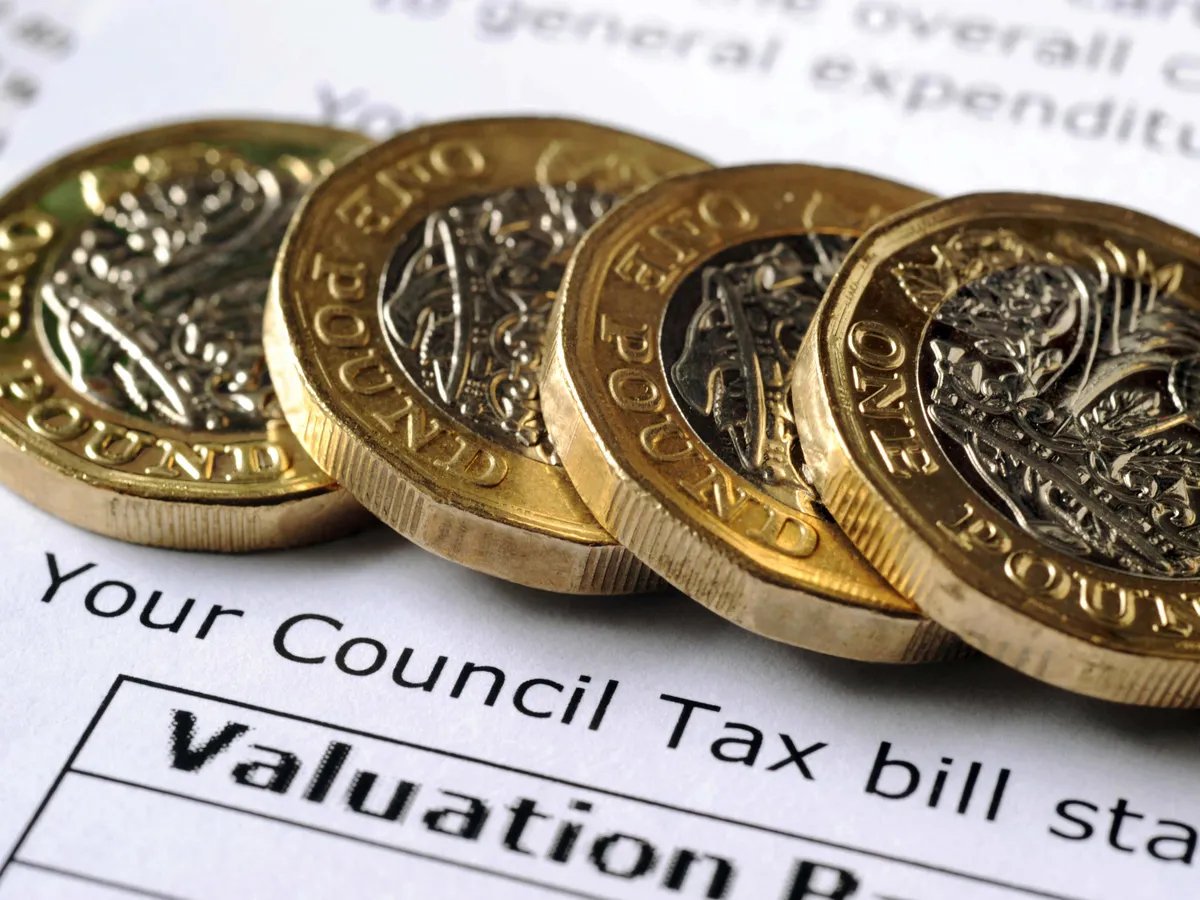
The number of local authorities in England looking to impose the maximum level of council tax has fallen this year, new analysis reveals.
Some 119 of the 153 top-tier authorities have either proposed or confirmed a rise of 4.99% for 2026/27 – the largest increase possible without holding a local referendum.
A further six councils with acute financial challenges are likely to accept the permission granted by the Government to increase council tax beyond this level.
This means 125 authorities – 82% of the total – are planning a rise of at least 4.99%, down from 134 (88%) last year.
The figures have been compiled by the Press Association based on the latest data available from local authorities in England, as of February 25 2026.
The findings show that 25 upper-tier councils are currently not looking to raise council tax by at least 4.99%, of which eight have pencilled in rises between 4.00% and 4.98%, nine are between 3.00% and 3.99%, and the remaining eight are between 1.99% and 2.99%.
Some 10 of these 25 councils are run by Reform UK, either as the majority party or as a minority administration.
By contrast, two Reform-led councils – Doncaster and North Northamptonshire – have signalled their intention to apply the maximum 4.99% this year, while another, Worcestershire has been given permission for a rise of up to 8.99% to deal with financial pressures.
The Government has recently reformed the local government finance system in a bid to establish a fairer distribution of funding through changes to allocation formulas, alongside multi-year settlements.
However, the Local Government Association, which represents councils in England, has warned that some councils will still see their funding fail to keep pace with inflation and demand pressures.
Greg Stride, principle researcher at the think tank Local Government Information Unit, said: “The outcome of the Fair Funding Review has changed the grants local governments get from central government, which has granted a small number of councils a temporary reprieve from raising council tax.
“But increasing cost pressures mean this is unlikely to continue for long, and the Government and Office of Budget Responsibility’s own forecasts assume councils will raise council tax by the maximum amount in years to come.”
Of those councils given permission to raise council tax above 4.99% in 2026/27, North Somerset and Shropshire have both proposed the highest increase of 8.99%, with Worcestershire opting for 8.98%.
North Somerset is led by a coalition of Labour, Liberal Democrats, Greens and independents, while Shropshire has a Lib Dem majority.
The other three councils considering increases of above 4.99% are Trafford and Warrington, both run by Labour, along with Lib Dem-controlled Windsor & Maidenhead.
All three have been given the right to raise the tax by up to 7.49%.
Reform has pledged to lower taxes at local and national level, but its leaders on Worcestershire council have warned the authority could be forced to declare effective bankruptcy because of a financial crisis.
Among other Reform-led councils, West Northamptonshire, Derbyshire and Warwickshire have opted for rises of 4.95%, 4.90% and 4.40% respectively; Kent, Nottinghamshire and Staffordshire are set to increase council tax by 3.99%; and Lancashire has proposed a rise of 3.80%.
The Reform cabinet in Kent have been accused of delivering a budget of “extreme risk” and one that is “potentially reckless” by opposition councillors ahead of the vote that approved the financial plans.
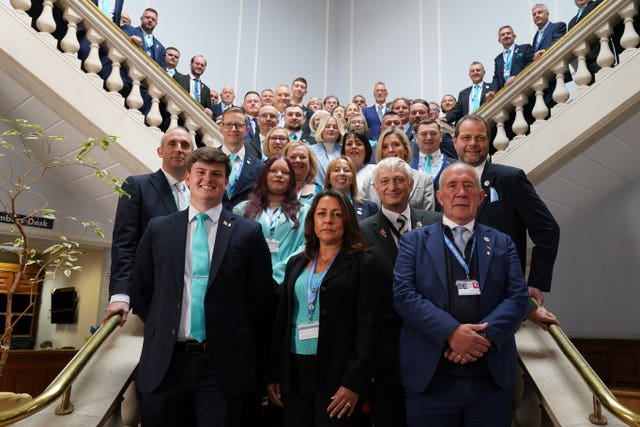
At the time, council leader Linden Kemkaran said Reform would prefer not to propose a council tax increase at all but given “the dire legacy we inherited” alongside an unprecedented rise in demands and costs for services such as social care, “this is simply not possible”.
Opposition parties in the county warned against “dangerously low” reserves and the authority’s “highest ever exposure to financial risk” totalling more than £410 million on the risk register.
Smaller increases by Reform councils have been approved in Leicestershire (2.99%), Lincolnshire (2.90%) and Durham (1.99%).
A Ministry of Housing, Communities and Local Government spokesperson said: “Local authorities decide the level of council tax they wish to set, which reflects the service needs of each area, and we are clear that in doing so they should put taxpayers first.
“We have made over £78 billion available for council finances next year, an increase of over 6% compared to 2025/26, with the majority of money un-ringfenced so local leaders can decide for themselves how best to spend on their local priorities.”
Coventry is one of the local authorities not run by Reform that is proposing an increase below 4.99%.
The Labour-run administration said its planned rise of 3.95% “has been made possible thanks to additional funding from a fairer Government settlement following years of lobbying by the council”.
Rutland is another local authority that said additional funding from Westminster is a reason it has been able to keep council tax increases below 4.99% – in this instance, at 2.00%.
“Not every council will feel the benefit of this cash injection from the Government,” said Gale Waller, leader of Rutland’s Lib Dem minority-run administration.
“We have managed our finances carefully and responsibly for many years and taken difficult decisions to curb spending.
“As a result, we can pass the benefit of this last-minute change on to our residents by reducing our proposed council tax increase to just 2% to help fund adult social care services, while still balancing the budget.”
Of the 78 top-tier councils run by Labour, either as a majority or minority-led control, nearly nine in 10 (67) are intending to increase bills by at least 4.99%, while roughly the same proportion of Conservative-led authorities (23 of 26) have opted to do the same.
All but one of the 18 Lib Dem-led councils that have declared their intentions are set to increase council tax by at least 4.99% , with two of these – Shropshire and Windsor& Maidenhead – granted permission for increases of 8.99% and 7.49% respectively.
The analysis by the Press Association also shows that:
– Across the East Midlands, only three of the region’s 10 upper-tier councils are planning a maximum increase, with the remainder opting for rises of between 4.95% and 2.00%.
– In contrast, 10 of the 11 top-tier councils in eastern England are looking to increase bills by the maximum permitted, with Essex the exception (3.95%).
– Of the 32 London boroughs, all are opting for 4.99% except Barnet (4.98%) and Merton, Wandsworth and Westminster (2.00%).
– The 12 top-tier authorities in north-east England include eight seeking to impose a 4.99% rise, with two opting for 4.95% and two – Middlesbrough and Durham – applying 2.00% and 1.99% respectively.
– All but one of the 24 upper-tier councils in North West England are set to increase council tax by at least 4.99%, with Lancashire planning a 3.80% rise, while in Yorkshire & the Humber 12 of the 15 councils want to apply the maximum hike.
– Kent is the only top-tier council in the South East not planning a maximum increase, while Torbay is the only outlier in the South West (4.75%).
– Some 11 upper-tier councils in the West Midlands are set for increases to the maximum, with three – Warwickshire, Staffordshire and Coventry – choosing rises of 4.40%, 3.99% and 3.95% respectively.