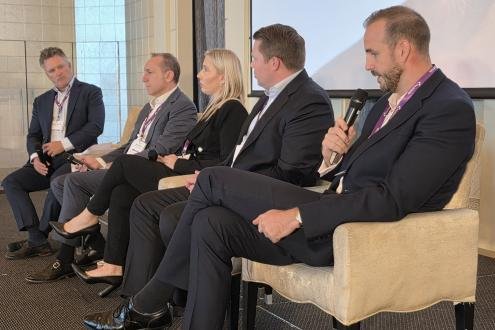
At the Hubbis Independent Wealth Management Forum – Dubai 2026, panellists examined how the UAE’s wealth ecosystem is shifting from rapid expansion to a more institutional phase – with deeper infrastructure, a more settled advisory community, and rising expectations from globally mobile clients. The discussion focused on what has tangibly changed in the market, what “independence” needs to mean in practice, and how advisory firms can scale without diluting alignment, service quality, or fiduciary discipline.
Speakers also highlighted the operational realities of independence – including the need for broader platforms, stronger provider governance, and a more sophisticated approach to cross-border complexity, tax, and beneficiary planning. As the UAE attracts more wealth and international families, the panel argued that independent wealth management has to mature alongside it – not just in size, but in process, proposition depth, and accountability.
Chair: Damian Hitchen, Chief Executive Officer, MENA, Saxo Bank
Panellists:
- David Smylie, Group Head, GSB Private
- Rene Wessels, Senior Executive, Private Clients, Investec Wealth & Investment International
- James Haller, Founder & CEO, Vesper Wealth Advisors
- Steve Corrin, Head of Asset Management, Member of Executive Board, Wealthbrix Capital Partners
Key Takeaways
- The UAE’s competitive position has strengthened through practical reforms and ecosystem stickiness – including longer-term residency for talent, ongoing capital market deepening, and reforms in areas such as gratuity.
- Independence was framed as alignment and architecture – reducing quarter-driven product pressure, and building propositions broad enough to avoid “shoehorning” clients into a narrow set of solutions.
- The expat-heavy nature of the market increases advisory complexity – requiring greater sophistication on cross-border assets, beneficiary location, and tax interplay before recommending structures such as foundations.
- Independence depends on provider governance – including multi-custodian strategies, managing service variance, and navigating persistent frictions such as onboarding and account opening.
- Digital assets were viewed as relevant but still proportionally limited in institutional portfolios, while data control and reporting aggregation were highlighted as strategic vulnerabilities for independents.
From Rapid Expansion To Institutional Stability
Panellists described the UAE’s development as the result of deliberate structural evolution rather than organic growth alone. Regulatory reform, increasing market depth, and initiatives designed to retain talent and institutions longer-term have helped strengthen the ecosystem and reinforce confidence among international families.
The shift from short-term participation towards longer-term residency and business continuity has contributed to a more stable advisory landscape. Families entering the region increasingly expect enduring support structures, professional depth, and continuity of relationships across legal, tax, and investment disciplines.
As a result, the UAE is increasingly positioned alongside established global financial centres, supported by rising institutional presence and sustained capital inflows driven by regional and international demand.
Independence As Structure, Not Branding
A central theme was the need to redefine independence beyond marketing language. Speakers emphasised that independence requires structural alignment across remuneration, governance, and platform design.
One perspective focused on the alignment of incentives between adviser and client, arguing that long-term remuneration models encourage sustainable advice and reduce short-term sales pressure. Alignment mechanisms were viewed as essential in ensuring advisers remain focused on outcomes rather than quarterly targets.
Another view highlighted architecture and breadth as defining characteristics. Independence requires sufficient depth of product access, custody relationships, and advisory capability to avoid limiting client solutions to a narrow universe. Without that breadth, independence risks becoming nominal rather than operational.
More broadly, independence was framed as sitting fully on the client side of decision-making, ensuring that recommendations are driven by suitability and long-term strategy rather than provider constraints.
Global Clients And Rising Advisory Complexity
The UAE’s demographic reality significantly shapes advisory practice. With a high proportion of globally mobile clients and beneficiaries located across multiple jurisdictions, cross-border considerations were described as central rather than peripheral.
Speakers stressed that structures such as foundations or estate planning vehicles cannot be assessed in isolation. Jurisdictional tax rules, beneficiary residency, and asset location must all be evaluated before recommendations are made. This complexity increases the need for advisers to expand their technical knowledge and collaborate closely with international tax and legal specialists.
The discussion emphasised that sophisticated questioning and holistic understanding of clients are becoming core competencies, particularly as global citizens require coordinated planning across multiple regulatory environments.
Service Providers, Custody Relationships, And Operational Realities
Independence also requires active management of external relationships. Maintaining multiple custodian partnerships was described as a way to reinforce objectivity and avoid dependency on a single provider.
However, speakers noted that this approach introduces operational complexity. Service quality can vary between institutions, and personnel turnover can necessitate periodic resets in working relationships. Onboarding and account-opening processes remain ongoing challenges, with increasing regulatory expectations contributing to friction rather than simplification.
Multi-provider strategies were therefore framed as both a competitive advantage and an operational responsibility, requiring constant monitoring to ensure that partners continue delivering appropriate levels of service.
New Entrants, Digital Assets, And Data Control
The panel also discussed competitive pressures from fintech platforms, digital asset providers, and newly established advisory firms. While innovation is accelerating, digital assets were generally positioned as a complementary allocation rather than a dominant portfolio component within institutional wealth strategies.
Data ownership emerged as a significant strategic consideration. Consolidated reporting tools offered by institutions can improve transparency, but may also create risks if client data is overly centralised with providers that have competing commercial interests. Maintaining control over client information and ensuring appropriate separation of data was highlighted as an increasingly important aspect of independence.
Strategic Priorities: Growth With Discipline
In closing, panellists outlined priorities centred on sustainable growth rather than expansion at any cost. Wealth inflows into the UAE continue to accelerate, creating opportunities for independent advisers capable of delivering international-quality service locally.
Key themes included thoughtful team expansion, building scalable operational foundations, maintaining high standards of client experience, and reinforcing trust as the industry evolves. Speakers emphasised that independence must remain anchored in its core purpose – delivering aligned, high-quality advice while adapting to a rapidly maturing marketplace.