As vehicles to be hit by emissions tax rises officials gave a statement about MOT pollution tests

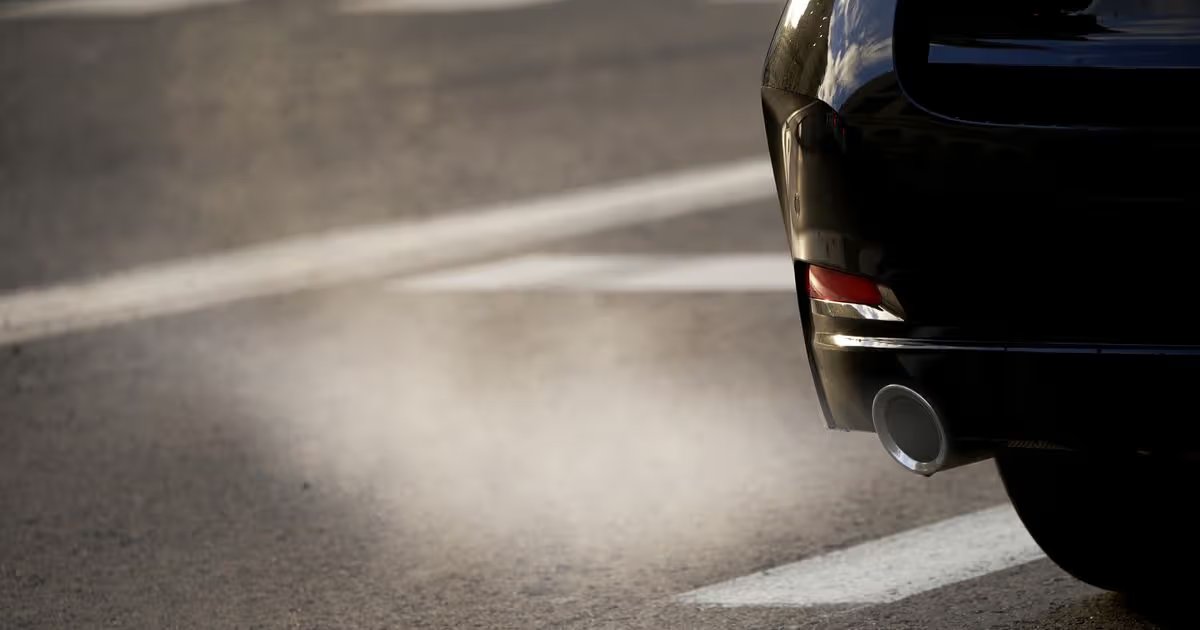
Car taxes are going up in April and the emissions a vehicle produces are a key factor(Image: Getty)
The Treasury has released an update on key changes to Vehicle Excise Duty (VED) which are coming in from April 2026. Petrol and diesel vehicles will see rises this year – with the most polluting paying a first year fee of what is expected to be £5,690 from April 1.
The increase stems from substantial modifications to Vehicle Excise Duty (VED) rates last year which saw an high rise of £2,745 for some models. Mainstream manufacturers such as Ford and Toyota will see certain models affected. BMW, Mercedes and Audi vehicles will also be impacted.
Cars which produce more than 225g of CO2 emissions per kilometre are hit by Vehicle Excise Duty (VED) – with those producing 201-225g/km paying £430, 226-255g/km £735 and over 255g/km £750.
And the bands are set to rise with the £735 going up to £760 and the £750 over 255g/km expected to hit £790 from April 2026.
In a new update Labour MP Neil Duncan-Jordan asked how the emissions are calculated – and rather than go with what the manufacturers claim should it instead be based on actual MOT results. He asked Chancellor Rachel Reeves: “Whether the planned increase in vehicle tax from April 2026 will be based on (a) emissions from vehicles based on factory information when new and (b) MOT results annually.”
In reply Exchequer Secretary (HM Treasury) Dan Tomlinson said: “Vehicle Excise Duty (VED), sometimes known as ‘road tax’ or ‘vehicle tax’, is a tax on vehicles used or kept on public roads. Different rates apply to cars, vans, and motorcycles, and the rate for each vehicle is calculated according to a range of factors, such as its date of first registration, weight, or CO2 emissions.
“As announced by the government at Budget, from 1 April 2026, VED rates for cars, vans, motorcycles and heavy goods vehicles (HGVs) will be uprated in line with the Retail Price Index (RPI) in 2026-27.”
Independent MP James McMurdock also asked Ms Reeves: “Whether she plans to review the structure of Vehicle Excise Duty.”
Mr Tomlinson said: “Vehicle Excise Duty (VED), sometimes known as ‘road tax’ or ‘car tax’, is a tax on vehicles used or kept on public roads. Different rates apply to cars, vans, and motorcycles, and the rate for each vehicle is calculated according to a range of factors, such as its date of first registration, weight, or CO2 emissions. The government has no current plans to review this structure.
“At Autumn Budget 2025, the government announced the introduction of Electric Vehicle Excise Duty (eVED), a new mileage charge for electric and plug-in hybrid cars, which will come into effect from April 2028. Drivers will pay for their mileage alongside their existing Vehicle Excise Duty (VED).”
Expected 2026-2027 car tax rates for vehicles registered between March 1, 2001, and April 1, 2017
- Up to 100g/km – Remains at £20
- Between 101 and 110g/km – Remains at £20
- Between 111 and 120g/km – Remains at £35
- Between 121 and 130g/km – Rising from £165 to £170
- Between 131 and 140g/km – Rising from £195 to £200
- Between 141 and 150g/km – Rising from £215 to £225
- Between 151 and 165g/km – Rising from £265 to £275
- Between 166 and 175g/km – Rising from £315 to £325
- Between 176 and 185g/km – Rising from £345 to £360
- Between 186 and 200g/km – Rising from £395 to £410
- Between 201 and 225g/km – Rising from £430 to £445
- Between 226 and 255g/km – Rising from £735 to £760
- Over 255g/km – Rising from £750 to £790
The Government chose to dramatically increase first-year VED charges for petrol and diesel vehicles from April 2025. These are substantial fees paid by purchasers of brand-new cars before they transition to the standard rate.
Charges have increased on a sliding scale, with the majority of higher bands experiencing fees that double from their 2024 levels. Vehicles emitting over 255 g/km of CO2 faced the steepest £2,745 rise, impacting some of the most widely-driven cars on Britain’s roads. They rose to £5490 for the first year – and this is expected to rise to £5,690 from April 1 2026.
Mainstream manufacturers such as Ford and Toyota will see certain models affected. BMW, Mercedes and Audi vehicles will also be impacted. Premium marques will shoulder the greatest burden of the changes. Models from Porsche, Lotus, Lamborghini and McLaren are among those set to face the new levy.
Chancellor Rachel Reeves announced the measure to incentivise consumers towards purchasing electric vehicles and broaden the divide between ‘higher polluting’ cars and EVs.
The first-year tax figure is determined by the quantity of carbon dioxide the vehicle emits. At present, those choosing electric vehicles (EVs) benefit Currently, electric vehicles (EVs) are exempt from Vehicle Excise Duty (VED), while cars emitting between 111g and 150g/km of CO2 faced a £220 charge.
Those exceeding 255g/km are subject to an even steeper first-year fee of £5,490 – which is set to rise again. Changes last April saw EV owners paying a nominal £10 for their first year’s VED—a rate that has recently been frozen.
Expected first year car tax rates from April 1, 2026
0g/km – Remains at £10
1-50g/km – Rising from £110 to £115
51-75g/km – Rising from £130 to £135
76-90g/km – Rising from £270 to £280
91-100g/km – Rising from £350 to £365
101-110g/km – Rising from £390 to £405
111-130g/km – Rising from £440 to £455
131-150g/km – Rising from £540 to £560
151-170g/km – Rising from £1,360 to £1,410
171-190g/km – Rising from £2,190 to £2,270
191-225g/km – Rising from £3,300 to £3,420
226-255g/km – Rising from £4,680 to £4,850
Over 255gkm – Rising from £5,490 to £5,690
After first year will pay standard rate – expected to be £200 (currently £195)
A full list of new models emitting over 255 g/km has been released.
- Audi RS6 4.0 TFSI V8
- Audi S8 4.0 TFSI V8
- McLaren GT 4.0T V8
- Audi R8 5.2 FSI V10
- Lamborghini Huracan 5.2 V10
- Chevrolet Corvette Stingray 6.2 V8
- Volkswagen Amarok 3.0 TDI
- Aston Martin DBX 4.0 V8
- Ferrari Roma 3.8T V8
- Audi SQ7 4.0 TFSI V8
- Range Rover Sport 4.4P V8
- Jaguar F-Pace 5.0 P575 V8
- Aston Martin DB12 4.0 V8
- Porsche 911 3.7T 992 Turbo
- Jeep Wrangler 2.0 GME
- Ford Ranger 2.0 TD EcoBlue
- Audi RSQ8 4.0 TFSI V8
- Lotus Emira 3.5 V6
- Bentley Continental 4.0 V8
- Audi SQ8 4.0 TFSI V8
- Aston Martin Vantage 4.0 V8
- Toyota Hilux 2.8D
- Porsche Macan 2.9T V6
- Mercedes-Benz SL55
- Range Rover 4.4 P530 V8
- Mercedes-Benz AMG GT 4.0 V8
- Porsche 718 Cayman 4.0 GT4
- Lamborghini Urus 4.0 V8 BiTurbo
- Audi RS7 4.0 TFSI V8
- Ford Mustang 5.0 V8
- Toyota Land Cruiser 2.8D
- Bentley Continental 6.0 W12
- Mercedes-Benz GLC63
- Ford Ranger 3.0 V6
- INEOS Grenadier 3.0P
- Range Rover 4.4 P615 V8
- Land Rover Defender 90 5.0 P425 V8
- Rolls-Royce Ghost 6.75 V12
- Ford Ranger 3.0 EcoBlue
- Mercedes-Benz G63
- Ferrari Purosangue 6.5 V12
- Rolls-Royce Cullinan 6.75 V12
- Alfa Romeo Stelvio 2.9 V6 Bi-Turbo
- Mercedes-Benz GLE63
- Maserati Levante 3.0 V6
- Porsche Cayenne 4.0T V8
- BMW M8 4.4 V8
- Maserati MC20 3.0 V6
- Land Rover Defender 110 5.0 P425 V8
- Mercedes-Benz G400D
- Lamborghini Revuelto 6.5 V12
- Bentley Bentayga 4.0 V8
- BMW X7 M 4.4 V8
- BMW X6 M 4.4 V8
- BMW Alpina XB7 4.4 V8
- Bentley Flying Spur 4.0 V8
- Maserati Levante 3.8 V8
- BMW X5 M 4.4 V8
- Mercedes-Benz GLS63h
Cars costing more than £40,000 attract VED luxury car tax surcharge
Vehicles that cost more than £40,000 when new (including options) incur an extra annual charge of £425 (increasing from £410) on top of the standard annual VED car tax rates, from their first through sixth birthdays.
Cars that cost more than £40,000 new (including options) incur an extra charge of £425 for five years, starting when the car is taxed for the second time. This means you’re out of pocket to the tune of £2,125 in extra tax by the time the car turns six.
From 1 April 2026, the threshold for the “luxury car tax” (£425 surcharge) for EVs will increase to £50,000, while remaining at £40,000 for petrol/diesel cars.
If you’re driving a modern classic or just a reliable older runaround registered before March 2001, your tax is based on VED engine size categories rather than CO2 emissions.