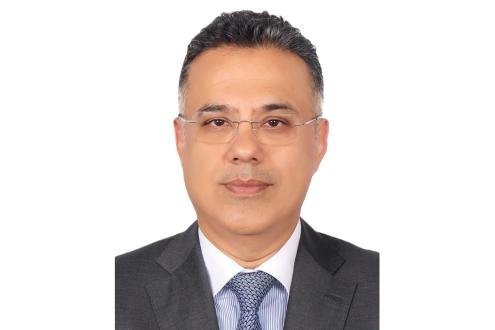
As the Middle East strengthens its position as a global hub for private wealth and family office activity, UHNW and HNW clients are demanding a more integrated, strategic approach to managing complexity. In his contribution to the Middle East Private Wealth Management Outlook 2026, Rohit Nanani, CEO of InCred Global Wealth, outlines how client expectations are shifting toward consolidation across investments, governance, and reporting. He explains how InCred is combining institutional investment discipline, digital intelligence, and high-touch advisory to deliver clearer decision-making, stronger governance frameworks, and future-ready family wealth structures in an increasingly interconnected regional ecosystem.
How are UHNW and HNW client expectations evolving as we enter 2026, and how is your organisation enhancing the client experience in response?
As we enter 2026, our clients are increasingly focused on integration — not just of portfolios, but of their entire financial ecosystem. UHNW and HNW families are looking for firms that can simplify complexity: bringing together investments, governance, and reporting within a coherent strategic framework. At InCred Global Wealth (DIFC) limited, we’ve centered our client experience on two priorities — personalized strategic insight and seamless family office consolidation. Our advisory model combines institutional investment discipline with the agility of a private client platform. The result is a clearer line of sight across asset classes, structures, and liquidity, allowing our clients to make faster, more coordinated decisions.
How will your firm leverage digital tools, AI and data intelligence in 2026 to strengthen advisor productivity and scale high-touch private wealth services?
We view technology as a multiplier of human advice. In 2026, we are deepening the use of data intelligence and AI‑enabled portfolio tools across our consolidated reporting platform. This enhances our ability to map exposures and identify opportunities across global holdings in real time. For our advisors, usage of models for analytics and document workflows drives productivity and precision, freeing up capacity to focus on strategic asset allocation, risk conversations, and family planning. We are also working on digital dashboards for our end clients to deliver curated insights, helping them engage with their wealth in a more dynamic, informed way — while preserving the bespoke, high‑touch experience they expect.
As family businesses deepen their focus on governance, succession and next-generation leadership, how is your organisation supporting clients in building long-term structures?
Strong governance and succession are fundamental to long‑term family wealth growth and preservation. We work with families to build structures that align decision‑making with shared purpose, linking investment governance to family values and next‑generation readiness. Our multi-functional and global expertise allows us to integrate legal, fiduciary, and investment structures under a unified umbrella, a key advantage when managing cross‑border families. We also run bespoke engagement sessions for next‑generation members, combining education with exposure to co‑investment opportunities, so they grow into their roles with both confidence and context.
Which investment themes, products and strategies do you expect will resonate most with UHNW and HNW clients in 2026, and why?
In the last few years , we have seen clients gravitating toward resilient income streams, selective growth, and diversification beyond public markets. Private credit, thematic equity, and structured yield solutions are resonating most strongly. Our investment process is built around strategic allocation discipline balanced by tactical agility. As rates stabilize, we’re encouraging clients to reposition for duration and consider hybrid strategies that blend public and private exposures. For families with established portfolios, inflation and geo-political hedge investments remain a growing area of interest, aligning performance with ehnhanced focus on capital preservation and new age themes.
How do you see the private wealth landscape in the Middle East continuing to develop in 2026, which types of clients are driving the strongest interest in the region, and how do you expect the broader wealth ecosystem — advisers, platforms, structures and providers — to evolve in response?
The Middle East region, and UAE especially continues to cement its position as a global center for wealth and family office activity. We’re seeing two distinct client cohorts driving this: regional entrepreneurs institutionalizing their wealth, and international families consolidating operations in the DIFC. InCred’s role has been to bridge investment strategy with structural consolidation, helping clients professionalize their family offices while maintaining control and privacy. The DFSA’s regulatory framework and the DIFC’s robust legal environment have provided the ideal foundation for this evolution. Looking ahead, we expect the ecosystem to become even better interconnected, with advisers, platforms, and service providers collaborating to deliver truly holistic solutions underpinned by governance, technology, and transparency.