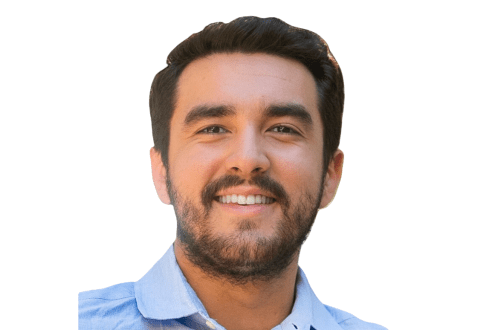
As artificial intelligence (AI) moves from novelty to necessity, Alex Kearns, Founder and CEO of DataDasher, is urging private wealth managers to rethink their operating models. In an interview with Hubbis ahead of the Independent Wealth Management Forum – Dubai 2026, Kearns outlined how DataDasher is helping advisers navigate client expectations, rising data complexity, and the proliferation of generic AI tools by offering industry-specific intelligence layered on top of enterprise-grade infrastructure. Kearns will be speaking at the Independent Wealth Management Forum – Dubai 2026 event on Wednesday 11th February, from 9.00am to 1.00pm at Shangri-La Dubai, where he will share further insights on building operational agility through verticalised AI.
Key Takeaways
- Vertical, Not Horizontal: Kearns cautions advisers against relying solely on general-purpose tools like ChatGPT or Microsoft Copilot, emphasising the superior performance and compliance of verticalised platforms tailored to wealth management.
- Real-Time ROI: Tools like DataDasher can save advisers 10 to 15 hours per week by automating meeting notes, follow-ups, and CRM updates, freeing up time for higher-value client engagement.
- The Three Questions: When evaluating AI tools, Kearns recommends asking: What’s the brain (the model)? What’s the data source? And what systems does it integrate with?
- US Leading, Global Catch-Up: While the United States has been a first mover, Kearns notes that adoption is accelerating globally, including among wealth managers in the Middle East and Asia.
- Beyond the AI Hype: With regulatory and client expectations rising, Kearns stresses the importance of choosing tools that go beyond surface-level AI integration to deliver workflow-driven insight and measurable impact.
A Layered, Industry-Specific Approach
“We are not just an AI company,” Kearns begins. “We’re an AI company for financial services, built specifically for private wealth and asset management.”
DataDasher’s platform operates as a context-aware AI assistant that integrates directly into an adviser’s daily ecosystem, including meeting platforms, emails, customer relationship management (CRM) systems, and portfolio systems. Unlike generic language models, the system is trained on workflows and terminology specific to the advisory space.
This means the platform is capable of joining meetings, summarising discussions, generating follow-ups, and drawing context from CRM entries or previous correspondence.
“The goal is not just automation,” Kearns explains, “but true integration, so the system thinks and works the way you do.”
Moving from Experimentation to Efficiency
Most advisers, Kearns believes, have already dabbled with AI tools. “They’ve tried ChatGPT or something similar,” he says, “but the next step is to move from experimentation to real, operational efficiency.”
That shift requires a departure from what Kearns calls “horizontal” tools, those built for broad, cross-industry use, towards “vertical” tools, which are tailored for a specific profession. The distinction is more than semantic: “Generic tools don’t understand regulatory requirements or industry nuance,” Kearns notes. “They also don’t connect meaningfully to the systems you already use.”
Verticalisation, therefore, is not just a matter of accuracy, but of compliance, scalability and return on investment (ROI). “If you’re an adviser,” he continues, “you don’t want to upload sensitive client information into a generalist tool trained on internet data. You want a system that pulls only from your own data, in a private, compliant environment.”
The ROI Equation and Integration Imperative
One of DataDasher’s core promises is time savings. “We regularly see 10 to 15 hours per week saved per adviser,” says Kearns. That is achieved through AI-driven automation of meeting summaries, email drafting, pre-meeting preparation, and CRM follow-ups.
The productivity gain, however, is not just about speed, but quality.
“When the AI already understands your client relationships, your workflows, and your terminology,” he explains, “you get outputs that are not just faster, but better.”
Kearns suggests a simple ROI calculator: “Estimate how many hours per week the tool saves, multiply by an hourly rate, and compare that to the cost of the tool. In most cases, the return is immediate.”
Another defining feature is integration. “ChatGPT doesn’t plug into Salesforce or HubSpot,” he adds. “We do. And that integration is where the real leverage comes from, when AI doesn’t just answer questions, but acts within your systems.”
Dispelling Misconceptions and Avoiding Pitfalls
One common mistake Kearns observes is over-reliance on bundled AI tools. “People say, ‘We use Microsoft, so Copilot is our AI strategy,’” he says. “But Copilot is useful for Microsoft products, it doesn’t understand adviser workflows or integrate with portfolio systems.”
Kearns argues for a more modular, flexible approach. “Different tools serve different needs,” he says. “You might use Copilot for Excel and Word, but that doesn’t mean you should use it for client engagement or compliance workflows.”
He also warns against the “black box” perception of AI. “The best systems still require human review,” he says. “You’re not abdicating responsibility, you’re using the tool to get more done, better and faster, with human oversight.”
Looking Ahead to Dubai 2026
The pace of AI adoption in wealth management is accelerating, particularly in mature markets like the United States. But Kearns sees significant momentum building elsewhere too, including the Middle East.
“With regulators demanding more transparency and clients expecting real-time, personalised service, the pressure is on,” he says. “Firms that adopt the right tools will pull ahead. Those that don’t risk falling behind.”
His message to advisers: “Great technology can help you win clients, but bad tech can help make you lose them. So that can be your competitive advantage or your Achilles heel.”
Looking Ahead to the Hubbis Independent Wealth Management Forum – Dubai 2026
As the UAE continues to assert itself as a global wealth management centre, the rise of independent wealth managers, external asset managers, and multi-family offices is redefining advisory excellence. The Hubbis Independent Wealth Management Forum – Dubai 2026 provides a vital platform for these professionals to examine the tools, strategies and partnerships needed to compete in a more complex, technology-driven landscape.
Join us on Wednesday 11th February, 2026, from 9.00am to 1.00pm at Shangri-La Dubai, for a deepdive into the future of independent wealth advice in the Middle East and beyond. CLICK HERE to view the event homepage.