AS TEMPERATURES plummet and snow hits the UK, many of us will be wondering how to keep warm without cranking up the heating.
Meanwhile, the new energy price cap means that households will see their bills rise from £1,755 to £1,758 a year.
But there are ways to keep costs low without spending a single penny.
Here we reveal eight simple ways to slash your energy bills while still staying warm.
Try house cloaking
Another free way to cut your bill is to try house cloaking.
The moment the sun comes up in the morning, simply open all the curtains and blinds around your home.
Read more on energy bills
Then as soon as it gets dark just shut your curtains.
Doing so puts a “cloak” around your home – insulating it for free.
The daylight from the sun heats your home, then closing the curtains when it’s dark traps the heat inside.
Switch off vampire devices
You could be wasting money unnecessarily by leaving vampire devices on standby.
Turning off these appliances could save you around £45 a year, according to the Energy Saving Trust.
You can switch off almost all electronic devices at the plug without changing their programming.
Or buy a standby saver, which lets you turn off all your appliances in one go to save money.
But remember that appliances including fridges and freezers need to be on at all times.
Become a draught detective
Walk around your home and look for window and door draughts where heat could be leaking from your home.
Plugging these gaps with draught excluders could save you up to £50 a year, according to the Energy Saving Trust.
Putting bubble wrap on cold bathroom windows or using clingfilm can help to stop the heat from escaping.
Or make your own draught excluder from old clothes and tights.
Turn down boiler flow temperature
Turning down your boiler’s flow temperature could save you money on your energy bills.
The boiler flow temperature controls how hot water gets before it is sent to your radiators.
As it flows through your radiators the water cools before it is sent back to your boiler.
The temperature of the water at this point is the return temperature.
Reducing the flow temperature also lowers the flow temperature, which can make your boiler more efficient and save you energy and money.
If you have a conventional boiler with a hot water cylinder then there will be just one dial or setting to adjust.
But if you have a combi boiler with no hot water cylinder then there will be two dials or settings – one for the radiators and one for hot water.
You need to adjust the radiator setting, which may be marked with an icon of a radiator rather than a tap.
Reducing your boiler’s flow temperature to 60 degrees could improve your boiler’s efficiency by nearly 4%, according to Nesta.
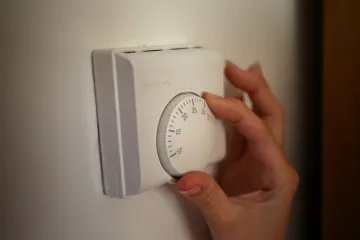
Turn down your thermostat by one degree
Turning down your thermostat by just one degree could save you £90 a year on your heating bill, according to the Energy Saving Trust.
Meanwhile, for every degree that you turn your thermostat down you could save 10%, according to Citizens Advice.
For most people, the most comfortable temperature to heat your home at is between 18 and 21 degrees.
Instead, put on an extra jumper or pair of socks or sit under a blanket to work or watch TV.
But if you have a health condition or are elderly then you shouldn’t set your temperature below 21 degrees.
Move your furniture
Rearranging your furniture could help you slash 10% off your bills.
That’s because radiators heat the air around them.
The warm air then heats the room.
If you put things in front of your radiator then the warm air can’t flow, so the room won’t warm up as quickly and you’ll use more energy to heat your home.
Try and move the furniture at least one radiator’s width away.
Take off any covers over the radiator too to avoid it being absorbed and not circulating.
Meanwhile, if you have curtains then stop them from hanging over the top or in front of the radiator.
Wash clothes at a lower temperature
Unless you need to wash bedding, towels or really dirty items then you could save money by washing your clothes at a lower temperature.
Turning down your washing temperature to 30 degrees could save you up to £29 a year, according to British Gas.
Around 40 degrees is the best temperature to wash items such as cotton, linen, viscose or acrylics, according to Which?.
Most stains will also be removed at this temperature, so there’s no need to use a higher setting.
In most cases, 40 degrees is also the best temperature to wash towels, though 60 degrees may stop them from going grey.
Bleed your radiators
If air builds up in your radiators then hot water may not circulate properly and they may not work as well.
This can cost you more energy and money.
To check if your radiator needs bleeding, touch the top of it when it is turned on.
If it feels hotter in some areas rather than others then it may be a sign that your radiator needs bleeding.
To bleed a radiator you just need a key, an old cloth to hold the key with and a plastic tub or jug to catch any water that may leak out.
Turn off your heating and make sure your radiators are cold before you get started.
Then insert the radiator key and turn it anticlockwise.
You should hear a hissing sound and when the water escapes, close the valve.
What energy bill help is available?
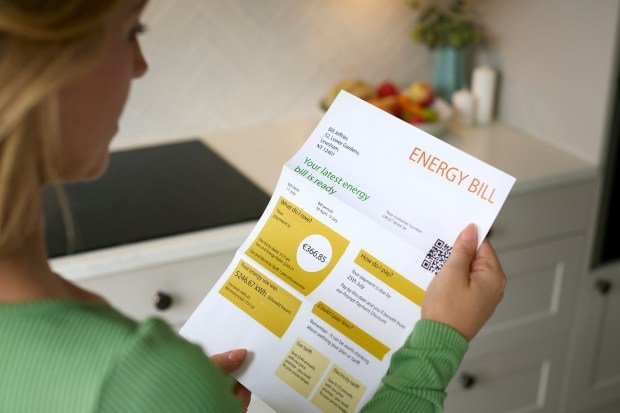
There’s a number of different ways to get help paying your energy bills if you’re struggling to get by.
If you fall into debt, you can always approach your supplier to see if they can put you on a repayment plan before putting you on a prepayment meter.
This involves paying off what you owe in instalments over a set period.
If your supplier offers you a repayment plan you don’t think you can afford, speak to them again to see if you can negotiate a better deal.
Several energy firms have schemes available to customers struggling to cover their bills.
But eligibility criteria vary depending on the supplier and the amount you can get depends on your financial circumstances.
For example, British Gas or Scottish Gas customers struggling to pay their energy bills can get grants worth up to £2,000.
British Gas also offers help via its British Gas Energy Trust and Individuals Family Fund.
You don’t need to be a British Gas customer to apply for the second fund.
EDF, E.ON, Octopus Energy and Scottish Power all offer grants to struggling customers too.
Thousands of vulnerable households are missing out on extra help and protections by not signing up to the Priority Services Register (PSR).
The service helps support vulnerable households, such as those who are elderly or ill.
Some of the perks include being given advance warning of blackouts, free gas safety checks and extra support if you’re struggling.
Get in touch with your energy firm to see if you can apply.