Forget chips for a moment. Forget the software. Look at the data center itself.
What is the one thing a specialized $30,000 Nvidia H100 chip cannot function without? It isn’t code. It’s Juice. Specifically, 24/7, interruption-free, carbon-free electricity.
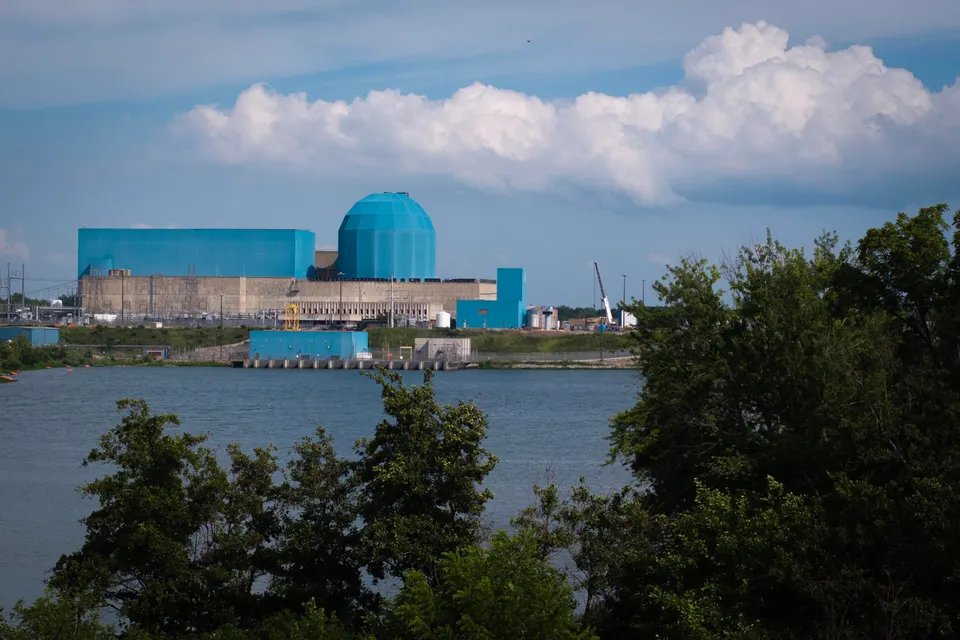
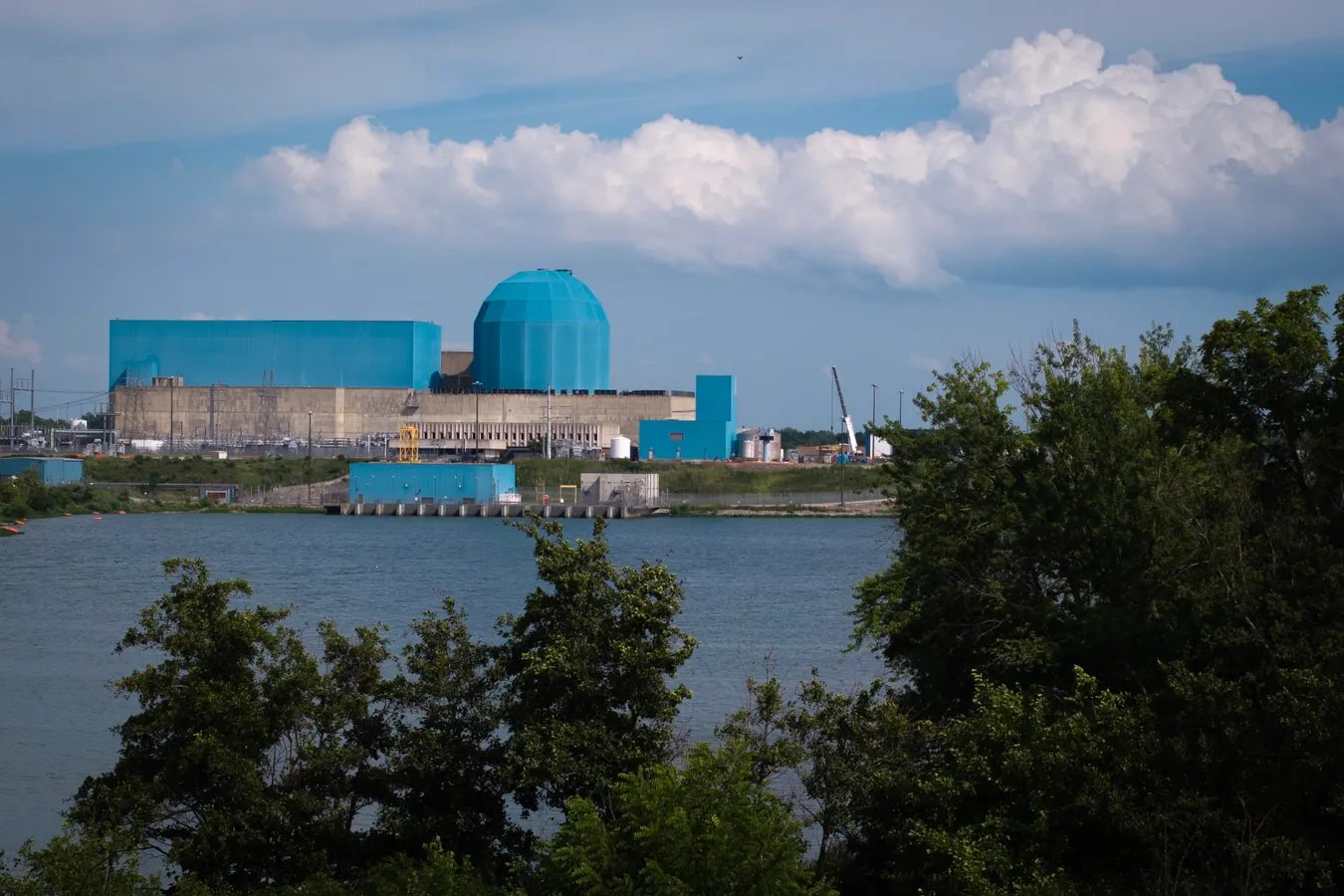
CLINTON, ILLINOIS – JULY 24: An aerial view shows Constellation’s Clinton Clean Energy Center’s single nuclear reactor power plant on July 24, 2025 in Clinton, Illinois. Meta recently signed a 20-year power purchase agreement with Constellation for the output from the plant. (Photo by Scott Olson/Getty Images)
Getty Images
And right now, the U.S. grid is effectively “sold out” of that specific commodity. Solar sleeps at night. Wind takes days off. Gas kills the “Net Zero” promise. Separately, see Is Oklo A $14 Billion “Paper Reactor” Bubble?
This scarcity has turned Constellation Energy (CEG) from a boring utility company into the owner of the most valuable real estate in the AI economy. It owns the nuclear power plants that Microsoft and Amazon are desperate to lease.
But with the stock trading at a tech-like 32x forward P/E—double the utility average—is this a fundamental shift, or a bubble waiting to burst? Let’s dissect it using the Trefis First Principles Framework. Related: How the $10 trillion AI bubble pops?
CEG Is Solving The “Physics” Problem For AI
The market isn’t buying CEG because it sells electricity. It’s buying CEG because it solves a physics problem that Big Tech can’t code its way out of.
- The Problem: AI training clusters run at 99% utilization, 24/7. They require “firm” power. If you plug a data center into a solar farm, you need billions of dollars in batteries to survive the night.
- The “Aha” Moment: Nuclear is the only power source on Earth that is both Clean (Zero Carbon) and Firm (Always On).
- The Asset: Constellation owns 21 nuclear reactors—the largest fleet in the United States. They don’t just produce power; they produce reliability.
The Valuation Sanity Test: Utility or Infrastructure?
Here is where the math gets messy.
- Constellation P/E: about 32x.
- Typical Utility (Duke/Southern): roughly 15x to 20x.
The Distortion: Why pay double? Because you aren’t buying a regulated utility. Most power companies are Regulated. The government caps their profit. If they make too much money, they have to lower prices for Grandma.
Constellation is Merchant (Unregulated). They sell power on the open market.
- The Implication: If AI demand drives electricity prices from $40 to $80 per MWh, Constellation keeps the profit. A regulated utility would have to refund it.
- The “Perfection” Scenario: To justify 30x, CEG must prove the recent Microsoft deal (Three Mile Island) wasn’t a fluke. They need to sign multiple contracts where Hyperscalers pay a 50% premium over market rates just to secure the supply.
Why Not Buy Vistra or Gas?
This is the most critical question. If the thesis is “Power,” why pay the CEG premium? Why not buy Vistra (VST) or just burn cheap Natural Gas?
Alternative A: Vistra (The “Dirty” Cousin)
- The Stock: Vistra trades cheaper (20x P/E).
- The Flaw: Vistra is a hybrid. It owns nuclear, but it also owns a massive fleet of Gas and Coal plants.
- The Customer Mindset: Microsoft and Google have pledged “Carbon Negative” by 2030. They cannot sign a massive 20-year deal with a gas plant without getting crucified by ESG investors. CEG is the “Pure Play.” It offers the Guilt-Free Electron that Vistra cannot fully match.
Alternative B: Natural Gas
- The Pros: It’s cheap, fast to build, and reliable.
- The Cons: It emits carbon. For an AI company, using gas is a temporary bridge, not a solution. It kills their climate goals.
Alternative C: Small Modular Nuclear Reactors (Oklo)
- The Reality: These are paper reactors. Deployment at a commercial level is likely to begin only around 2028. Could take years before they scale. Constellation has gigawatts of power today.
The Verdict: Constellation has a multi-year monopoly on “Scale + Purity.” If you need 500MW of clean power tomorrow, you have to call Constellation. There is no other phone number.
What Is The Biggest Risk?
Here is the risk that could kill the thesis overnight.
- The Event: In November 2024, FERC (The grid regulators) rejected a deal between Amazon and Talen Energy. Amazon wanted to plug directly into a nuclear plant (“Colocation”) to skip grid fees.
- The Ruling: FERC said “No.” They argued this steals power from the public grid and raises prices for regular families.
- The CEG Nuance: Constellation’s Microsoft deal (Three Mile Island) is a Restart. It puts new power onto the grid, bypassing the “stealing” argument.
- The Risk: If regulators get aggressive and decide all premium nuclear deals are unfair to the public, they could cap the prices CEG can charge. That forces CEG back to a 15x odd utility multiple—a 50% crash.
Our Take
Constellation Energy isn’t a power company; it is the Manhattan Real Estate of the AI Grid. They own the skyscrapers (reactors) that everyone wants to rent, and zoning laws prevent anyone from building more.
- Bull Case: The “Restart Model” works. CEG brings retired units back online, bypassing FERC blocks, and becomes the exclusive power broker for the AI revolution.
- Bear Case: Regulators intervene, declaring nuclear power a “Public Good” that cannot be sold exclusively to Tech Giants.
The Prediction: Buy the Landlord, but watch the Zoning Board. The asset is irreplaceable, but the government determines the rent.
Multi-Asset Portfolios Offer More Upside With Less Risk
Individual stocks can soar or tank, but multi-asset exposure steadies the ride. A spread out portfolio captures upside while limiting the damage from any one market.
The asset allocation framework of Trefis’ Boston-based, wealth management partner yielded positive returns during the 2008-09 period when the S&P lost more than 40%. Our partner’s strategy now includes the Trefis High Quality Portfolio, which has a track record of comfortably outperforming its benchmark that includes all three – the S&P 500, S&P mid-cap, and Russell 2000 indices.