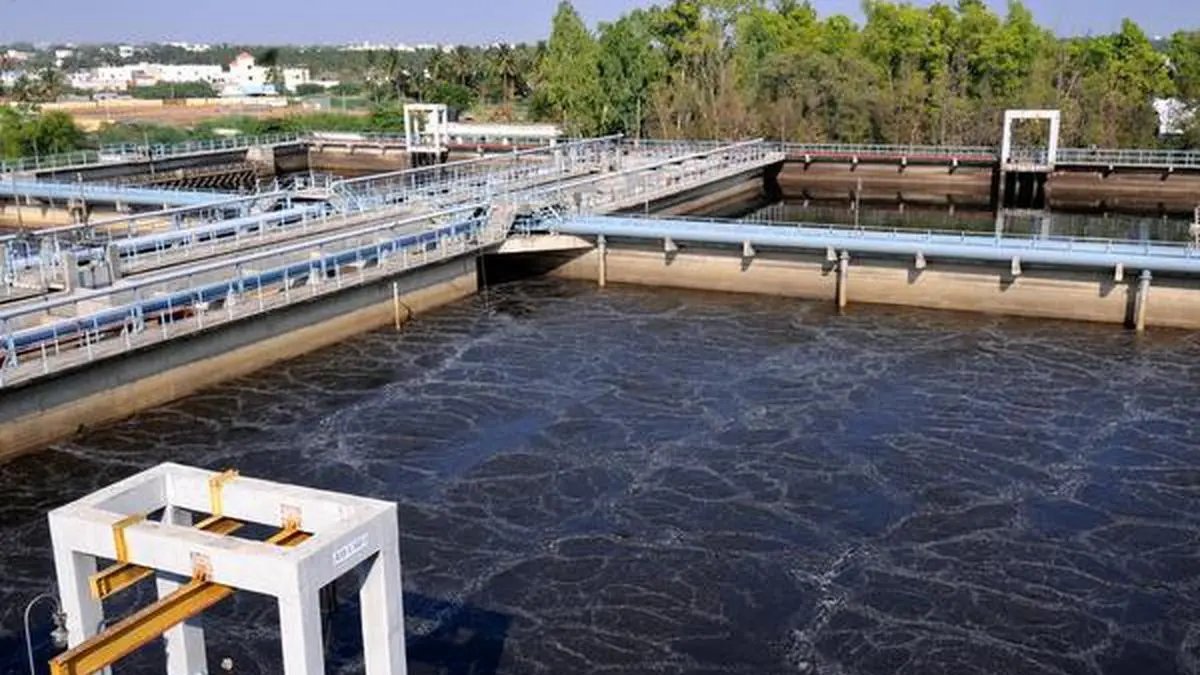
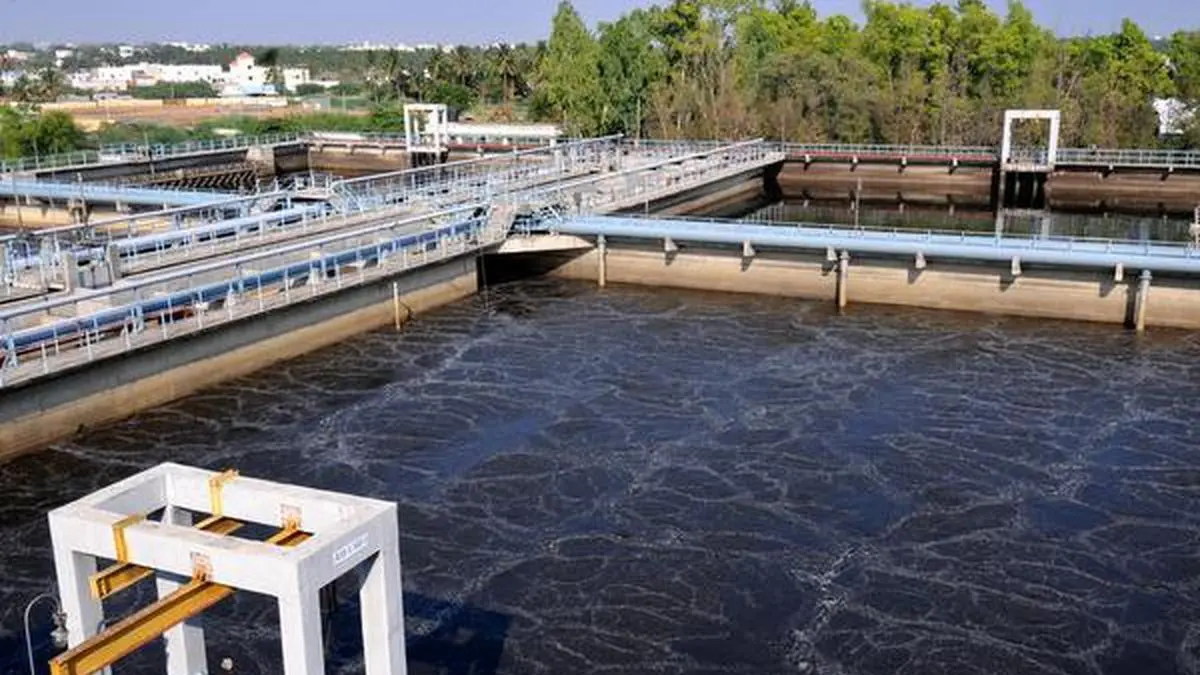
File photo: A wastewater treatment facility in Coimbatore
| Photo Credit:
PERIASAMY M
India stands at a critical juncture in its water management journey. With agriculture consuming nearly 80–85 per cent of the country’s freshwater, the pressure on groundwater and surface resources has never been greater. At the same time, rapid urbanisation and industrial expansion are widening the gap between freshwater demand and supply, while also generating large volumes of wastewater. Climate variability exacerbates the stress by disrupting availability and reliability. The water demand is further expected to increase, requiring innovative solutions to meet it.
At this point, it is crucial to understand that the solution does not lie in looking for new water but in creating new water, a shift that is being enabled by next-generation wastewater treatment and re-use technologies.
Countries worldwide facing acute water scarcity have already demonstrated that treated wastewater can be used to meet a significant share of agricultural demand. India is now stepping up efforts in this direction, and the early signs are quite promising. A report by the Central Pollution Control Board (CPCB) revealed that India generates over 72,000 MLD of wastewater, of which barely 28 per cent is treated. Even a 20 per cent increase in treated and re-used water can unlock billions of litres of irrigation potential, which is enough to bring large tracts of semi-arid land under assured cultivation.
Why wastewater reuse for irrigation makes economic sense
Unlike freshwater extraction, treated wastewater is climate-resilient, which means it is largely unaffected by monsoon variability. It is available year-round and does not depend on groundwater pumping. Additionally, it is cost-predictable, i.e., expenditures are stable and foreseeable.
The treated wastewater also contains nitrogen, phosphorus, and other micronutrients, which are beneficial to crops, and it allows local reuse partnerships between municipalities and farmer groups. Studies indicate that reuse-based irrigation can reduce farmers’ input costs by 15–25 per cent, improve soil health over time, and create new revenue streams for municipal bodies through long-term offtake contracts.
The technology turning point
Modern treatment technologies have moved far beyond the conventional sewage treatment solutions of the past. Today’s solutions enable fit-for-purpose water, where treatment is customised according to crop category, soil type, and irrigation method. For example, Advanced Biological Systems (MBBR, SBR, IFAS) to stabilise organic load, Tertiary Polishing (dual media filtration, activated carbon) for clarity and odour removal, Membrane Bio-Reactors (MBR), Ultra-filtration (UF) & high-efficiency membranes for pathogen removal – these technologies are often used collectively to treat water. Smart Nutrient Retention Models that preserve NPK (Nitrogen, Phosphorus, and Potassium) values are beneficial for crops, besides AI-driven monitoring that ensures compliance with CPCB irrigation norms, are some other prominent ones.
This precision treatment ensures farmers receive water that is safe, nutrient-balanced, and consistent across seasons; something groundwater cannot guarantee.
Government push: A major catalyst
With India targeting 70 per cent wastewater re-use by 2047, the sector is poised for exponential expansion. An independent study by the CEEW estimates that the market value of treated wastewater in India will reach ₹190 crore in 2050, provided the country has mechanisms to sell it to select sectors. This would require a significant policy momentum, and India is accelerating the shift in this direction through regulatory reforms.
The National Water Policy 2021 emphasises reuse-centric water security, AMRUT 2.0 mandates treated wastewater re-use plans for all urban local bodies, state-level mandates (Tamil Nadu, Gujarat, Maharashtra, Rajasthan) require re-use for agriculture and industry, NMCG encourages cities along the Ganga to sell treated sewage to farmers and industries; these initiatives collectively indicate a strong regulatory push.
The road ahead
For India to secure its food and water future, wastewater must become a mainstream irrigation source. The transition requires a “three-P partnership” – Policy, Public Agencies, and Private Water Technology Leaders. With a strong regulatory push, ready markets in agriculture, and proven technologies, India stands at the cusp of a wastewater-led agricultural revolution.
The next decade will belong to organisations that can treat, transport, and distribute high-quality reclaimed water with precision and accountability. This is not just a business opportunity to make a profit, but as a national responsibility to create new water, strengthen rural livelihoods, and build climate resilience for generations to come.
The author is CEO, WOG Technologies
Published on November 29, 2025