Unlock the Editor’s Digest for free
Roula Khalaf, Editor of the FT, selects her favourite stories in this weekly newsletter.
Robert Salter
director at accounting firm Blick Rothenberg

The decision by Rachel Reeves to freeze income tax allowances and thresholds until April 2031 is a tax rise in all but name. It will result in many lower income earners, such as many people on zero-hours contracts or those doing seasonal work, being drawn into income tax for the first time.
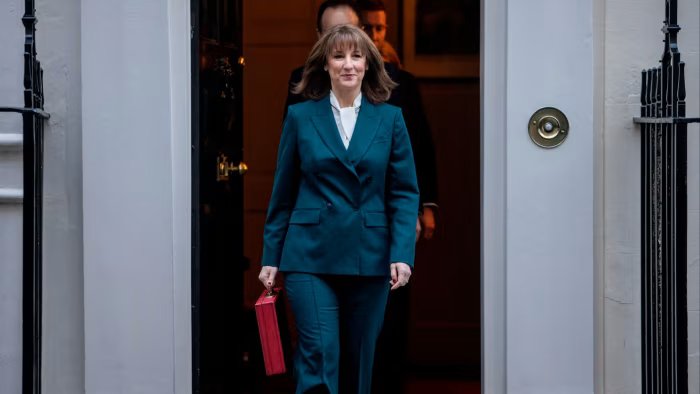
Chancellor Rachel Reeves indicated she will ease the administrative burden for pensioners whose only income is the basic state pension, who would otherwise need to prepare tax returns from 2027-28.
Moreover, those on higher incomes will increasingly be taxed at 40 per cent or become liable to a “cliff edge”, because of the child benefit charge or the taper of the personal allowance. These cliff edges often cause taxpayers to reduce their hours, for example, and should have been addressed by Reeves if she wanted proactively to eliminate some of the factors undermining economic activity and growth.
Many taxpayers will also be caught by the planned 2 percentage point increase in income tax on dividends, rental profits and savings income. This surcharge will potentially impact renters, with landlords trying to increase rents where they can to protect their net income — and will also impact those self-employed individuals working through personal service companies and paying themselves through dividends rather than salary. Again, this may result in these business owners looking to increase their prices where possible in an attempt to protect their net income.
Simon Edelsten
fund manager at Goshawk Asset Management

Markets were well briefed about this Budget and the limited options available once more radical steps had been ruled out. Before the chancellor stood up, top hats had been inspected and no rabbits had been found. The UK bond market and sterling exchange rates wobbled, but ended where they started.
While the investment tone in the UK has been gloomy, particularly about rising costs, international investors are upbeat about the range of growth opportunities — especially artificial intelligence, but also advances in robotics, machine learning, alternative energy, medical diagnostics and streamed entertainment. Despite British strengths (commercial and academic) in these areas, there seemed little in the Budget to help them flourish. Only the UK defence sector got the expected lift.
As with last year’s Budget and the Spring Statement, the £22bn fiscal headroom leaves little room for error. The component parts of this number include volatile debt payments and uncertain forecasts of government spending — the growth in both labour and capital costs being prone to revision. The shock absorbers in UK finances have been wearing thin since the 2008-09 financial crisis and the UK gilt market will be jumpy until these have been rebuilt.
Laura Suter
director of personal finance at AJ Bell

The new limit on cash Isa contributions to £12,000 from 2027 — down from £20,000 — is less likely to spark an investing revolution than the Office for Budget Responsibility is to emerge unscathed after the leak fiasco. The chancellor hopes the reduced limit will nudge people into investing, but people are more likely to leave their cash in taxable savings accounts — and will pay a higher rate of tax on that money from 2027.
The carve-out for cash Isas for those over the age of 65 is an unnecessary complication to the already complex Isa system. In one move, the chancellor has deepened a generational divide, adding complexity to what was supposed to be a simple savings scheme. We will now have six different annual limits for what you can pay into Isas and six different Isa accounts. And that’s before the government reviews the Lifetime Isa and launches a replacement. Simple? I think not.
A quarter of all cash Isa subscribers are over the age of 65 — and presumably the argument is that pensioners have a greater need for cash than younger people. But that is a hugely simplistic view of people’s finances that doesn’t take into account personal circumstances or short-term spending needs.
Christine Ross
Client director at Handelsbanken Wealth & Asset Management

The perennial tinkering by governments with the pension rules only serves to discourage much-needed saving for later life. This time the target is those who make additional contributions to their employer’s pension scheme by giving up a proportion of their salary. The main benefit of salary sacrifice, as opposed to making personal pension contributions, is that neither the employer nor the employee suffer national insurance contributions on the amount paid into the pension.
Many employers share their 15 per cent NI saving with the employee which, when added to employee NI savings of up to 8 per cent, further enhance the amount received by the pension. The new rules will not come into effect until 2029, so there is time for employees to maximise their pension payments.
On the other hand, this potentially creates an administrative burden for the employer. They will need to differentiate between contributions that escape NI and those on which the tax is levied, and report these. It may be that some employers will in future limit the ability to sacrifice salary for pension to £2,000.
There is still an incentive to make contributions through an employer’s payroll: the benefit of immediate tax relief. The full contribution is received immediately by the pension scheme and starts to achieve tax free growth. The alternative is to pay into a pension out of taxed income, where basic tax relief is received automatically but any higher rate relief having to be claimed through self-assessment. Depending on when the tax return is filed, and how quickly HMRC pays a refund, it can take many months to benefit from the full relief.
Overall, it is an unwelcome change that raises a significant amount of tax, but the remaining pension benefits still outweigh alternative forms of saving.