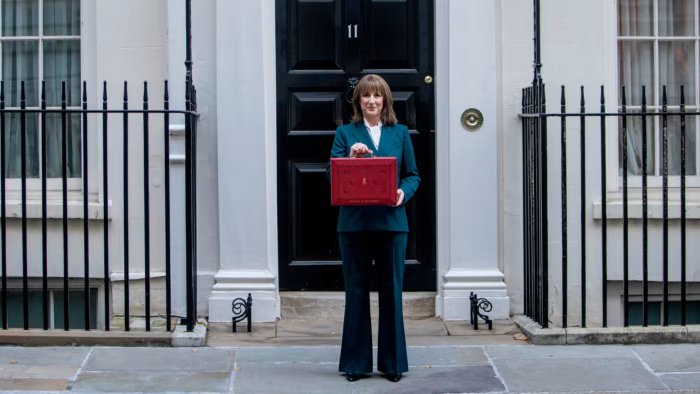
Chancellor Rachel Reeves delivered a Budget that takes UK taxes to an all-time high, hitting workers, the wealthy and business to fund higher welfare spending and build up her emergency buffer.
Reeves, who increased taxes by £40bn in her first Budget last year, announced a further £26bn rise on Wednesday that will lift the overall burden to 38 per cent of GDP by the end of the parliament.
“I’m asking everyone to make a contribution,” said the chancellor, who later refused to rule out more tax rises in future Budgets. “I won’t pretend otherwise.”
The Budget had a chaotic start, with the Office for Budget Responsibility accidentally publishing details of the chancellor’s plan on Wednesday morning before she could announce it in parliament.
The package raises revenue through freezing tax thresholds, hitting pension salary sacrifice schemes and imposing new levies on property and dividends, with spending expanded by measures such as scrapping the two-child benefit cap.
But much of the increased tax is due to come in several years’ time while the spending comes sooner. “Spend now, pay later” was the verdict of the Institute for Fiscal Studies.
The respected think-tank said the chancellor was “relying heavily on tax rises towards the back end of the parliament”.
Official forecasts made for uncomfortable reading for Reeves, with downgrades to projections for both growth and household disposable incomes. Inflation will also be higher than previously forecast.
But the bond markets welcomed her decision to increase the government’s fiscal headroom — its budgetary room for manoeuvre — to £21.7bn by 2029-30, compared with £9.9bn at her last fiscal statement.
The OBR said a weaker growth outlook and rising tax burden would squeeze household finances, despite Reeves arguing that she was acting to cut living costs.
The fiscal watchdog cut its forecast for households’ disposable income, which is now set to grow at an average pace of just 0.5 per cent a year, the second-worst period for living standards since the 1950s, according to the Resolution Foundation think-tank.
Labour MPs cheered higher taxes on landlords and dividends, along with a new “mansion tax” on homes worth more than £2mn, but ordinary Labour voters will also take a big hit.

Acknowledging that the Budget would have “a cost for working people”, Reeves froze income tax thresholds for an extra three years, raising £12.7bn by 2030-31, by far the day’s biggest single revenue-raiser.
The OBR predicted that one in four people would be caught by the 40 per cent higher rate of tax by the end of the forecast period.
A separate policy to curb tax advantages of salary sacrifice schemes will hit employers hardest but employees are expected to see lower wages and lower pension contributions as a result. That is planned to raise almost £5bn in 2029-30 but less in subsequent years.
Reeves’ Budget will partly fund higher annual welfare spending, which is set to be £16bn more a year in 2029-30 than previously forecast by the OBR. That includes more than £3bn earmarked by Reeves for the abolition of the two-child benefit cap and is also boosted by inflation.
That announcement won the biggest Labour cheer of the day, but the Conservatives warned that working people are paying higher taxes to fund extra benefits, especially to families with large numbers of children.
Labour MPs had previously forced Reeves to abandon plans to cut £5bn from the welfare bill and also pressured the chancellor into a £1.3bn U-turn on plans to slash winter fuel payments.
The Budget was announced after the OBR accidentally published its assessment of Reeves’ statement an hour before she actually delivered it.
A plainly furious chancellor said: “It is deeply disappointing and a serious error on their part.” The OBR blamed a “technical error” and apologised, but the blunder added to a sense of disarray around the Budget process.
The fiscal watchdog had already infuriated Reeves by choosing this moment to address Britain’s long-standing productivity problems, cutting its productivity growth forecasts by 0.3 percentage points with the loss of £16bn in projected tax revenues.

However, stronger than expected tax revenues over the OBR forecast, including from higher real wage growth, helped to provide the chancellor with more room for manoeuvre than some expected.
Reeves’ decision to boost her fiscal headroom reassured investors, giving gilt markets a boost and pushing 10-year borrowing costs down 0.08 percentage points to 4.42 per cent.
“We feel comfortable to come back to the UK market and add gilt exposure,” said Ales Koutny, head of international rates at Vanguard, the world’s second-largest asset manager.
Among the other tax measures introduced by Reeves are charges on electric cars raising £1.4bn, gambling duty reform to bring in £1.1bn, and a council tax surcharge on homes worth more than £2mn, which will raise £400mn in 2029-2030.
The surcharge will be introduced from April 2028 and will take the form of a recurring annual levy. The charges will spread among four price bands, ranging from £2,500 for a property valued in the lowest £2mn-£2.5mn band, to £7,500 for a property valued in the highest band of £5mn or more.
Dividends will also be more highly taxed. From April 2026, a 2 percentage point increase to the basic and higher rates of tax on dividends will lift them to 10.75 and 35.75 per cent respectively, raising £1.2bn a year on average from 2027.
Reeves insisted that by freezing income tax thresholds rather than raising rates she had “kept every single one of our manifesto commitments”.
But Kemi Badenoch, Conservative leader, said Reeves should resign. “She has broken every single one of her promises,” she said, adding that the Budget was “a total humiliation”.
The fiscal package comes after Reeves’ post-election Budget last year raised taxes by the most since the early 1990s. It represents a breach of the chancellor’s subsequent vow not to come back for more taxes and will pile pressure on an economy that has been struggling to gain momentum.
UK inflation is forecast to average 3.5 per cent in 2025, up from the 3.2 per cent expected in March, according to the OBR.
Inflation is set to decline to 2.5 per cent in 2026, compared with 2.1 per cent forecast in the spring. Reeves is pinning her hopes on further rate cuts by the Bank of England as soon as December.
Additional reporting by Emily Herbert