
SNAP lapse impacts Port St. Lucie food banks
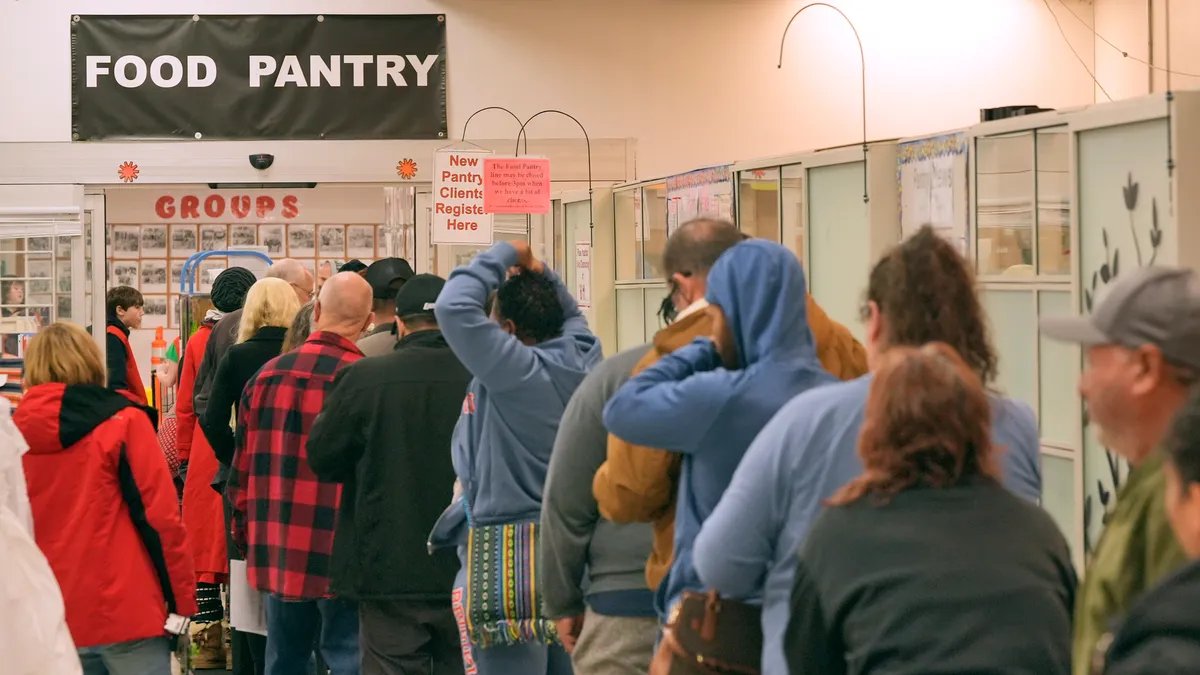
“If I don’t come here, we don’t eat,” said a Port St. Lucie woman who relies on food banks amid the halt in SNAP payments.
The Trump administration must fully fund the federal food assistance program, which helps 1.4 million Michiganders afford food, by Friday Nov. 7, one day after the judge’s ruling.
The ruling came from Rhode Island U.S. District Judge John McConnell, who heard during a virtual hearing a motion to enforce an earlier order from the court to pay partial benefits two days after they would typically be loaded on EBT cards, or grant a temporary restraining order on the pause in benefits. On Thursday, Nov. 6, the Trump administration filed a notice that it will appeal the judge’s orders.
The developments are the latest in a fast-moving situation that involves two lawsuits seeking to keep Supplemental Nutrition Assistance Program, or SNAP, recipients from going without food assistance, an appeal from the Trump administration, a federal shutdown that is now the longest in history, and changing guidance from the government on how much it will fund in the interim.
The Michigan Department of Health and Human Services on Thursday evening applauded McConnell’s decision to require the USDA’s Food and Nutrition Service (FNS) to fully fund SNAP.
MDHHS said in a statement Thursday night: “Absent a successful appeal by FNS, SNAP recipients who normally receive their benefits on the third, fifth or seventh of the month should receive their full SNAP allotment within 48 hours of MDHHS receiving the funds. All other SNAP recipients will receive their full benefit payments on their normally scheduled date.”
On Wednesday, Nov. 5, prior to McConnell’s ruling and the administration’s subsequent appeal, MDHHS said households would begin receiving partial payments starting Saturday, Nov. 8, in response to the federal government reducing the Supplemental Nutrition Assistance Program, or SNAP, to about 50% of recipients’ payments for November during the shutdown.
In a memo to SNAP state agency directors dated Nov. 5, the U.S. Department of Agriculture followed up on its previous guidance issued the day before and said maximum allotments are being reduced by 35% instead of 50%.
The U.S. Department of Agriculture (USDA) said earlier this week that it would provide partial payments but acknowledged that the process could take a few weeks to several months.
The USDA “performed further analysis and determined that the maximum allotments need only be reduced by 35%, instead of 50%, to deplete the SNAP contingency fund and has issued a revised memorandum and allotment tables to State agencies,” USDA official Patrick Penn said in a court filing.
Funding for the November benefits comes from nearly $5 billion in contingency funds for the month. The federal government in October directed the state to pause SNAP benefits for November because of the shutdown.
On Nov. 5, the Center on Budget and Policy Priorities, a left-leaning Washington, D.C.-based think tank, released an analysis that found the USDA’s initial plans would use about $3 billion of contingency funds and not the full $4.65 billon the federal government said it had available for November SNAP benefits.
Food Bank Council report due next week
Meanwhile, on Nov. 6, House Speaker Matt Hall held a news conference with Phil Knight, executive director of the Food Bank Council of Michigan. Knight said food banks can’t scale up to replace a program as big as SNAP, partly because of the infrastructure investment that would be required. “We already have more trucks on the road than Walmart,” he said.
Michigan food banks are buying five times more food now than they did in 2019 and “we pray that we don’t have to do it very long,” and that the federal government will reopen, Knight said.
Hall said the recently passed budget includes $30 million that could be used for food relief and that the state has committed $4.5 million so far. He and Gov. Gretchen Whitmer expect to receive a report from Knight the middle of next week, and, at that time, it is possible the state could commit more funds, he said.
Asked whether he would support the state filling in the percentage of SNAP payments not being covered by the federal government once SNAP payments resume, Hall said, “What we support is what we’ve done.
“We don’t want people to be hungry; we don’t want people to starve during this difficult time, but we also need realistic solutions,” Hall said. “I am really urging the federal government to get their act together,” and “make a deal.”
Nearly 100 food banks in Detroit, mapped
In Detroit, the city launched a new online map to find nearby pantries, in response to the SNAP disruption.
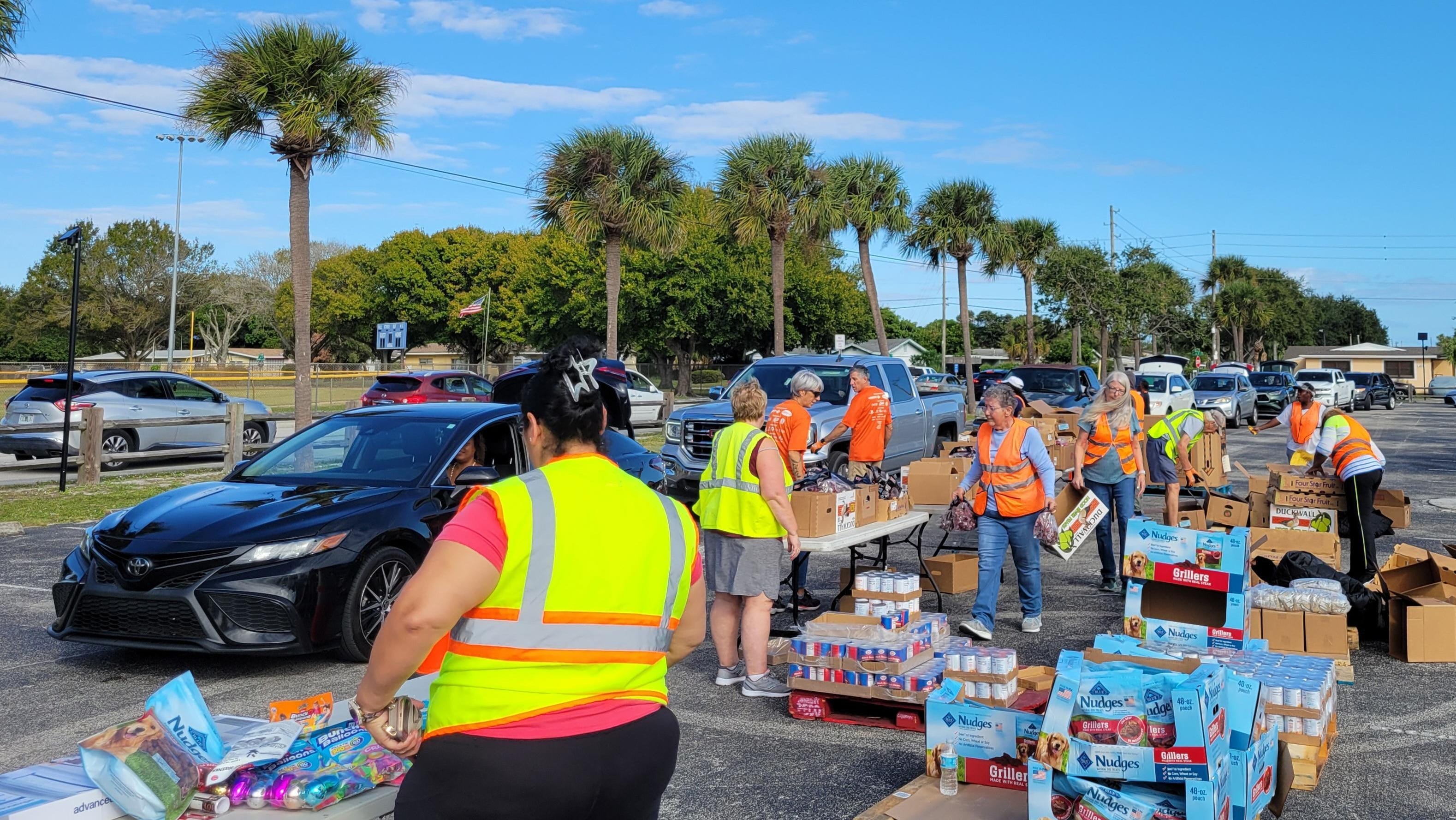
The map features 93 pantries and officials anticipate that number to grow. On the morning of Wednesday, Nov. 5, Duggan visited one of those pantries — a drive-through distribution site outside of the Jesus Tabernacle of Deliverance Ministries church on the east side of the city — and loaded fresh produce into cars.
“We’re going to take care of you,” he said, standing in a line of volunteers in a parking lot near boxes of fruits, vegetables and packaged goods.
The city also put out a call for volunteers to staff the network of emergency food pantries. Duggan told the Free Press on Wednesday that 1,300 people had signed up to help. That’s more volunteers than sites available, he said, but that’s a “nice problem to have.”
Detroiter Tahia Lee volunteered at the drive-through pantry for the first time. For her, it’s personal.
“Having been down on hard times before and using the pantry — or several of them — I think it’s only right to help out and give back,” said Lee, who arrived around 8 a.m. for her shift. She wants to volunteer again.
Kent Useary, a retired truck driver, came to the drive-through using a mobility scooter. Useary, who does not receive SNAP benefits, is a regular at the pantry. He had thoughts on the disruption: “Give the working people what they deserve.” Useary has limited ability to walk so the pantry helps him out.
“I can’t get around like everybody else to go to the market,” the 65-year-old, who lives near the church, said.
Late last week, Duggan announced $1.75 million in federal and state grants for nonprofits combating food insecurity, including Gleaners Community Food Bank, Forgotten Harvest and Metro Food Rescue. That will last until next week, Duggan said.
If more money is needed, Detroit City Council President Pro Tem James Tate is expected to lead council efforts to approve additional funding. Duggan said the city would also approach philanthropic organizations and ask people to donate food if they can.
How to get help and volunteer
- To view the city’s food pantry finder, go to www.detroitmi.gov and click “Food Locations” to view the interactive map, searchable by distance and council district. The map includes locations and days and hours of operation. To help out, click “Volunteer @ Pantries” and fill out the form to sign up for four-hour shifts.
- MSU Extension, a SNAP outreach agency, has a community food assistance website, featuring ways to get help, recipes and ways to stretch a food budget. To learn more, go to www.canr.msu.edu/nutrition/community-food-assistance
- To find area food pantries and other resources, go to www.fbcmich.org/food-bank-network; www.pantrynet.org; www.forgottenharvest.org/find-food, or call the Michigan 211 line. Call locations ahead to confirm availability, hours and location.
- The Fair Food Network’s Double Up Food Bucks program, which matches purchases of fruits and vegetables using food assistance benefits up to $20 a day, has lifted the cap and it is now unlimited through the end of the year. Shoppers can also get $40 in Double Up Bonus Bucks, an additional offering, for fresh and frozen produce. For more information, go to doubleupfoodbucks.org. Call the program’s hotline at 866-586-2796 or text 734-213-3999 (9 a.m. to 5 p.m., Monday to Friday). Find a participating location at DoubleUpFoodBucks.org/find-a-location.
Free Press reporters Todd Spangler and Paul Egan contributed.
Reach reporter Nushrat Rahman at nrahman@freepress.com