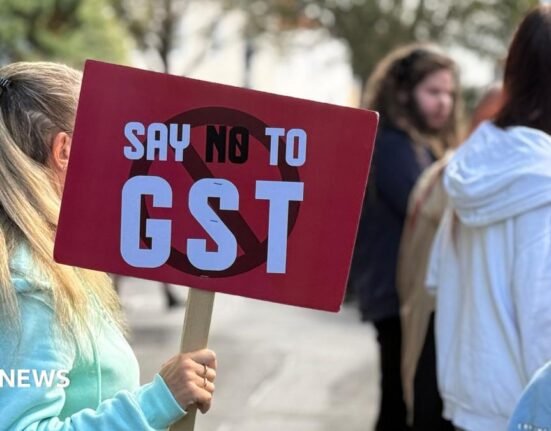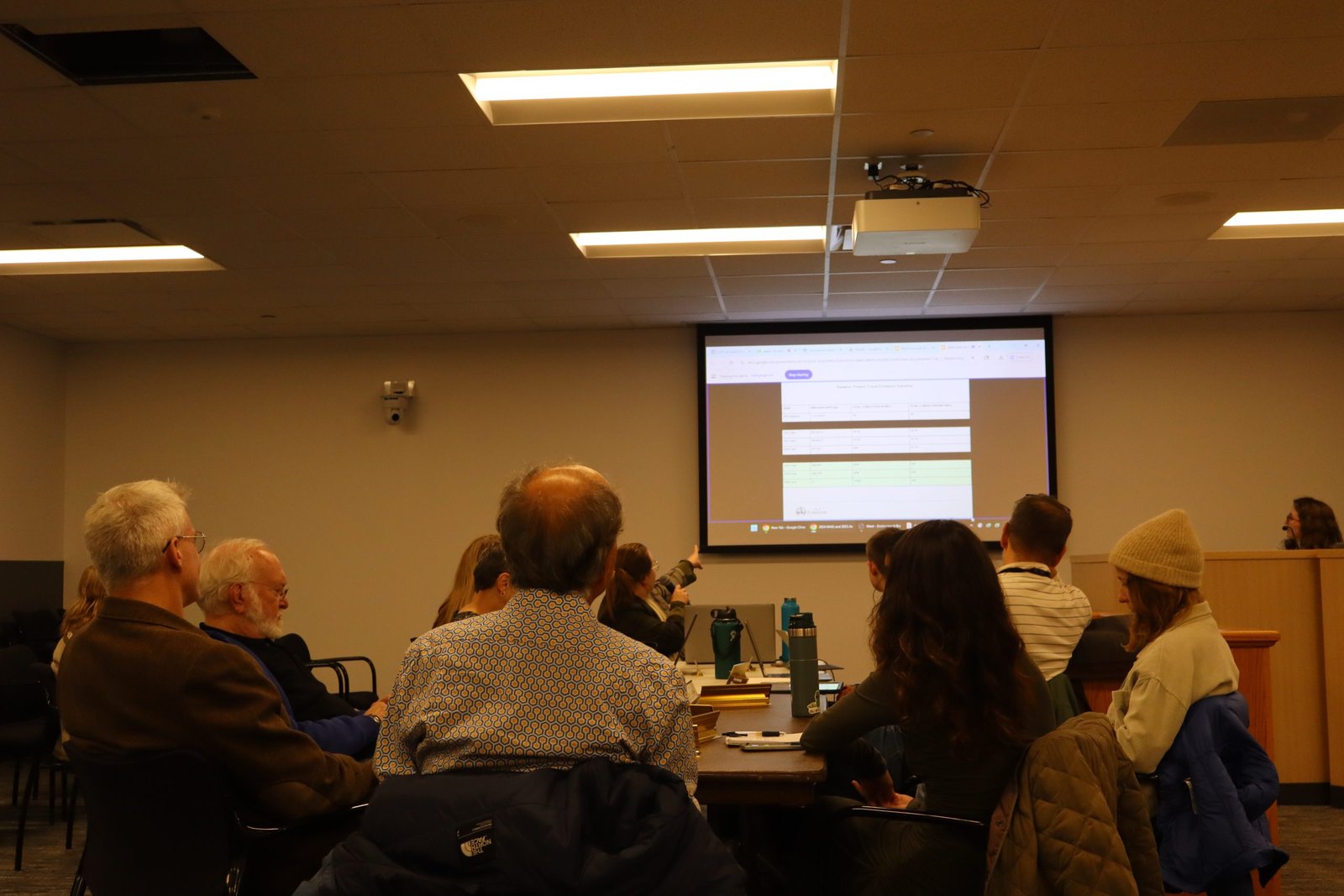
Evanston’s Environment Board agreed at its meeting Thursday night to ask the City Council to keep $100,000 in annual wheel tax revenue in the city’s Sustainability Fund instead of moving it to the General Fund, which officials have proposed to help balance the 2026 budget.
The city created the Sustainability Fund in 2022 to set aside money specifically for staff positions, programs and projects that advance the Climate Action and Resilience Plan (CARP) and other environmentally friendly initiatives. During its Oct. 23 meeting held at Morton City Hall, the Environment Board reviewed how the city’s proposed 2026 budget would impact that fund specifically. City Council is expected to discuss the budget on Monday evening as well.
In their 2026 proposal, the city is asking all departments to cut expenses by 3% in the face of budget uncertainty.
The Environment Board objected to this idea at Thursday’s meeting, with members saying they felt the move would set a bad precedent and hurt sustainability efforts, especially since the budget proposal shuffles some programs from the General Fund to the Sustainability Fund without providing additional revenue to pay for them.
Councilmember Jonathan Nieuwsma (4th Ward), who previously sat on the board and attended the meeting as a de facto liaison, suggested that members pass a resolution to send a message to the council.
While members agreed on what they objected to, they struggled over how specific they should get in their feedback and whether to suggest revenue solutions. The board ultimately voted for members James Cahan and Gennifer Geer, who drafted potential resolutions as the meeting went on, to send what they came up with to board co-chairs Katarina Topalov and Paula Scholl. The co-chairs would then “synthesize” these drafts into something to send to council in time for Monday’s meeting.
Sustainability Fund plans
Overall, the Sustainability Fund includes a projected $262,000 in revenue, not counting $730,450 transferred from other funds, and about $1.5 million in expenses. Cara Pratt, the city’s sustainability and resilience manager, said some changes in revenues and expenses reflect one-time grants being spread out over multiple years and errors that will be corrected in later drafts. On top of that, $25,000 is simply being moved from the General Fund to the Sustainability Fund, so there’s no actual net budget increase for that.
But other changes do reflect real funding gains and losses.
For example, the proposed budget assumes that a $250,000 U.S. Department of Energy grant to help implement the Healthy Buildings Ordinance isn’t coming — simply because, given the second Trump Administration’s priorities, it’s not something Evanston can count on.
“I don’t know if or when we’ll get it,” Pratt said Thursday.
Additionally, the budget also calls for shifting money around in a way that would result in a net reduction in Sustain Evanston grants.
The Sustainability Fund is also getting a $30,450 increase in transfers from Northwestern’s Good Neighbor Fund to keep up with inflation, and it would get a $15,000 increase in funding for seasonal employees to hire interns in the Transportation and Mobility Division.
But it was the proposal to keep $100,000 in the General Fund that dominated Thursday’s discussion. Topalov said she worried that this move could become an annual occurrence, which would hurt sustainability initiatives in the long term.
“There was a reason why we decided, you [City Council] decided, that there would be an earmarked pot of money that goes toward sustainability,” she said.
Nieuwsma replied that, if the board is against the move, it should let the council know.
“That feedback would be worth something,” he said.
Board member Olin Wilson-Thomas suggested that the group recommend raising the wheel tax, at least on “large, polluting cars,” to add money to the Sustainability Fund. Scholl said that might be worth discussing at a future meeting, and suggested that the board stick to the wheel tax funding issue for now.
This led to a long discussion over the statement to send to City Council, and if it would be more powerful to keep the comments simple or to offer a funding solution as well. Board members also debated if a wheel tax increase should be income-based to avoid penalizing low-income residents more likely to drive older cars.
Nieuwsma urged simplicity.
“The simple message the council will hear is don’t defund sustainability,” he said.

Deconstruction Ordinance
Earlier in the meeting, the board revisited an ongoing discussion on the city’s progress in meeting CARP goals, especially those items that were supposed to be completed this year.
One of those time-sensitive goals was for the city to propose, but not necessarily pass, a Preservation/Deconstruction Ordinance — in other words, an ordinance that would require buildings to be taken apart rather than demolished so that materials can be saved for reuse or recycled.
Nieuwsma wondered if that kind of ordinance is something the city should realistically pursue at the moment, given that the Rebuilding Exchange recently shut down after a $4 million U.S. Environmental Protection Agency grant it was counting on ended up in limbo.
He said that working with the Rebuilding Exchange would’ve “offered some carrots for contractors,” but now, the city would be left with nothing but sticks.
Board member Gul Agha asked if the Rebuilding Exchange could come back.
“When the administration changes,” Topalov answered. “They lost $4 million in grants.”
Nieuwsma said that, with “such a local asset” out of commission, he wanted to get the board’s sense of “where we might get more bang for our buck.”
“Making sure the enforcement is there” for the Healthy Buildings Ordinance, Geer replied.
Other board members didn’t raise any objections to that.
“I’m inclined to put it on the shelf, for now,” Nieuwsma said.”[Implementing] HBO is going to take everybody’s time and energy.”