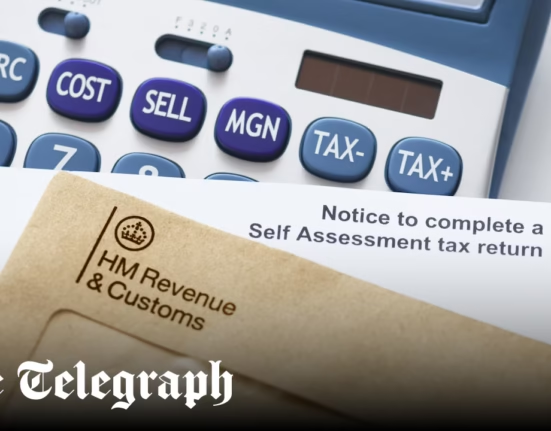
The Treasury has responded to an online petition calling for a stop to making tax digital next year.

Income tax rises for Scots in April – how the changes affect you
The Uk Government has responded to an online petition calling for planned changes to make tax digital from April 2026 to be scrapped. More than 16,800 people have signed the e-petition, hosted on the UK Government’s Petitions Parliament website.
Petition creator Saira Khan argues that many small businesses use paper-based tax records and may lack the digital skills to do it all online. However, in a written response to the proposals, the Treasury said that making Tax Digital “will help businesses stay on top of their affairs, boost productivity and ensure more of the right tax is paid”.
The statement added that the UK Government will support users with the news system and has “no plans to delay” the launch.
READ MORE: New HMRC income tax change due to start in AprilREAD MORE: People taking money out of private or workplace pensions could be due £3,800 tax refund
The Treasury explained: “Making Tax Digital delivers value for money by increasing the amount of tax collected. This ensures that more money can go to funding vital public services, like the NHS, and supporting growth across the UK. Making Tax Digital for VAT has already been successful at reducing error and increasing tax revenues.
“HMRC’s published evaluation shows Making Tax Digital generated additional VAT revenue, as forecast, in the range of £185 million to £195 million in 2019 to 2020. Making Tax Digital for Income Tax will build on this, and we expect it will result in an additional £1.95bn in tax cumulatively between its introduction and the 2029-30 financial year.”
The Treasury continued: “Making Tax Digital for Income Tax is a new approach that uses modern technology to help customers stay on top of their tax affairs and avoid errors. It will build on the successful introduction of Making Tax Digital for VAT which applies to over 2m VAT-registered businesses.”
It added: “The Government understands this is a big change for many taxpayers and agents, and it is committed to supporting them through the transition. It has worked with the software industry to ensure there is free and low-cost software available to support smaller and simpler businesses.”
At 100,000 signatures of support, the ‘Stop HMRC implementing making tax digital and enforcing quarterly submissions’ petition will be considered by the Petitions Committee for debate in Parliament. You can view the Treasury’s full response here.
Making tax digital
HMRc estimates around 780,000 self-employed individuals and landlords will be required to use MTD for Income Tax from April 2026, with a further 970,000 joining from April 2027
Quarterly updates will spread the workload more evenly throughout the year, bring the tax system closer to real-time reporting and help businesses stay on top of their finances and avoid the last-minute rush.
HMRC is urging eligible customers to sign up to a testing programme on GOV.UK and start preparing now. Agents can also register their clients via GOV.UK.
Craig Ogilvie, HMRC’s Director of Making Tax Digital, recently said: “Tax is changing and with just six months until Making Tax Digital for Income Tax comes into effect, now’s the time to start preparing.
“MTD is about spreading your tax admin throughout the year instead of that January scramble to complete your Self Assessment return.
“There are free software options available, and early feedback from our testing participants shows the system is straightforward once you are familiar with it.
“Don’t delay – go to https://makingtaxdigital.campaign.gov.uk/ to learn more and sign up to our testing programme today.”
MTD for Income Tax is the most significant change to the Self Assessment regime since its introduction in 1997. It will make it easier for self-employed people and landlords to stay on top of their tax affairs and help ensure they pay the right amount of tax.
From April 2026, individuals with qualifying income above £50,000 will need to keep digital records, use MTD-compatible software and submit quarterly summaries of their income and expenses to HMRC.
These digital requirements will help businesses save time through more efficient record-keeping, reduce errors in tax calculations, and provide a clearer picture of their tax obligations throughout the year.
Qualifying income includes gross income from self-employment and property before any tax allowances or expenses are deducted. Those with qualifying income above £30,000 will also be required to use MTD for Income Tax from April 2027. The threshold will then decrease to £20,000 from April 2028.
The phased introduction of MTD for Income Tax follows the successful implementation of MTD for VAT, which now helps more than two million businesses reduce errors and save time on their tax affairs. Businesses which joined the MTD for VAT testing phase were better prepared for the move to quarterly reporting.
An independent report published in 2021 found that 69 per cent of mandated businesses experienced at least one benefit from MTD for VAT, while 67per cent reported that it reduced the potential for mistakes in their record keeping.