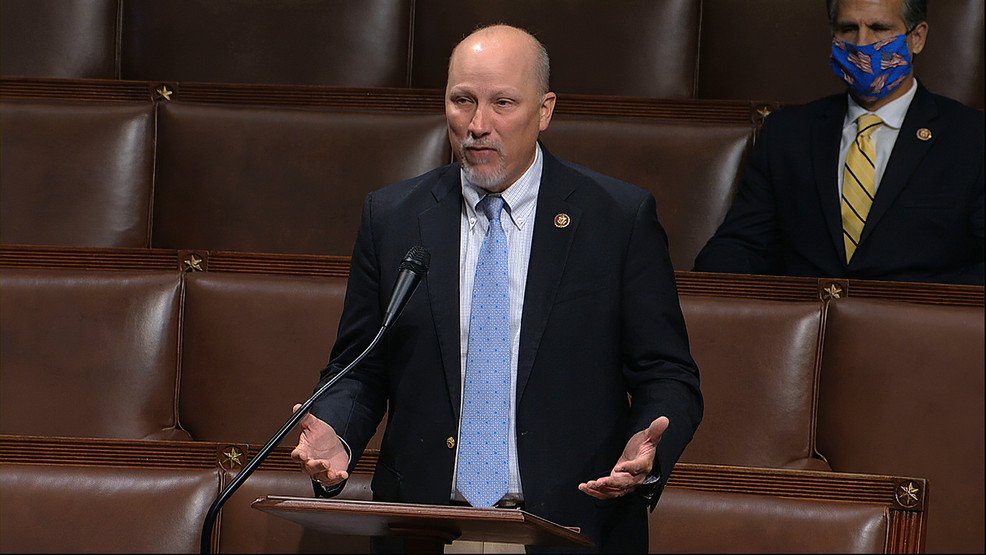
WASHINGTON (TNND) — A bipartisan group of House lawmakers has launched yet another effort to ban members of Congress from trading stocks in an issue that has broad favorability among voters but has struggled to get across the finish line despite several pushes to get a bill signed into law.
Pressure on lawmakers to address stock trading by members of Congress has grown in recent years amid a flurry of activity from both sides of the aisle that has raised suspicions about well-timed trades with potential conflicts of interest with some trading shares in industries they oversee.
A series of lawmakers on both sides of the aisle have been subject to public scrutiny after reporting showed eye-popping returns or seemingly suspiciously timed trades that aligned with an incoming policy announcement or bill’s introduction impacting certain industries. Momentum for passing enhanced restrictions has grown this year with backing from high-ranking leaders like House Minority Leader Hakeem Jeffries and Treasury Secretary Scott Bessent.
A new group of lawmakers have been working on legislation for months seeking to combine various previous proposals into one bill that could garner wide enough support to pass the House and Senate. The coalition includes lawmakers from a unique blend across the political spectrum that includes leading progressive voices along with some of the House’s most conservative members.
The Restore Trust in Congress Act, being led by Reps. Chip Roy, R-Texas, and Seth Magaziner, D-R.I., would ban lawmakers from owning individual stocks and bonds. They would be allowed to own diversified mutual funds, ETSs and some commodities.
Members of Congress who currently own individual stocks and bonds would have 180 days to divest, and new members would have 90 days upon taking office.
Opponents of banning stock trading by Congress argue it would discourage people from wanting to serve in Congress, an argument that was rejected by lawmakers during a press conference on Wednesday.
“If you want to day trade, leave Congress. It’s that simple. If you come up here with the trust of the American people, do your job,” Roy said.
Polling on congressional stock trading has found broad swaths of Americans would support a ban. A 2023 survey by the University of Maryland’s School of Public Policy found 86% of Americans would support banning stock trading for members of Congress and their families, including 86% of Republicans, 87% of Democrats and 81% of independents.
It also comes as trust in government institutions has fallen, especially for Congress, where voters see constant partisanship and shrinking levels of dealmaking across the aisle making the legislative branch inept. Government ethics groups and supporters of stock trading bans argue it would be a start in repairing Congress’ reputation with the public, but lawmakers actions still face hefty skepticism from voters.
“I don’t know that anything can really restore faith in Congress, partly because of how it conducts itself, but partly because of the inherent mysteriousness of congressional behavior, the fact that people can’t keep track of 535 people at one time — and in lacking detailed information, they tend to assume the worst,” said Chris Devine, an associate professor of political science at the University of Dayton.
Insider trading is already illegal through the 2012 STOCK Act and are required to disclose them or face fines, though critics argue the law does not go far enough to ensure cooperation. Failing to disclose trades is only punishable by a $200 fine.
Roy and Magaziner’s bill would implement harsher penalties, with lawmakers who are found in violating having to pay 10% of the value of their investment with personal funds, not campaign or office funds, plus give up earnings from the violation.
A key difference between the House bill and another stock trading proposal introduced in the Senate by Josh Hawley, a Missouri Republican, is the House version does not apply to the executive branch. Hawley’s PELOSI Act would have also placed restrictions on the president and vice president, which drew backlash from Trump.
House Speaker Mike Johnson has supported a stock trading ban but has yet to put any legislation up for a vote amid disagreements from some lawmakers about what restrictions should look like and how they would be implemented. Johnson told reporters on Wednesday that he is working out the specifics of what a bill should look like.
“There’s a couple of different ideas on the table and we have to build consensus on that, ‘cause you got to do it responsibly. So some of the ideas that have been put forward, I’m not in love with the details of. But I mean it’s generally a policy I’ve always favored. But we have lots of different opinions on that in the conference and in Congress, so we got to work through it,” he told reporters.
The House lawmakers leading the latest push may leave GOP leadership no choice on whether the bill will receive a vote.
“We have reached a tipping point where pressure outside the building is becoming too much for leadership to deny,” Magaziner said. “I cannot even describe when this issue comes up at town halls and events across the country, people go nuts.”
Several said they would give Johnson until the end of the month to put the bill on the floor before they force a vote through a procedural maneuver known as a discharge petition.
“We’ve asked nicely for leadership to put this on the floor. If they don’t, I’m saying timeline is end of month. There is a discharge petition prepared and ready to go,” said Rep. Anna Paulina Luna, R-Fla., who had vowed to force a vote on the issue prior to the August recess.